
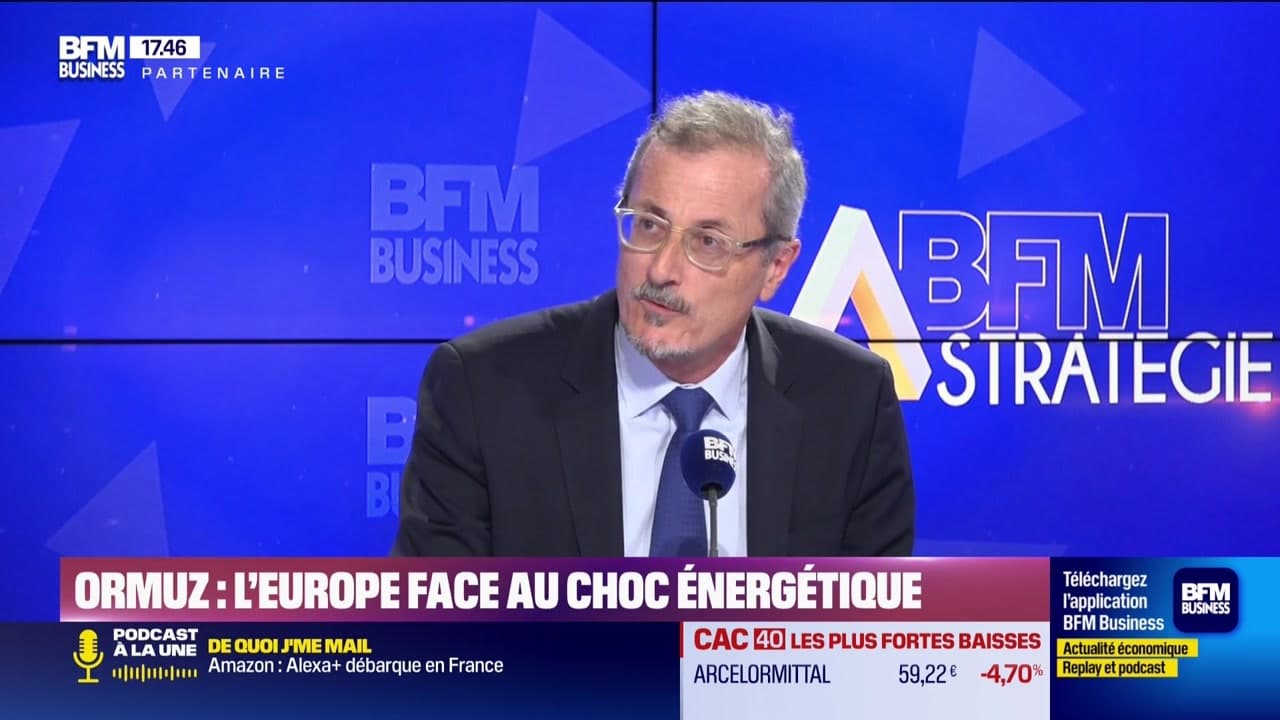
Strait of Hormuz: Europe Facing an Energy Shock
Global strategic autonomy is now the primary driver of economic policy, as Europe and the West decouple from Chinese technology and diversify energy corridors to mitigate shocks. This shift integrates AI-driven industrialization and a renewed focus on human-centric health, fundamentally altering how nations manage risk and supply chains.
Why the Strait of Hormuz remains Europe’s biggest energy vulnerability?
The Strait of Hormuz is a geopolitical choke point. Roughly one-fifth of the world’s total oil consumption passes through this narrow waterway. According to BFM Stratégie, any disruption here triggers an immediate energy shock for Europe, which is still untangling its dependency on volatile regions.
The trend is moving toward “energy sovereignty.” We are seeing a pivot from globalized energy reliance to regional clusters. Europe isn’t just switching to renewables; it’s aggressively diversifying its LNG (Liquefied Natural Gas) imports from the US and Qatar to ensure a single regional conflict doesn’t freeze the continent’s industry.
How is China winning the global automotive and battery race?
China isn’t just making cars; it’s controlling the entire vertical stack. From lithium mining in Africa to the final assembly of EVs, Chinese firms like BYD and Xiaomi have outpaced European legacy automakers. BFM Stratégie highlights that the “Chinese game” is centered on speed and integration.
Europe is fighting back through the European Battery Alliance, but the gap is stark. While EU manufacturers focus on high-end engineering, China dominates the LFP (Lithium Iron Phosphate) battery market, which is cheaper and more durable for mass-market vehicles. The future trend here is “localization”—Europe will likely impose stricter “rules of origin” to force battery production onto home soil.
For more on industrial shifts, see our guide on industrial transformation trends.
What happens when AI moves from the cloud to the “Edge” in factories?
The “factory of the future” is moving away from centralized cloud computing. Edge computing—processing data directly on the machine rather than sending it to a distant server—is the new standard. This reduces latency to near zero, which is critical for robotics and real-time quality control.
In healthcare, this transition is even more vital. AI is being used to redesign supply chains, predicting shortages before they happen. According to industry reports, AI-driven logistics can reduce waste in pharmaceutical chains by up to 20% by optimizing cold-chain storage and delivery routes.
Can the “Tech Decoupling” actually work?
The “Grand Decoupling” is the strategic effort by Western powers to remove critical dependencies on Chinese hardware and software. We see this in the ban of certain 5G equipment and the push for domestic semiconductor production (the EU Chips Act).

However, total independence is a myth. The trend is actually “de-risking” rather than “decoupling.” Companies are adopting a “China Plus One” strategy—keeping operations in China for the local market but building redundant capacity in India, Vietnam, or Mexico to protect against geopolitical sanctions.
Why are women’s health and mental wellness becoming corporate strategies?
For decades, women’s health was a medical blind spot. BFM Stratégie notes a shift where gender-specific health is finally being recognized as an economic imperative. When companies ignore the specific health needs of half their workforce, they lose productivity and talent.
Similarly, mental health at work has moved from a “perk” to a risk management issue. The trend is moving toward “preventative wellness.” Instead of offering a meditation app after burnout happens, firms are restructuring workloads to prevent the burnout from occurring in the first place.
Check out the World Health Organization for the latest data on occupational health standards.
What are the M&A prospects for 2026?
The merger and acquisition (M&A) landscape is shifting toward “survival and synergy.” After a period of high interest rates, the 2026 outlook suggests a surge in consolidations within the tech and energy sectors. Companies will buy smaller AI startups not just for their tech, but for their talent (so-called “acqui-hiring”).
We are also seeing a return to “risk-taking.” After years of cautious spending, the winners of the next cycle will be those who invest in unproven but high-potential sustainable technologies, such as green hydrogen or sustainable beauty chemistry.
Quick Comparison: Industrial Strategy Shift
| Old Model (Pre-2020) | New Model (2024+) |
|---|---|
| Just-in-Time Efficiency | Just-in-Case Resilience |
| Globalized Sourcing | Regionalized “Friend-shoring” |
| Centralized Cloud AI | Decentralized Edge AI |
Frequently Asked Questions
What is the “China Plus One” strategy?
It is a business strategy where companies maintain their primary operations in China but diversify by establishing a second hub in another country to reduce risk.

How does Edge Computing differ from Cloud Computing?
Cloud computing processes data in centralized data centers. Edge computing processes data closer to the source (the “edge” of the network), reducing lag and increasing speed.
Why is the Strait of Hormuz so critical for Europe?
Because it is the primary transit point for oil and gas from the Middle East. A blockage would immediately spike energy costs across the EU.
Stay Ahead of the Curve
Are these geopolitical shifts affecting your business strategy? Do you believe Europe can truly decouple from Chinese tech?
Join the conversation in the comments below or subscribe to our newsletter for weekly strategic insights.