
Survodutide Reduces Liver Fat and Weight in Obesity and At-Risk MASLD
Survodutide, a dual glucagon receptor and GLP-1R agonist, significantly reduced liver fat and body weight in participants with obesity and at-risk MASLD during a 48-week phase 3 trial. The treatment led 60% of participants to achieve normalization of liver fat content (LFC), while also improving key cardiometabolic risk markers. According to the trial data, these results suggest the drug could reduce liver inflammation and suppress the progression of fibrosis.
How does survodutide reduce liver fat and inflammation?
The phase 3 trial found that survodutide 6.0 mg weekly produced substantial reductions in liver fat content as measured by MRI-PDFF. Specifically, 84.2% of participants saw a reduction of 30% or more, 75.3% achieved a reduction of 50% or more, and 55.5% reached a reduction of 70% or more.
Beyond fat reduction, the drug improved non-invasive tests (NITs) related to liver inflammation. These improvements included reductions in ALT, AST, and cT1, as well as a decrease in overall liver volume.
Why is the dual-agonist mechanism significant?
Survodutide differs from GLP-1R monoagonist therapies by targeting both the glucagon and GLP-1 receptors. In vitro, the drug has an eight-fold greater activation of the human GLP-1R than the glucagon receptor, a balance that supports metabolic benefits without compromising glucose regulation.
Data from a previous phase 2 trial suggests that improvements in liver inflammation and fibrosis markers, such as the ELF score, were predominantly independent of weight loss. This indicates that glucagon receptor agonism may provide complementary or synergistic effects directly on the liver.
What are the cardiometabolic implications?
Participants treated with survodutide showed improvements in several markers of cardiovascular risk. These included reductions in systolic blood pressure (SBP), diastolic blood pressure (DBP), lipids, HOMA-IR, hsCRP, uric acid, and HbA1c.
The trial references the UK-based ASCOT trial, which showed that treating hypertension and lipids early led to fewer cardiovascular events a decade later. This suggests that early intervention in MASLD could potentially prevent the progression of cardiovascular disease.
What were the safety results and side effects?
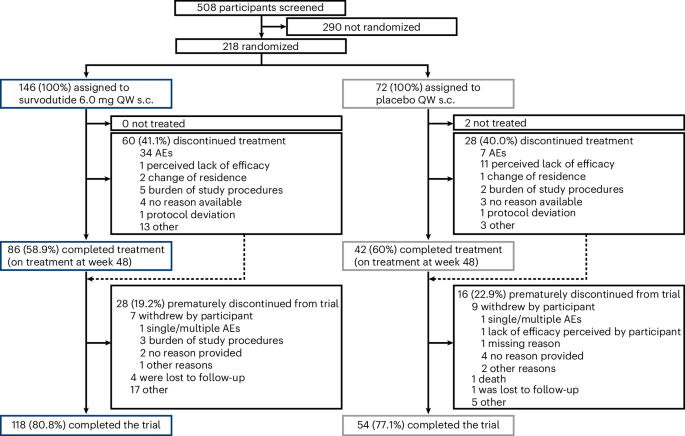
The safety profile was consistent with other GLP-1R agonist medications. Gastrointestinal events were the most common side effects and the primary reason for participants discontinuing treatment. These issues typically occurred during the dose-escalation period and resolved over time.
There were no confirmed cases of acute pancreatitis, pancreatic cancer, thyroid cancer, or drug-induced liver injury. The drug was associated with a modest mean increase in heart rate, but no clinically relevant QTcF prolongation was evident.
What may happen next in survodutide research?
The LIVERAGE phase 3 clinical trial program is expected to assess the drug’s effects on a more advanced population. This will include people with MASH and moderate-to-advanced fibrosis (stage F2–F3) as well as those with MASH-associated compensated cirrhosis (stage F4).

Additionally, the SYNCHRONIZE obesity program, including SYNCHRONIZE-CVOT, may provide data on a broader range of ethnic and racial representations. Future protocols are likely to include greater dose flexibility to improve patient tolerance during the early stages of treatment.
Frequently Asked Questions
Who participated in this phase 3 trial?
The trial included participants with obesity and at-risk MASLD, identified by liver steatosis and evidence of inflammation or fibrosis via non-invasive tests (NITs) or liver biopsy-confirmed MASH.
Did the drug reduce liver fibrosis?
While MRE-assessed liver stiffness showed no difference—likely due to a “floor effect” from low baseline stiffness—VCTE and the ELF score both showed reductions in liver stiffness and fibrogenesis markers.
What was the primary cause of treatment discontinuation?
Adverse gastrointestinal events, which most frequently occurred during the dose-escalation period, were the most common cause of discontinuation.
Do you think non-invasive tests will eventually replace liver biopsies for most metabolic liver disease diagnoses?