

Tajikistan emerges as Central Asia growth leader
Tajikistan’s Economic Surge: Key Drivers and Growth Metrics
According to the European Bank for Reconstruction and Development (EBRD), Tajikistan’s economy grew by 8.4% in 2024, with projections of nearly 8% growth in 2026. This performance places the Central Asian nation among the region’s fastest-growing economies, driven by investment, industrial expansion, and infrastructure projects.
Investment and Industrial Growth
Fixed asset investment in Tajikistan rose 34.2% in Q1 2026 compared to the same period in 2025, one of the highest rates in Central Asia. Industrial production also surged, increasing 29.6% during the first three months of 2026, according to the EBRD. These figures reflect sustained momentum in manufacturing and construction sectors.
“The surge in investment activity is a clear indicator of confidence in Tajikistan’s economic trajectory,” said an EBRD spokesperson. “This is bolstered by state-led initiatives and private-sector participation.”
Strategic Infrastructure Projects
The construction of the Rogun Hydropower Plant is a cornerstone of Tajikistan’s development strategy. Once completed, the facility is expected to triple the country’s electricity generation capacity, enhancing energy security and enabling exports to neighboring states. The project, funded largely by domestic and international loans, has faced delays but remains a priority for the government.
“The Rogun Plant is not just an energy project—it’s a catalyst for regional integration,” noted a World Bank report. “Its completion could transform Tajikistan into a key electricity supplier in Central Asia.”
Trade Shifts: China Overtakes Russia as Top Partner
In 2025, China became Tajikistan’s largest trading partner for the first time in over two decades, with bilateral trade reaching $4.3 billion. This surpassed Russia, which accounted for 23% of total trade. The shift underscores Tajikistan’s deepening economic ties with Asia’s largest economy.
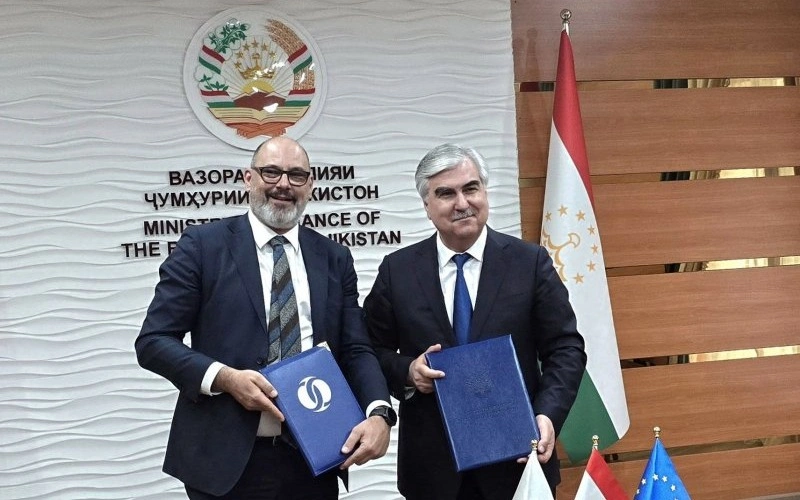
Tajikistan’s exports—primarily aluminum, cotton, and electricity—now face new opportunities in Chinese markets. Meanwhile, imports of machinery, fuel, and consumer goods from China are rising, according to the EBRD’s 2026 report.
What’s Next for Tajikistan’s Economy?
The EBRD forecasts continued growth in 2026, citing rising household incomes and expanded industrial activity. However, challenges such as reliance on commodity exports and geopolitical tensions in the region could pose risks. Analysts emphasize the need for diversification to sustain long-term stability.
Investment Outlook and Regional Cooperation
The EBRD highlighted that Tajikistan’s growth has attracted both domestic and foreign investment. Projects like the Rogun Hydropower Plant and road infrastructure upgrades are drawing interest from investors in China, the EU, and the Gulf. Regional cooperation, including participation in the China-led Belt and Road Initiative, is also a focus.
“Tajikistan’s position as a bridge between Central Asia and South Asia is increasingly strategic,” said a trade analyst at the Eurasian Economic Commission. “Its ability to leverage this role will determine future growth.”
FAQ: Key Questions About Tajikistan’s Economic Growth
Why is Tajikistan’s growth significant?
Tajikistan’s 8.4% GDP growth in 2024 outpaces many global peers. Its focus on infrastructure and energy projects positions it as a rising economic force in Central Asia, according to the World Bank.
How does trade with China impact Tajikistan?
China’s role as the top trading partner allows Tajikistan to access new markets for its exports and import cheaper goods. However, dependency on a single partner carries risks, as noted in a 2025 EBRD analysis.
What are the main economic challenges?
Reliance on aluminum and cotton exports, coupled with limited industrial diversification, remains a concern. Environmental and social issues linked to large-scale projects like Rogun also require careful management.
Did you know? The Rogun Hydropower Plant, once operational, could generate enough electricity to meet 80% of Tajikistan’s domestic needs and supply neighboring countries.
Pro Tips for Tracking Tajikistan’s Economic Trends
Monitor EBRD and World Bank reports for updated growth forecasts. Follow developments on the Rogun Hydropower Plant and Tajikistan’s trade agreements with China and other regional partners. Keep an eye on inflation rates and currency stability, which could affect investment flows.
For deeper insights, explore our coverage of Central Asia’s energy sector and Belt and Road Initiative projects.
What do you think about Tajikistan’s economic rise? Share your perspective or subscribe to our newsletter for more updates.