
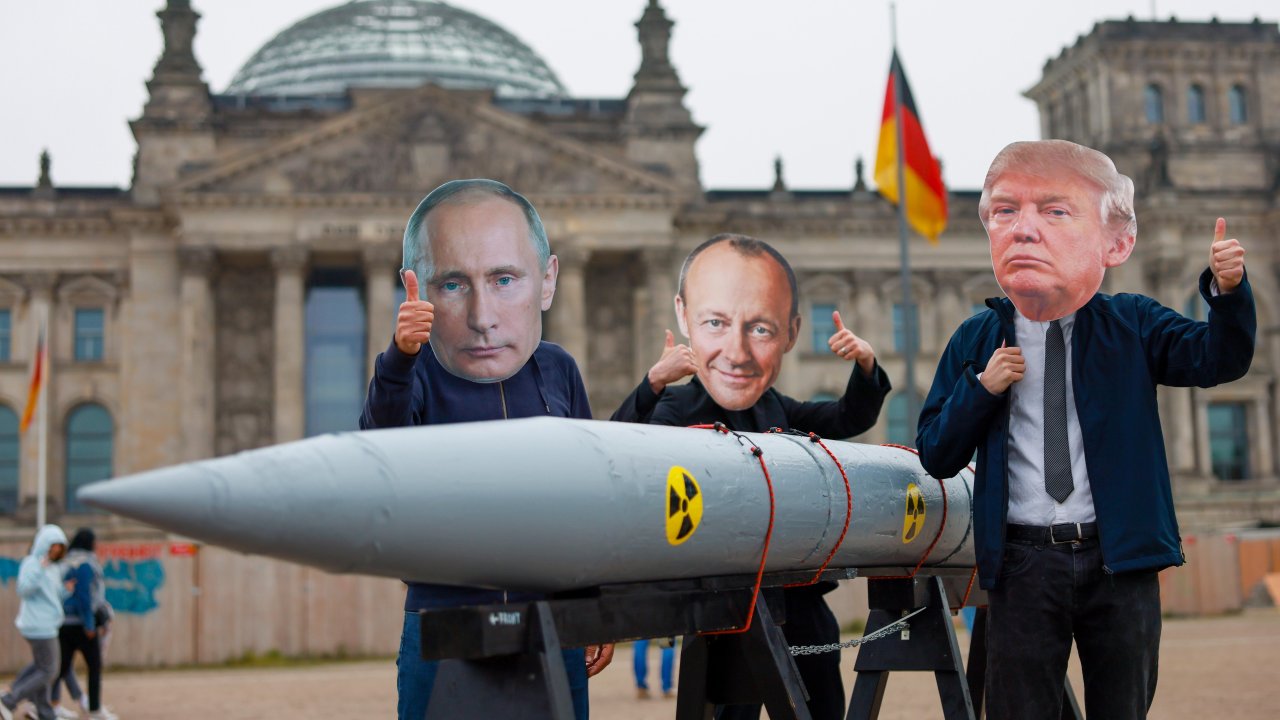
The Decline of Nuclear Deterrence in Modern Warfare
Nuclear deterrence is failing as conventional and hybrid warfare bypass traditional strategic threats, according to an analysis by Foreign Affairs. Recent events, including Ukraine’s “Operation Spider” which destroyed Russian strategic bombers with cheap drones, suggest that the threat of nuclear retaliation no longer prevents targeted conventional strikes on strategic assets.
Ukraine’s “Operation Spider” in June 2025 demonstrated a critical flaw in global security: nuclear weapons cannot stop low-cost conventional attacks. Ukrainian agents used drones costing approximately $500 to destroy at least 10 Russian strategic bombers and damage 41 aircraft, according to Ukrainian assessments cited by Foreign Affairs.
The operation involved infiltrating Russian territory and hiding short-range drones in cargo trucks near airbases as far as the Amur region on the Chinese border. Agents triggered the drones remotely using the Russian mobile phone network. These aircraft were not just conventional assets; some were used for nuclear command and control.
Why is traditional nuclear deterrence failing?
Nuclear deterrence is failing because the threat of “total destruction” doesn’t stop precise, low-cost hybrid attacks. For decades, the logic was simple: attacking a nuclear power’s strategic assets would trigger a nuclear response. Moscow maintained this doctrine, warning in 2024 that conventional strikes on strategic assets could provoke a nuclear answer.
However, Ukraine ignored this warning. When the bombers were destroyed, Russia didn’t push the nuclear button. Instead, it responded with a conventional strike on Kyiv involving 400 drones and 40 missiles. This confirms that the threat of nuclear escalation is often a bluff used to mask caution rather than a rigid rule of engagement.
How does “deterrence by denial” differ from “deterrence by punishment”?
The global security landscape is shifting from deterrence by punishment to deterrence by denial. Punishment-based deterrence relies on the threat of a devastating counter-strike to prevent an attack. Denial-based deterrence focuses on making the attack itself useless or impossible through superior defense and resilience.
According to Foreign Affairs, this shift changes how governments must spend their budgets. Instead of spending billions on modernizing warheads and delivery platforms, nuclear states would benefit more from hardening the physical defenses around their nuclear facilities. The goal is no longer to threaten the enemy’s existence, but to ensure the enemy’s attack fails.
What happened in the India-Pakistan and Iran-Israel conflicts?
Recent clashes prove that nuclear arsenals don’t prevent conventional war. In May 2025, India and Pakistan—both nuclear-armed—engaged in their heaviest border conflict of the century. The possibility of nuclear escalation didn’t stop them from attacking each other.
Similarly, Iran and its proxies have repeatedly targeted Israel, a state widely believed to possess nuclear weapons. Tehran has launched drones and missiles at Israeli cities and even attempted to hit nuclear facilities. In these cases, the “nuclear shield” provided no protection against conventional or hybrid aggression.
Does the “nuclear taboo” still exist?
The “nuclear taboo”—the global psychological and political barrier against using atomic weapons—remains, but it’s under pressure. During the early months of the 2022 invasion of Ukraine, Vladimir Putin appeared close to using tactical nuclear weapons to avoid defeat in southeastern Ukraine.
Foreign Affairs notes that Putin was deterred by a mix of advice from his own military leaders, pressure from Washington, and public warnings from China and India. The fear of becoming only the second person in history to use a nuclear weapon in combat remains a powerful deterrent, even when strategic doctrines fail.
| Strategy | Core Logic | Current Status |
|---|---|---|
| Punishment | “If you attack, I will destroy you.” | Weakening due to hybrid warfare. |
| Denial | “Your attack will not work.” | Increasingly valuable. |
Frequently Asked Questions
Does having nuclear weapons prevent a country from being invaded?
Not necessarily. The 2022 Russian invasion of Ukraine is often cited as a warning that non-nuclear states are vulnerable, but the failure of Russian nuclear threats to stop Ukrainian conventional strikes on strategic assets shows that nukes don’t protect the aggressor either.
What is the “nuclear triad”?
It is a three-pronged delivery system consisting of land-based intercontinental ballistic missiles (ICBMs), submarine-launched ballistic missiles, and strategic heavy bombers. This ensures a state can survive a first strike and still retaliate.
Why are drones so effective against strategic assets?
Drones are cheap, hard to detect in large numbers, and can be deployed via unconventional means (like cargo trucks). This allows them to bypass expensive, high-tech defense systems designed for larger missiles.
Do you think nuclear weapons still provide a security guarantee in the age of drone warfare?