
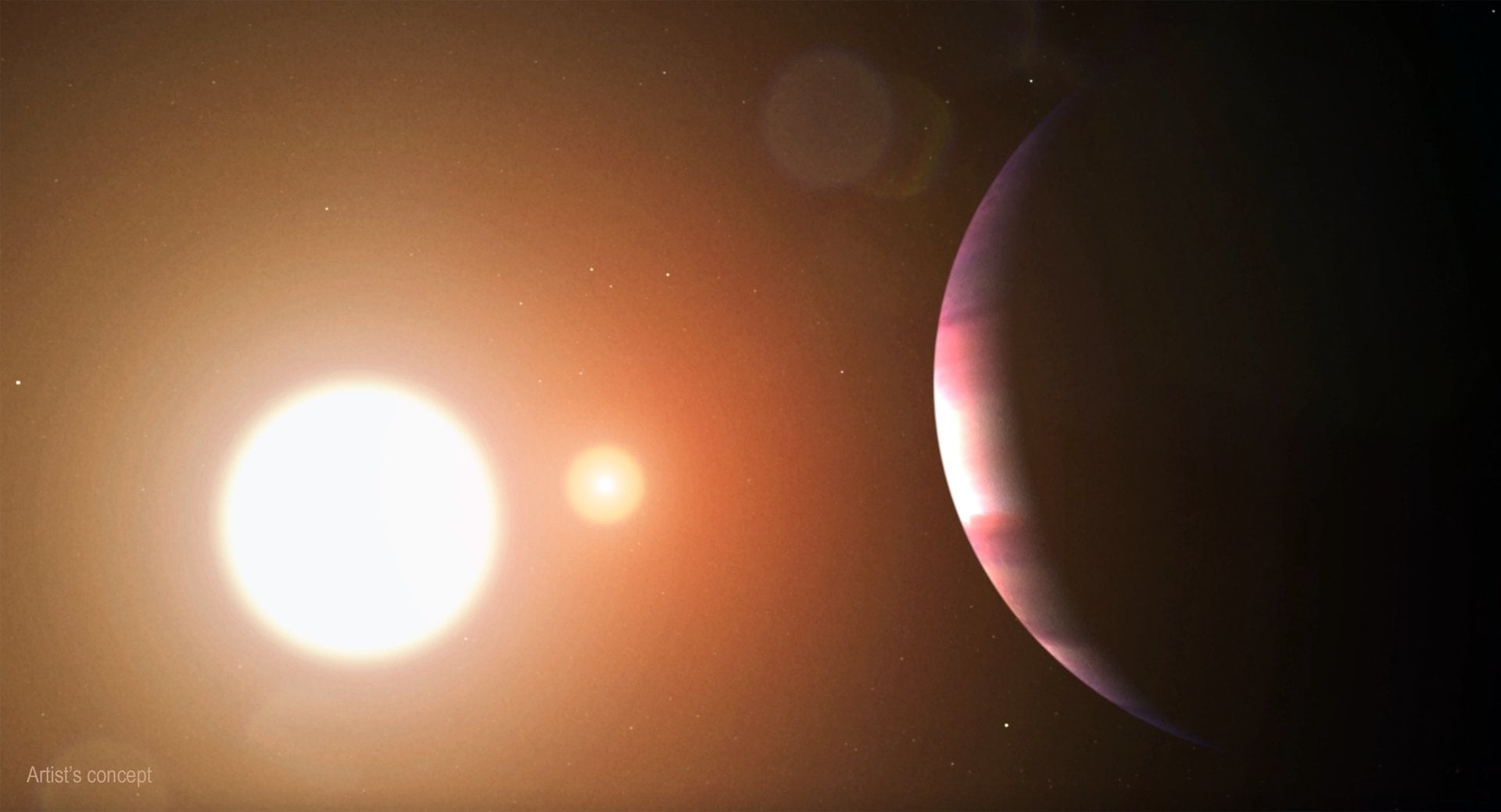
The Definitive Census of Multiple Star Systems Within 10 Parsecs
The Cosmic Neighborhood: Why Our Sun’s “Loner” Status is a Scientific Goldmine
For a long time, we viewed our solar system as the standard blueprint for the universe. One star, a handful of planets, and a vast amount of empty space. But as our telescopes get sharper, we’re discovering that the Sun is actually the odd one out. In the grand cosmic dance, most stars prefer to have a partner—or several.
Recent data from the University of Madrid has shed light on our immediate galactic backyard, analysing stars within 10 parsecs (roughly 32.6 light years). The findings are a wake-up call for astronomers: the “lonely star” model is the exception, not the rule. This shift in understanding isn’t just a curiosity for textbooks; it is fundamentally changing how we search for life beyond Earth.
The Mass Divide: Why Some Stars Travel in Packs
One of the most striking revelations in recent stellar surveys is the correlation between a star’s mass and its “relationship status.” in the universe, weight equals sociality.
Cosmic heavyweights—stars larger than half the mass of our Sun—have a strong tendency to form binary or multiple systems. In contrast, the “lightweights,” such as red and brown dwarfs (those under 0.1 solar masses), are far more likely to be solo acts, with only about 9% existing in multi-star systems.
This trend suggests that the process of star formation is heavily dependent on initial mass. Larger clouds of gas and dust are more likely to fragment into multiple cores, creating siblings that remain gravitationally bound for billions of years. Understanding this distribution allows astronomers to predict where we are most likely to find stable planetary orbits.
The Complexity of Multi-Star Systems
When we talk about “partners,” we aren’t just talking about pairs. The data reveals a hierarchy of complexity that challenges our imaging capabilities:
- Binaries: The most common, consisting of two stars orbiting a common center of mass.
- Triples and Quadruples: More complex systems where stars may orbit each other in nested loops.
- Quintuples: Rare, chaotic systems that push the limits of gravitational stability.
The “Noise” Problem: The Greatest Hurdle in Exoplanet Hunting
If you’re hunting for a “Twin Earth,” a companion star is essentially a blinding spotlight in your eyes. For researchers using the ESA Gaia telescope or radial velocity measurements, a second star creates gravitational “noise” that can mimic or mask the signal of a planet.
When a planet tugs on its star, the star wobbles. This wobble is how we find exoplanets. However, if there is a companion star nearby, its massive gravitational pull creates a much larger wobble, making it incredibly difficult to isolate the tiny signal of a rocky, habitable planet.
Future Trends: The Era of Direct Imaging
We are moving away from indirect detection (watching for wobbles) and toward direct imaging. The next generation of observatories, such as NASA’s Habitable Worlds Observatory (HWO) and ESA’s Larger Interferometer For Exoplanets (LIFE), aim to take actual photos of Earth-like planets.
This is where the “vetted target lists” from recent research become invaluable. By knowing exactly which stars in our neighborhood have companions, scientists can avoid wasting precious observation time on “noisy” systems. We are essentially creating a cosmic map that tells us where the “clear skies” are.
Predicting the “Tatooine” Effect
The future of astrobiology will likely focus on the stability of planets in multi-star systems. Can a planet maintain a circular, stable orbit in a triple-star system? If so, the climate dynamics would be vastly different from Earth’s. We may find that life is more common around “loner” stars like our Sun, or conversely, that the complex radiation environments of binary systems spark faster evolutionary leaps.
For more on how these systems form, explore our guide on the lifecycle of stars and the evolution of planetary systems.
Frequently Asked Questions
Q: Why is the Sun a “loner” star?
A: While the exact reason for our Sun’s lack of a companion is still debated, it may be due to the specific conditions of the molecular cloud from which it formed, or the ejection of a sibling star early in its history.
Q: Can planets exist in systems with 3 or 5 stars?
A: Yes, but their orbits must be either very tight (orbiting one star closely) or very wide (orbiting the entire group from a distance) to remain stable over billions of years.
Q: How does a companion star affect a planet’s habitability?
A: Companion stars can destabilize a planet’s orbit, potentially flinging it out of the “habitable zone” or causing extreme temperature fluctuations that make the development of life difficult.
Do you think we’ll find Earth 2.0 in a binary system?
The more we learn about our neighbours, the more we realize how strange the universe can be. We want to hear your theories!
Join the conversation in the comments below or subscribe to our newsletter for the latest updates from the frontier of space exploration.