

The Evolution of Dystopia From Kafka to Orwell
The progression of administrative overreach and the erosion of individual autonomy represent a significant shift in the landscape of societal control. From the labyrinthine, inexplicable legal proceedings depicted in Franz Kafka’s The Trial to the totalizing surveillance state envisioned in George Orwell’s 1984, these narratives trace a trajectory of increasing institutional power. For the modern observer, these works serve as a stark case study in the risks associated with opaque bureaucratic systems and the loss of objective truth.
The Mechanics of Institutional Control
The transition from Kafkaesque absurdity to Orwellian tyranny highlights a critical evolution in how systems maintain authority. While The Trial focuses on the psychological toll of being ensnared in a system that refuses to define its own rules, 1984 shifts the focus to the active manipulation of reality and history. Both scenarios underscore a common business and societal risk: the removal of transparency.
When institutions operate without clear accountability, the consequences for the individual are profound. In the Kafka model, the lack of information creates a paralysis of action. In the Orwell model, the imposition of false information—such as the doctrine that “War is Peace”—creates a systematic destruction of independent thought. These frameworks suggest that when power becomes absolute, the distinction between the law and the whim of the institution vanishes.
Implications for Future Governance
Looking ahead, analysts suggest that the trajectory toward increased surveillance and bureaucratic complexity could lead to further challenges in maintaining individual agency. If current trends toward the centralization of information continue, We see likely that the ability to verify objective reality may become more difficult for the average person.
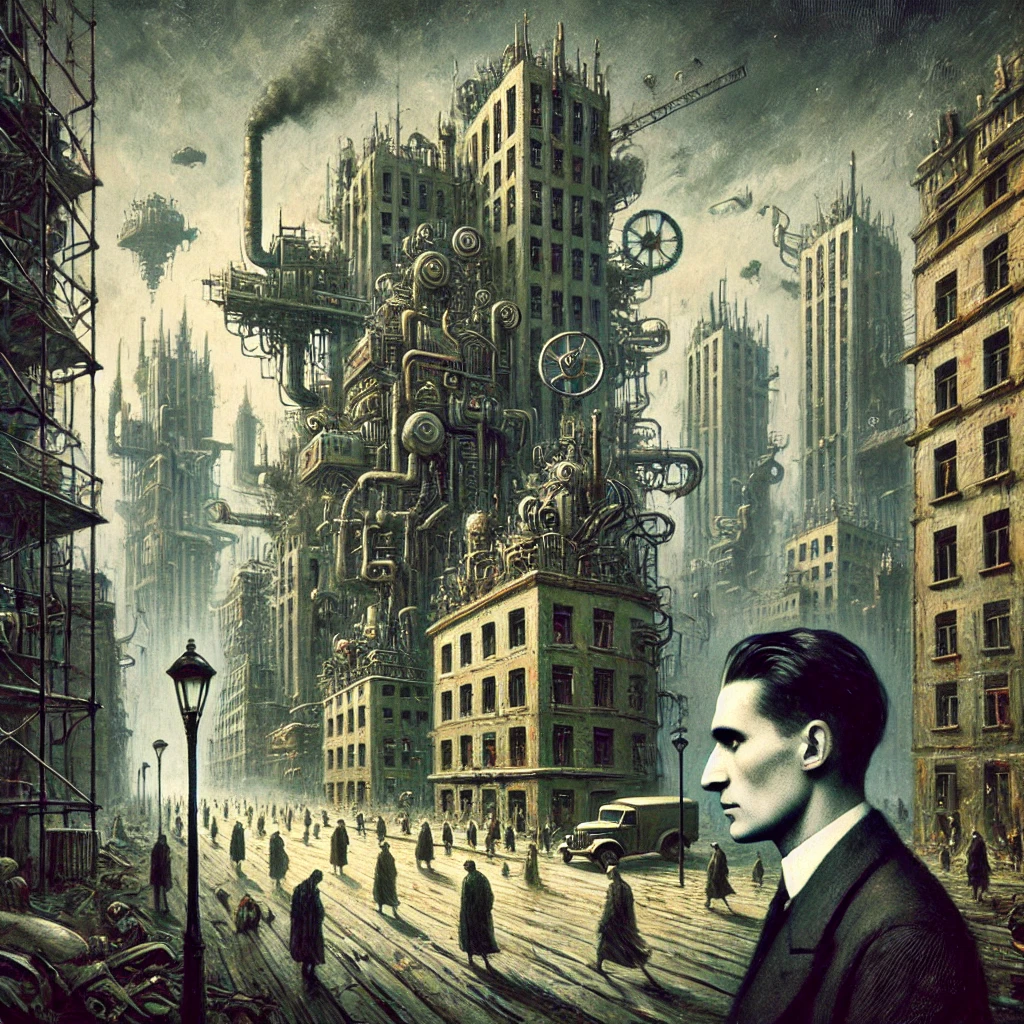
A possible next step in this evolution involves the further integration of technology into the surveillance of daily activities, mirroring the “telescreens” that monitor citizens in 1984. Observers expect that as institutions prioritize efficiency and control over transparency, the potential for individual rights to be sidelined in favour of administrative convenience will remain a primary concern.
Frequently Asked Questions
What is the primary conflict in the systems described?
The conflict centres on the individual’s struggle against an all-encompassing, often invisible authority that controls the flow of information and the interpretation of justice.
How does the role of information change between these two models?
In the Kafkaesque model, information is withheld, leaving the individual to navigate a system they cannot understand. In the Orwellian model, information is actively falsified or replaced to ensure compliance with the state’s narrative.
What is the ultimate consequence for individuals in these scenarios?
The ultimate consequence is the loss of individual autonomy, whether through the exhaustion of navigating an inscrutable legal process or the total assimilation into a state-mandated reality.
To what extent do you believe modern transparency standards are sufficient to protect against the types of institutional opacity described in these historical accounts?