
The Role of Immigrants in the U.S. Workforce and Healthcare Sector
Noncitizen immigrant workers in the U.S. declined by approximately 600,000 between January 2025 and April 2026, according to KFF analysis of federal survey data. This 4% drop occurred alongside Trump administration policy changes restricting visas and Temporary Protected Status, though an increase in naturalized citizen workers partially offset the loss.
The KFF analysis, based on Current Population Survey (CPS) and American Community Survey (ACS) data, shows noncitizen immigrant workers fell from 15.4 million to 14.8 million during this period. Naturalized citizen workers increased by over 800,000, or about 6%, moving from 15.2 million to 16.0 million.
U.S.-born workers also saw a slight increase of 1%, rising from 125.6 million to 126.7 million. These shifts come as the administration increases immigration enforcement and pauses the issuance of certain new visas.
How have immigration trends changed the U.S. workforce?
The total number of immigrant workers remained largely steady between January 2025 and April 2026. However, the composition of that workforce shifted toward naturalized citizens as noncitizen numbers dropped.
In the health care sector, the workforce grew by 1%, or about 130,000 people, reaching 19.6 million. This growth was driven by increases among U.S.-born workers (16.0 to 16.1 million) and noncitizen immigrant workers (961,000 to 1.2 million).
These gains offset a decline in naturalized citizen health care workers, who dropped from 2.5 million to 2.3 million during the same timeframe.
What role do immigrants play in U.S. health care?
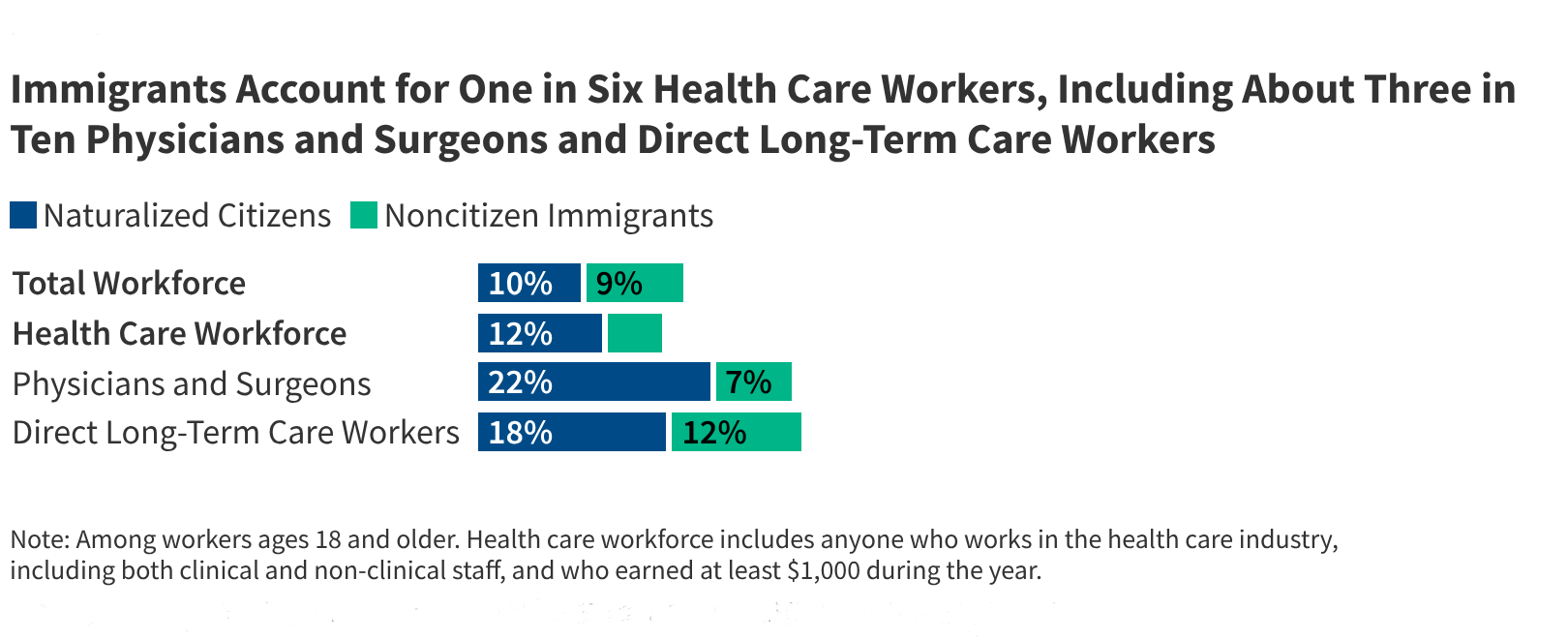
Immigrants made up about 17% of the total health care workforce as of 2024, totaling roughly 3.3 million people. Their presence is most concentrated in specialized roles, including 28% of all physicians and surgeons and 30% of direct care workers in long-term settings.
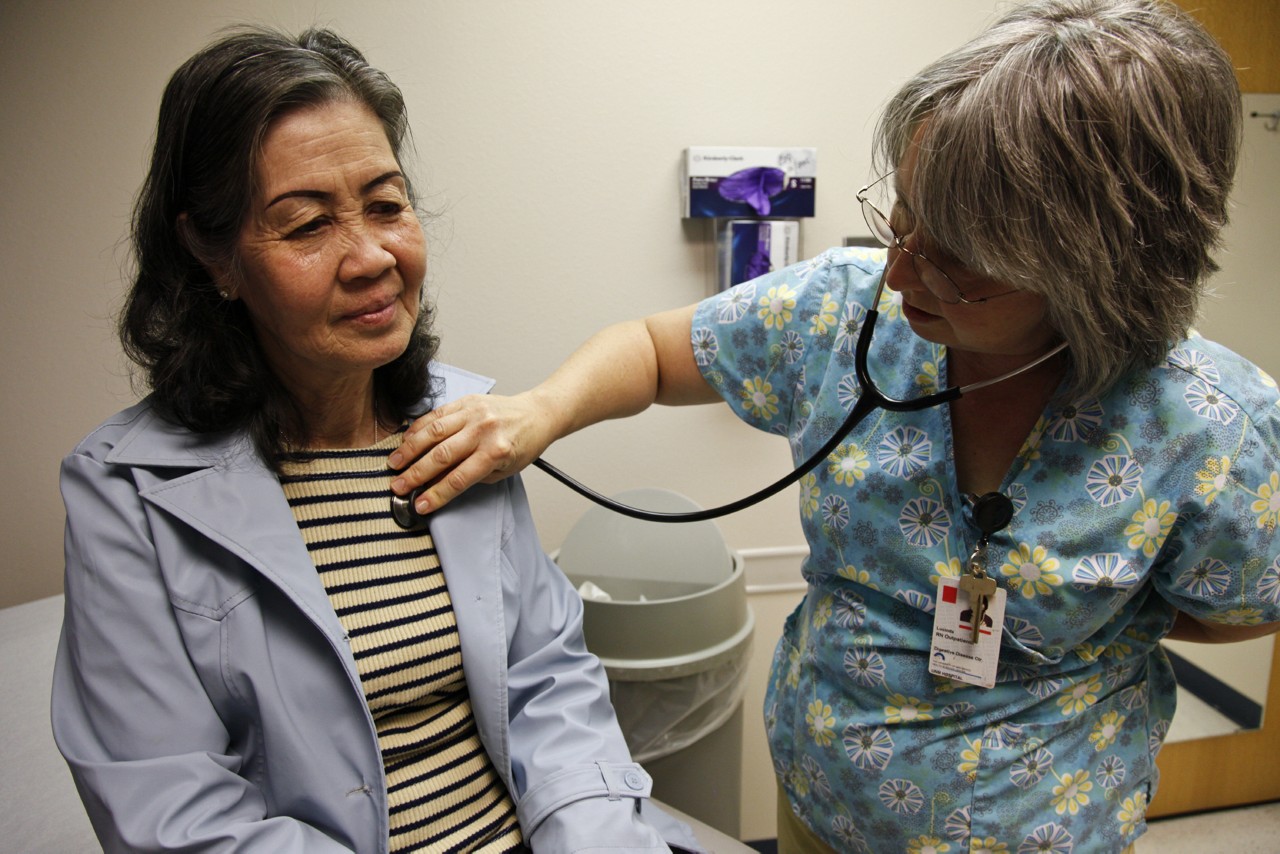
Within hospitals, immigrants account for 17% of the total workforce, or 1.4 million workers. This includes 22% of nursing assistants, 17% of registered nurses, and 15% of technicians.
The Philippines, Mexico, and India are the top countries of origin for these workers, contributing 12%, 11%, and 7% of the immigrant health care workforce, respectively.
Immigrants also hold significant roles in non-clinical hospital operations. For example, they make up 29% of building cleaning and maintenance workers in hospital settings.
Which industries are most dependent on immigrant labor?
Beyond health care, noncitizen immigrants hold disproportionate shares of the workforce in agriculture, construction, and service industries. According to KFF data from 2024, immigrants account for 33% of all agricultural workers.
In the construction industry, immigrants make up 26% of the workforce. Noncitizen immigrants specifically account for 18% of these roles, while naturalized citizens make up 8%.
The food services, maintenance, and personal care sectors also rely heavily on immigrant labor, with immigrants accounting for 23% of the workforce.
What happens next for the U.S. health care system?
Continued reductions in the immigrant population could impact the U.S. economy as the population aged 65 and older grows. A shrinking pool of replacement workers may lead to increased instability in key industries.
Reduced participation of immigrants in the health care workforce, particularly in long-term care, could exacerbate existing worker shortages. Such a trend may negatively impact the overall health and well-being of Americans.
Future workforce stability may depend on whether naturalized citizen growth continues to offset the decline of noncitizen workers in clinical and non-clinical roles.
Frequently Asked Questions
What percentage of the total U.S. workforce are immigrants?
As of 2024, immigrants accounted for about 19%, or close to 31 million, of the total U.S. workforce over age 18.
Which countries provide the most immigrant health care workers?
The top countries of origin are the Philippines (12%), Mexico (11%), and India (7%).
How did noncitizen immigrant worker numbers change between 2025 and 2026?
The number of noncitizen immigrant workers declined by about 600,000, or 4%, falling from 15.4 million to 14.8 million.
How do you think changes in the healthcare workforce will affect patient care in your community?