

The Stories Behind World Cup Jersey Designs
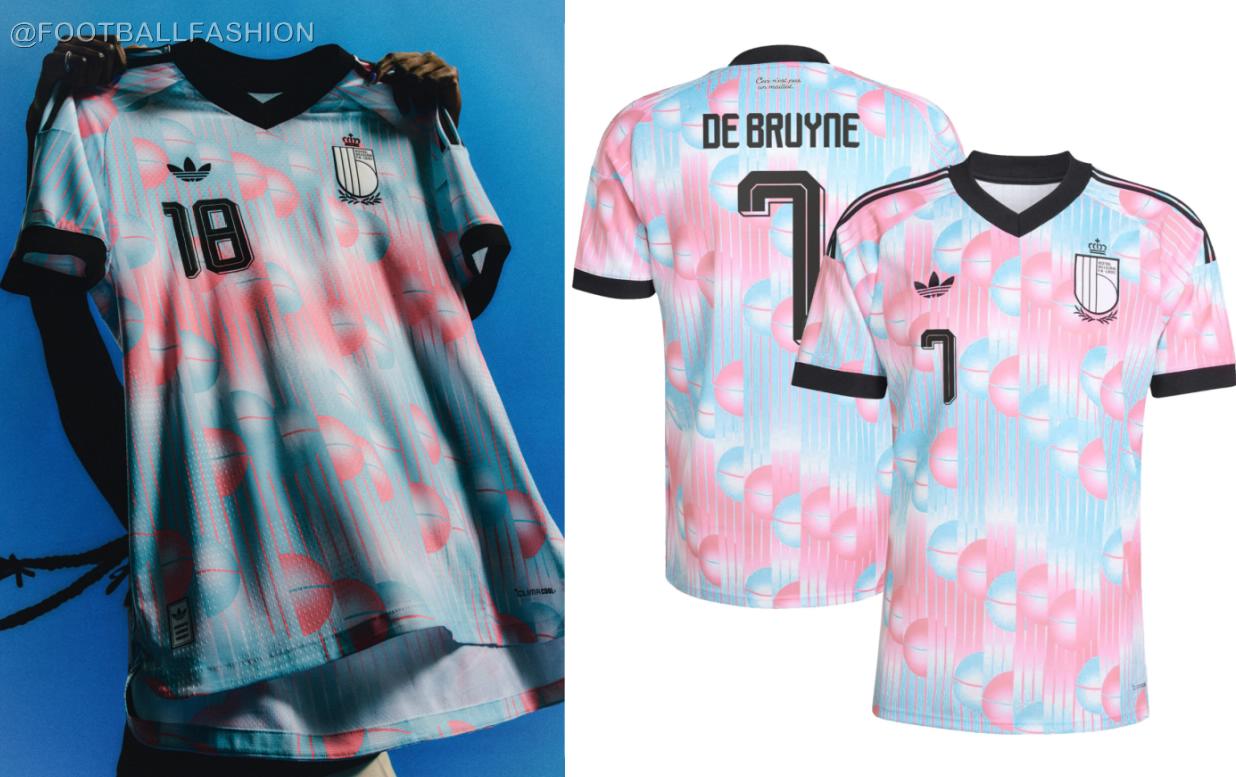
National football team jerseys are evolving into cultural canvases, integrating elements of surrealist art, endangered species, and literary classics. According to The Associated Press, recent designs range from Belgium’s Magritte-inspired kits to Colombia’s homage to Gabriel García Márquez, signaling a shift toward narrative-driven athletic apparel that prioritizes national identity over simple branding.
Why are football kits becoming cultural archives?
Sports apparel is shifting from basic color schemes to complex storytelling. The Associated Press reports that teams are now using jerseys to embed specific historical and geographical markers. Cape Verde, for example, uses a geometric pattern representing the flight routes connecting its 10 volcanic islands to unite its diaspora with the players.
This trend moves beyond aesthetics into the realm of national heritage. Mexico’s home kit revives the Aztec Calendar design, a motif popularized in the 1990s. The team reinforced this connection by posing with the “Sun Stone” at the National Museum of Anthropology in Mexico City shortly before the tournament.
How does nature drive modern sports design?
Biomimicry and environmental awareness are becoming central to kit design. Brazil’s away uniform utilizes colors inspired by the poisonous dart frogs of the Amazon rainforest, which The Associated Press notes is a nod to the “danger” the five-time world champion poses to opponents.
Similarly, Saudi Arabia’s dark green home kit incorporates lavender-colored rhombuses. This design pays tribute to the wild lavender flowers that bloom in the kingdom’s deserts during spring, a color the country views as a symbol of generosity.
What happens when cultural expression clashes with regulation?
The push for deeper meaning often hits regulatory walls. The Associated Press highlights a conflict between Haiti and FIFA regarding the Caribbean nation’s original kit. The design featured a representation of the 1803 final battle of the Haitian War of Independence.
FIFA rejected the imagery, labeling it “too political.” This forced the manufacturer, Saeta, to produce an updated version without the battle scenes. This incident underscores a growing tension between a nation’s desire to showcase its liberation history and the governing body’s strict rules against political statements on uniforms.
Will literature and art define future uniforms?
High-art collaborations are replacing standard templates. Belgium’s away kit features the phrase “This is not a jersey” on the collar, a direct reference to René Magritte’s surrealist painting The Treachery of Images. The Belgian federation stated the uniform is intended to “awaken the imagination.”
Literature is also finding a place on the pitch. Colombia’s vibrant yellow jersey contains patterns of yellow butterflies, referencing the magical realism of Nobel laureate Gabriel García Márquez and his novel One Hundred Years of Solitude. This integration suggests a future where sports brands partner with literary estates and art galleries to create “wearable museums.”
Comparative Influence: Art vs. History
While some nations focus on visual art, others lean into linguistics and ancient scripts. Norway’s kit utilizes typography inspired by runic writing—the geometric characters used in Northern Europe before the Latin alphabet. While Belgium uses 20th-century surrealism to provoke conversation, Norway uses Viking-style Urnes art to embrace ancestral history.
FAQ
What is “filete porteño”?
According to The Associated Press, it is a traditional ornamental painting technique from Buenos Aires characterized by bright, swirling colors and specific lettering styles, featured on Argentina’s away kit.
Why did FIFA reject Haiti’s jersey?
FIFA considered the depiction of the 1803 War of Independence battle to be too political for the tournament’s regulations.
What is the meaning behind France’s green kit?
The color mimics the oxidized copper of the Statue of Liberty, a gift from France to the U.S. in 1886. It includes the phrase “Nos différences nous unissent” (Our differences unite us).
Which national kit do you think best represents its culture? Share your thoughts in the comments below or subscribe to our newsletter for more deep dives into the intersection of sports and art.