
The Unexpected Brightness ‘Gap’ in an Ancient Globular Cluster
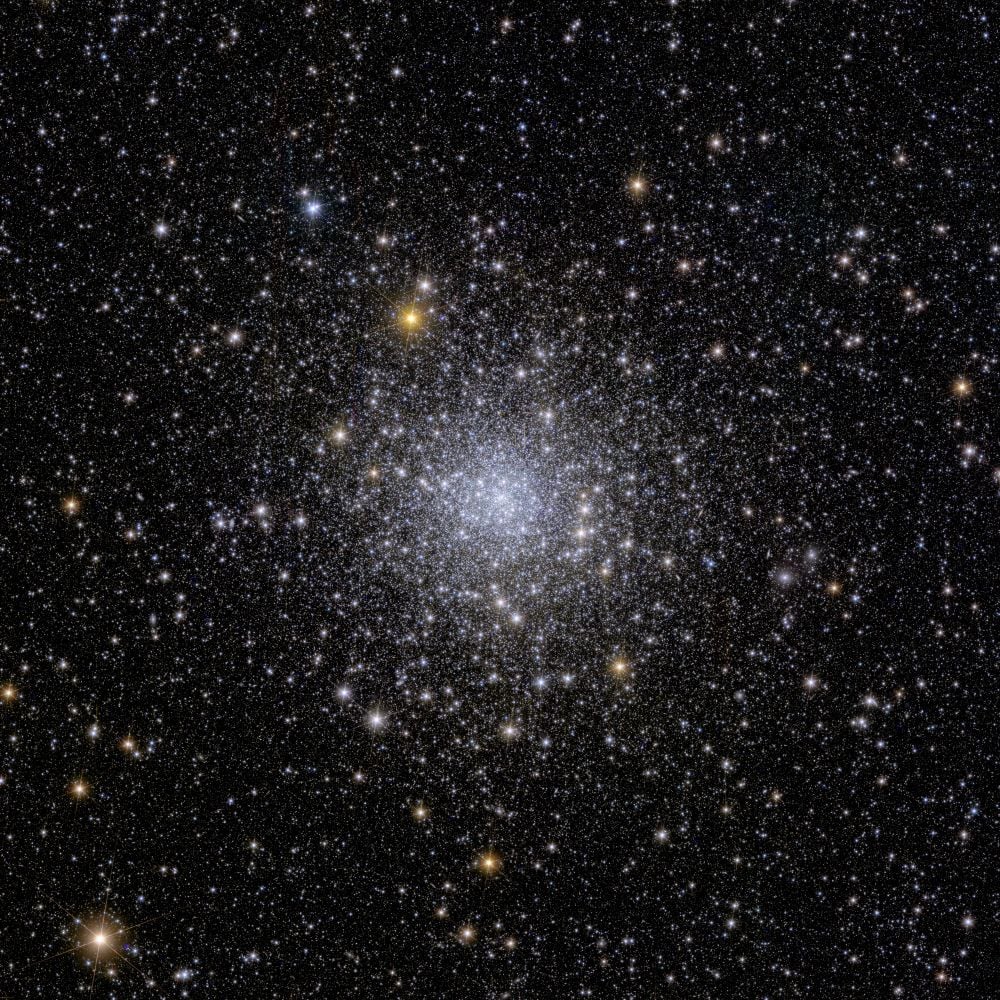
The European Space Agency’s (ESA) Euclid Space Telescope has successfully unlocked new observational capabilities, providing a breakthrough in how researchers analyze the dense, crowded environments of globular clusters. By deploying a specialized “multiple-pass” data-reduction tool, astronomers have identified a subtle stellar feature within NGC 6397, one of the two globular clusters closest to the Milky Way.
A Serendipitous Discovery in Dense Fields
While analyzing the internal kinematics of NGC 6397, a team led by Massimo Griggio of the Space Telescope Science Institute unexpectedly discovered a “gap” in the population of M-dwarf stars. This feature, known as the Jao gap, manifests as a narrow under-density of stars at approximately 0.35 solar masses.
The discovery was made possible by the wide field of view of the Euclid telescope combined with high-precision photometric data reduction. Although the centre of NGC 6397 contains roughly 400,000 stars, the new software allowed researchers to distinguish these faint red dwarfs with a confidence level greater than 5σ, overcoming the traditional difficulty of observing dim stars in such tightly packed regions.
Implications for Stellar Evolution Models
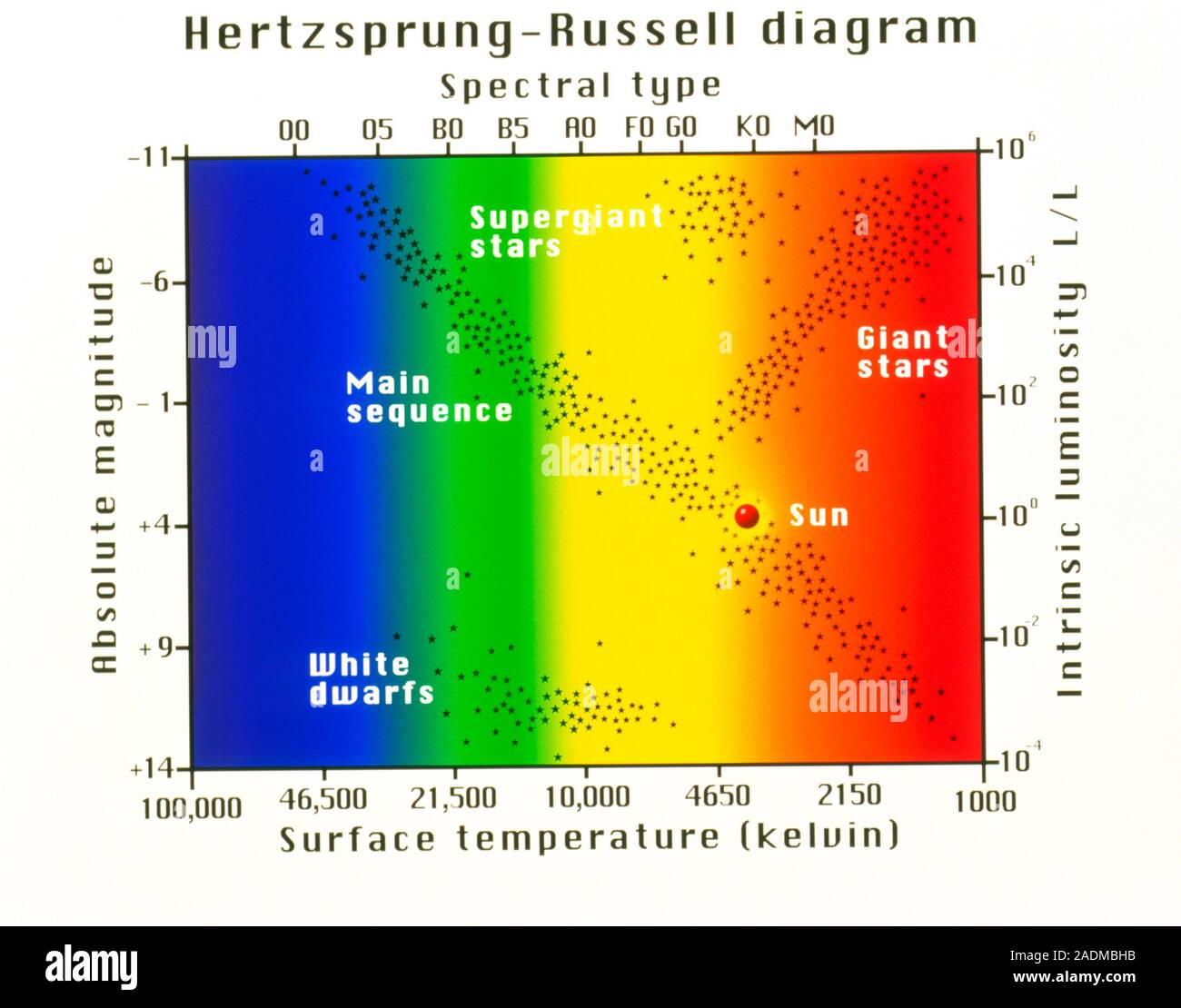
The existence of this gap provides a unique window into the internal mechanics of low-mass stars. As these stars reach the 0.35 solar mass threshold, they undergo a transition that alters their size, brightness, and temperature. This shift creates a detectable, albeit small, luminosity gap on the Hertzsprung–Russell Diagram.

Beyond identifying the transition, this data offers significant utility for broader astronomical research. The properties of the gap provide researchers with tighter constraints on the distance to NGC 6397 and its intrinsic metallicity dispersion, serving as a new benchmark for refining stellar evolution models.
Future Prospects for Galactic Research
Looking ahead, the success of this multiple-pass data-reduction tool suggests a possible next step in the study of other globular clusters. As astronomers continue to leverage the high-precision capabilities of Euclid, they may be able to apply similar analytical frameworks to uncover further mysteries regarding the origins of these clusters—including the long-standing question of whether they represent the remnant cores of dwarf galaxies.
If these methods can be scaled to more distant or even denser clusters, the potential to map metallicity and stellar motion with greater accuracy could clarify the role these massive objects play in the overall evolution of galaxies. Future studies are likely to focus on using this gap as a standard measurement tool to compare different stellar populations across the Milky Way.
Frequently Asked Questions
What is the Jao gap?
The Jao gap is a subtle under-density of stars observed in the Hertzsprung–Russell Diagram, specifically among M-dwarf stars at a magnitude of about 10. This proves linked to the transition of stars from partially to fully convective interiors.
Why is it difficult to observe M-dwarfs in globular clusters?
Globular clusters are characterized by extremely dense stellar populations. This creates a crowded environment where dimmer stars, such as red dwarfs, are difficult to detect and analyze without high-precision photometric tools.
How does this research help scientists understand galaxy evolution?
By using the gap to establish tighter constraints on the distance and metallicity of globular clusters, scientists can create more accurate models of stellar evolution. This helps clarify the historical role globular clusters play in the broader evolution of galaxies.
How might the ability to resolve these subtle stellar gaps change our fundamental understanding of how galaxies are assembled over billions of years?