
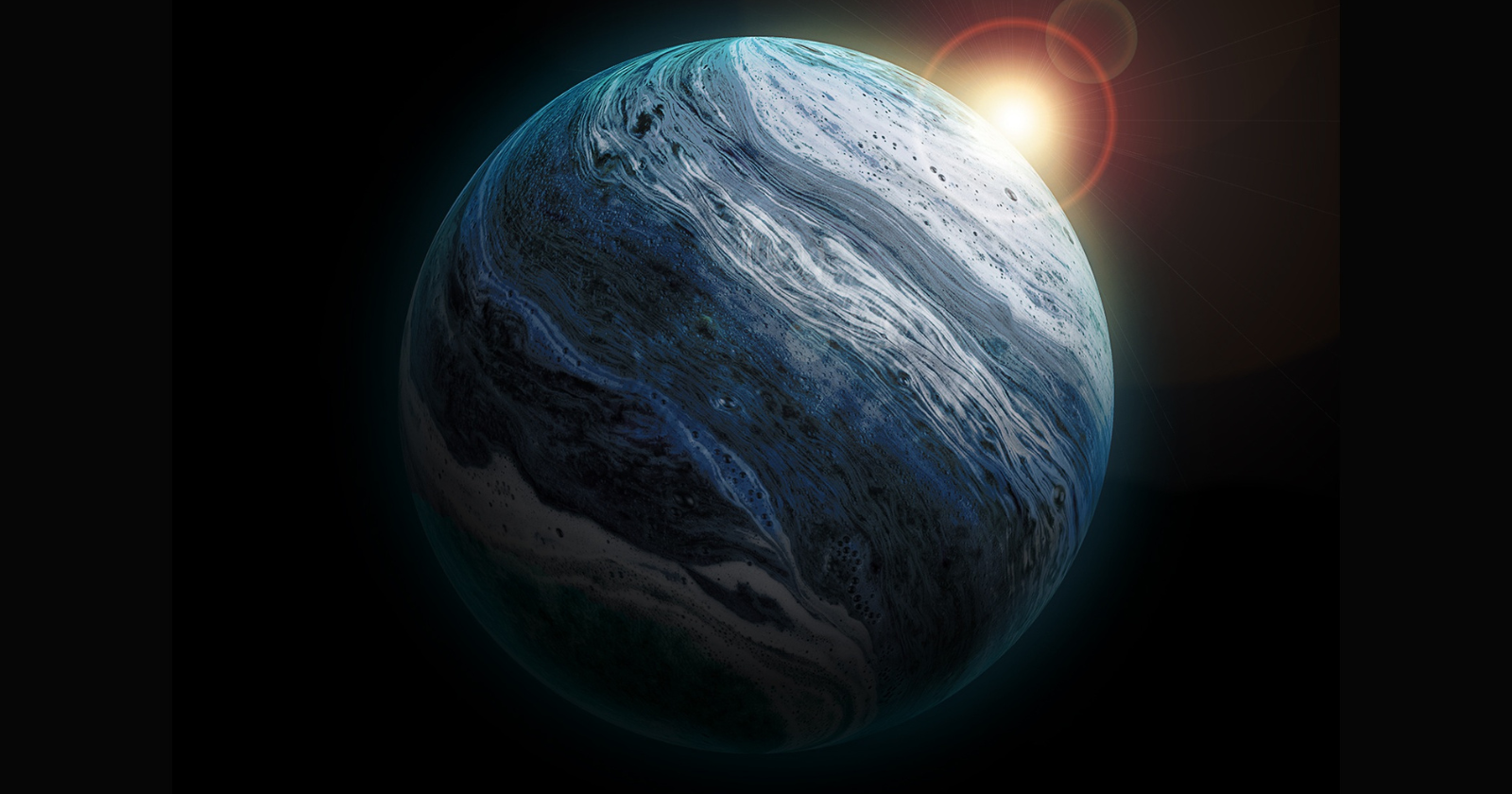
There is a planet 63 light-years from Earth where the rain is made of molten glass, the winds blow at 7,000 kilometres per hour, the daytime temperature is over 1,000 degrees Celsius, and the planet itself, viewed from space, is the same deep blue as Earth.
Beyond the Blue Mimic: The Future of Hunting Alien Worlds
For years, the astronomical community has been captivated by HD 189733b. On a telescope’s sensor, it appears as a serene, deep cobalt blue—a cosmic twin to Earth. But the reality is a nightmare: a world where it rains molten glass sideways at 7,000 kilometers per hour.
This “cosmic mimicry” highlights a pivotal moment in our understanding of the universe. We are moving past the era of simply finding planets and entering the era of characterizing them. The story of HD 189733b isn’t just about a hellish exoplanet; it’s a blueprint for how we will eventually find a world that is actually habitable.
The Shift from Detection to Atmospheric Fingerprinting
In the early days of exoplanet research, we relied on the “wobble” (Doppler spectroscopy) or the “shadow” (transit method) to prove a planet existed. We knew they were there, but they were just dots on a graph.
The trend is now shifting toward transmission spectroscopy. By analyzing the light that filters through a planet’s atmosphere as it passes in front of its star, scientists can identify the chemical “fingerprints” of the air.
With the deployment of the James Webb Space Telescope (JWST), we are no longer guessing. One can now detect carbon dioxide, methane, and water vapor in distant atmospheres. The future trend here is the search for biosignatures—combinations of gases, like oxygen and methane, that rarely coexist unless something living is producing them.
Why “False Positives” Like HD 189733b Matter
HD 189733b taught us a humbling lesson: colour is deceptive. The blue hue we see isn’t from oceans, but from scattering silicate particles. This warns astronomers that a “Blue Marble” image from a future telescope doesn’t automatically mean “Life.”
Future missions will need to cross-reference visual data with chemical analysis to avoid being fooled by cosmic mimics. This rigorous verification process is what will eventually lead to the first confirmed discovery of an Earth-like biosphere.
Solving the Mystery of Planetary Migration
One of the most jarring realizations from studying HD 189733b is the prevalence of “Hot Jupiters.” These gas giants are common across the galaxy, yet they are entirely absent from our own solar system.
Current astrophysical trends suggest these planets didn’t form where they are. Instead, they likely formed in the cold outer reaches of their systems and “migrated” inward, plowing through smaller rocky planets on their way to the star.
Understanding this migration is key to understanding our own history. By studying why some systems have Hot Jupiters and others (like ours) don’t, we can determine if our solar system is a cosmic anomaly or the standard model for stability. This research is essential for identifying which star systems are most likely to host stable, rocky planets where life can evolve undisturbed.
The Time-Lag Dilemma: Observing the Past
When we look at HD 189733b, we are looking 63 years into the past. This temporal gap is a fundamental constraint of astronomy, but it’s also a tool for understanding planetary evolution.
As we push our observations further—to planets hundreds or thousands of light-years away—we are effectively creating a “time-lapse” of the universe. We can see different stages of planetary aging and atmospheric decay across various systems.
The future of this field lies in Direct Imaging. While we currently rely on subtracting star-light to “see” planets, next-generation coronagraphs will allow us to block the star’s glare entirely and photograph the planet itself. We won’t just be seeing a dip in a light curve; we’ll be seeing a world.
Comparing the “Blue Dots”
- Earth: Blue due to liquid water oceans and nitrogen/oxygen Rayleigh scattering.
- HD 189733b: Blue due to molten glass droplets scattering light.
- Future Targets: Searching for “Pale Blue Dots” that show the spectral signature of chlorophyll or ozone.
Frequently Asked Questions
Could humans ever visit a planet like HD 189733b?
With current technology, no. It is 63 light-years away, and the environment—molten glass rain and 1,000°C temperatures—would destroy any known spacecraft instantly.
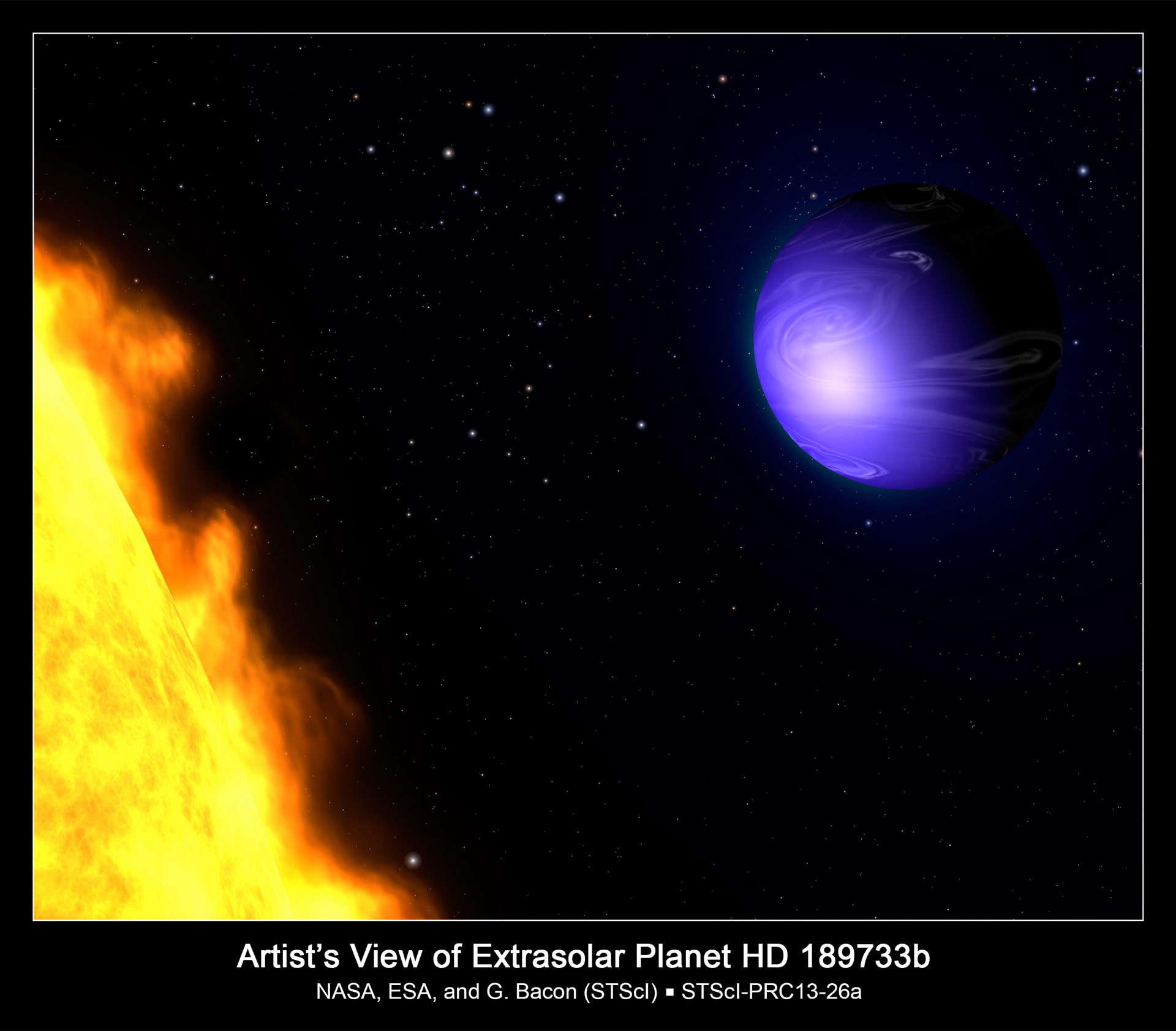
What is a “Hot Jupiter”?
A gas giant similar in mass to Jupiter but orbiting very close to its host star, resulting in extremely high surface temperatures.
How do we know it rains glass if we can’t see it?
Scientists use spectroscopy to identify silicates in the atmosphere. Combined with the known temperature (which melts these silicates) and wind speeds, the “glass rain” is the only physical explanation that fits the data.
Join the Conversation
Do you think we’ll find a “True Earth” in our lifetime, or are we alone in a universe of cosmic mimics? Let us know your thoughts in the comments below!
Want more deep dives into the cosmos? Subscribe to our Space Insights Newsletter.