
Thousands March in Belfast Against Racism Following Anti-Immigrant Violence
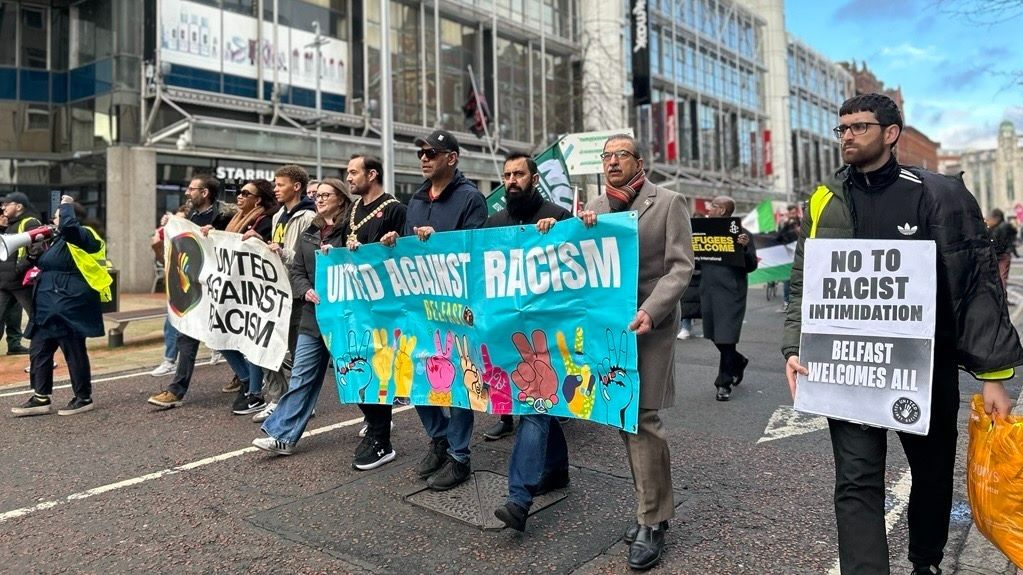
Thousands of demonstrators marched through Belfast on Saturday to oppose anti-immigrant violence following a series of riots triggered by a knife attack earlier this week. The “Together Against Hate” rally, held outside Belfast City Hall, followed two nights of disorder where masked mobs targeted ethnic minority businesses, homes, and individuals. Police have arrested 23 people in connection with the unrest, according to the Police Service of Northern Ireland.
Why did the unrest escalate into targeted violence?
The violence began after footage of a stabbing in north Belfast on Monday night circulated on social media, according to police reports. The attack left a man named Stephen Ogilvie seriously injured. Following the incident, a 30-year-old Sudanese man, Hadi Alodid, was charged with attempted murder. While the legal process began, misinformation and viral videos fueled localized protests that quickly descended into rioting. Masked individuals utilized the atmosphere to target specific ethnic minority neighborhoods, forcing families to flee their homes as vehicles were set ablaze and a Middle Eastern supermarket was destroyed.
Official figures from the Police Service of Northern Ireland indicate that race-related hate crimes have reached their highest recorded levels in two decades, highlighting a long-term trend of rising social tensions in the region.
How are community and political leaders responding?
Civic leaders, including Belfast’s new Lord Mayor Róis-Máire Donnelly, joined the rally to condemn the violence and call for unity. Ivanka Antova, chair of United Against Racism Belfast, stated that the city witnessed “families and young children fleeing their homes in terror.” Trade union leader Carmel Gates attributed the volatility to underlying poverty and social inequality, noting that the community has endured enough division. Speakers at the rally specifically credited local volunteers for providing food and shelter to displaced families during the height of the riots.
What are the long-term implications for social stability?
The recent unrest marks a significant escalation in Northern Ireland’s struggle with hate-motivated crime. While 17 people have been charged out of the 23 arrested, the incident has prompted a broader debate about the influence of social media in radicalizing local protests. Compared to previous instances of civil unrest in Northern Ireland, which were often rooted in historic sectarian divisions, this violence represents a shift toward racially motivated targeting. Authorities are now tasked with addressing both the immediate criminal investigation and the long-term challenge of protecting ethnic minority communities in an increasingly polarized digital environment.
Frequently Asked Questions
- Who was charged in the initial knife attack? Hadi Alodid, a 30-year-old Sudanese man, was charged with attempted murder after the incident in north Belfast.
- How many people have been arrested for the riots? Police have confirmed 23 arrests and 17 charges related to the recent disorder.
- What is the current trend of hate crimes in Northern Ireland? According to official records, race-related hate crimes are currently at their highest level in 20 years.
To follow updates on the ongoing police investigation and community recovery efforts, subscribe to our weekly newsletter for verified updates on Northern Ireland’s social and political landscape.
Have you been affected by these events or have a perspective on the changing social climate in Belfast? Share your thoughts in the comments section below.