
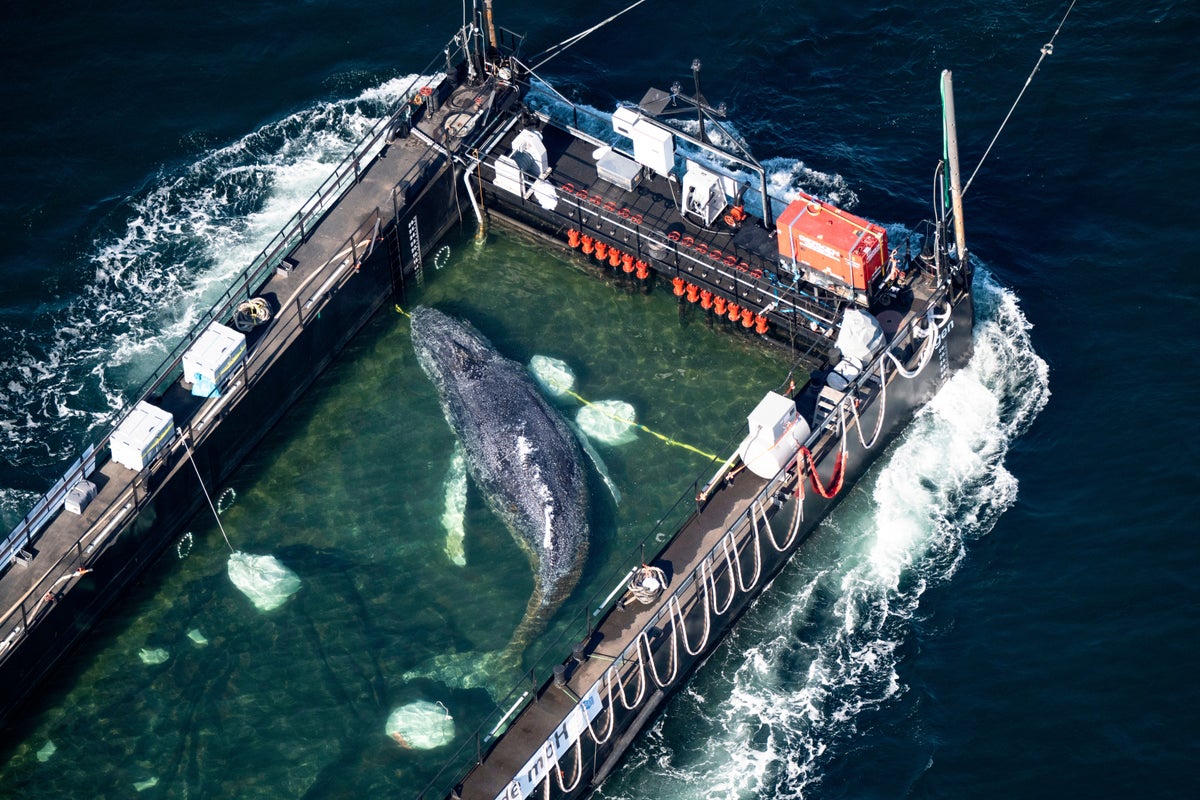
Timmy, Germany’s humpback whale, likely lived for only five days after controversial rescue effort
The humpback whale known as “Timmy” died roughly five days after a final, contentious rescue attempt failed to guide the animal back to the Atlantic Ocean, according to Till Backhaus, the environment minister for Mecklenburg-Western Pomerania. The whale was discovered dead on May 14 off the island of Anholt in the Kattegat, ending a months-long effort by officials and private initiatives to return the mammal to its natural habitat.
Data from a tracking transmitter attached to the whale’s dorsal fin indicates it likely succumbed on May 6 or 7. During those final five days, the whale traveled approximately 215 kilometers (134 miles) while heading toward the Baltic Sea, a direction inconsistent with reaching the Atlantic. Minister Backhaus stated that the transmitter signal was lost or the animal drifted aimlessly following that period.
Did You Know?
While German media and the public spent months referring to the whale as “Timmy” and assuming it was male, a post-mortem autopsy performed by officials revealed the animal was actually female.
What the Autopsy Revealed
An official examination of the carcass has not yet identified a definitive cause of death, according to Backhaus. The autopsy did, however, rule out several possibilities regarding the animal’s health and interactions with human activity. Officials found no evidence of serious injury, violence, or ingestion of foreign objects such as fishing nets.

The Impact of Resource Allocation
The death of the whale concludes a period of intense public and professional debate regarding the ethics of wildlife intervention. Throughout the spring, government officials, scientists, and private groups sparred over whether it was more humane to allow the sick, weakened animal to die naturally or to continue high-stakes intervention efforts. These efforts reached a peak on May 2, when the whale was transported on a barge toward the North Sea in a final attempt to return it to deeper waters.
Expert Insight: Samantha Carter
The case of “Timmy” highlights the significant operational and ethical trade-offs involved when high-profile wildlife rescue attempts collide with biological realities. The tension between public sentiment, which often drives the urgency for intervention, and the logistical failure to guide a displaced animal back to its migratory path, underscores the limitations of human-led rescue efforts in open-water environments.
What May Happen Next
The remains of the whale are currently being processed following the conclusion of the autopsy. According to the German news agency dpa, a portion of the whale’s remains will be converted into biodiesel in Denmark. Additionally, some of the bones are slated to be transferred to a Danish museum for scientific or educational display.
Frequently Asked Questions
When did the whale die?
According to tracking data cited by Minister Till Backhaus, the whale likely died on May 6 or 7, though it was not discovered until May 14.
Why was the whale in the Baltic Sea?
While the exact reason remains unclear, experts have suggested the whale may have lost its way while migrating or pursuing a shoal of herring.
Was the death caused by human interference?
No. An autopsy found no signs of violence, serious injury, or foreign objects such as nets, according to official reports.
How do you think public pressure should influence government decisions regarding the rescue of endangered or displaced wildlife?