
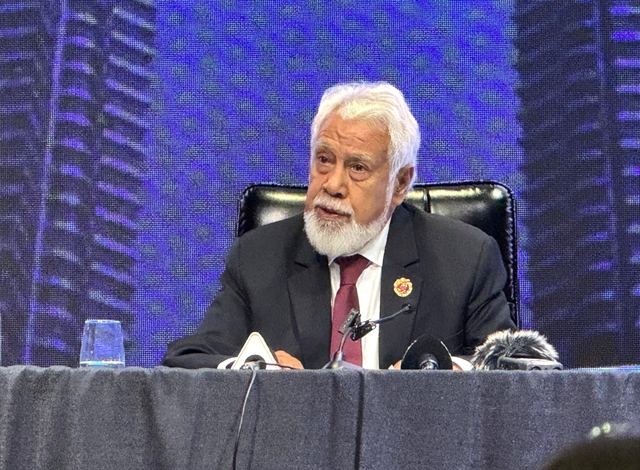
Timor-Leste PM’s official visit to strengthen traditional friendship
Vietnam and Timor-Leste are evolving their diplomatic friendship into a strategic economic partnership. Following Timor-Leste’s accession as ASEAN’s 11th member, the two nations are prioritizing high-tech agriculture, industrial labor exchanges, and digital infrastructure, anchored by Viettel’s dominant 52% market share in the Timorese telecommunications sector.
How will Timor-Leste’s ASEAN membership change its ties with Vietnam?
Timor-Leste officially became the 11th member of ASEAN in October last year. This isn’t just a symbolic title. It changes the entire gravity of how Dili interacts with Hanoi. According to Veeramalla Anjaiah, a Senior Research Fellow at the Centre for Southeast Asian Studies, this membership allows Timor-Leste to engage more deeply in regional cooperation and narrow development gaps.
Vietnam has been one of the most vocal supporters of this transition. By opening its embassy in Dili in April this year, Vietnam has created a permanent bridge for trade and policy coordination. We’re seeing a shift from “diplomatic support” to “practical integration.”
The real impact will be felt in how Timor-Leste adopts Vietnam’s integration playbook. Hanoi’s experience in transitioning from a closed economy to a global trade hub is exactly what Dili needs as it navigates the complex ASEAN regulatory environment. You can read more about ASEAN’s expansion strategies here.
Can the “Viettel Model” be replicated in other sectors?
The success of Viettel (Telemor) is the gold standard for bilateral cooperation. Launched in 2013, it didn’t just provide SIM cards; it transformed the country’s connectivity. When a company captures 52% of a national market, it proves that Vietnamese corporate models can scale in Timor-Leste.
Now, the trend is moving toward “hard” infrastructure and industry. Timor-Leste is eyeing Vietnam’s high-tech agriculture and industrial development. Ambassador João Pereira has indicated that the two nations are discussing sending Timorese workers to industrial zones in Vietnam, specifically in Bắc Ninh Province.
This is a smart move. Instead of just importing finished goods, Timor-Leste is importing knowledge. Workers learn modern production in Vietnam’s factories and then bring those skills home to build their own industrial base. It’s a human-capital exchange that’s far more valuable than a simple trade deal.
Where is the untapped potential in trade and agriculture?
Bilateral trade hit US$18.7 million last year, but that number is surprisingly low given the potential. Currently, the trade is lopsided, with Vietnam exporting rice and processed foods. But the future isn’t in selling rice; it’s in sharing the technology to grow it more efficiently.
Timor-Leste is eager to adopt Vietnam’s high-tech farming methods. Given the similarities in tropical climates, Vietnamese expertise in aquaculture and sustainable crop management could turn Timor-Leste into a regional food producer. According to VNA/VNS reports, the focus is shifting toward “substantive and effective” cooperation, which is code for moving from commodity trading to technical partnerships.
We should also watch the oil and gas sector. Both nations have significant experience in energy extraction. A joint venture or knowledge-sharing agreement here could stabilize energy costs for both parties and increase their leverage within the ASEAN energy grid.
What happens next for the Dili-Hanoi axis?
The official visit of Prime Minister Kay Rala Xanana Gusmão to Vietnam and his attendance at the 3rd ASEAN Future Forum mark a new chapter. The focus is now on “connectivity.” This means more than just flights or ships; it’s about digital connectivity and business networking.
Expect to see more MoUs focusing on human resource training and vocational education. As Timor-Leste integrates into ASEAN, it will need a workforce that can compete with Thailand, Indonesia, and Vietnam. Using Vietnam as a training ground is the fastest way to achieve that.
Frequently Asked Questions
When did Timor-Leste join ASEAN?
Timor-Leste officially became the 11th member of ASEAN in October last year.
What is the most successful Vietnamese investment in Timor-Leste?
Viettel’s Telemor is the most successful, holding approximately 52% of the telecommunications market share.
Which Vietnamese province is involved in labor exchange talks?
Bắc Ninh Province has been specifically mentioned as a potential destination for Timorese workers to gain industrial experience.
What are the primary Vietnamese exports to Timor-Leste?
The main exports are rice, consumer goods, and processed food products.
Want to stay ahead of Southeast Asian market trends?
The shift in ASEAN dynamics is happening fast. Join our newsletter for deep-dive analyses on regional trade and emerging markets.
Or tell us in the comments: Do you think the “Viettel Model” can work in other developing ASEAN nations?