

Top Selling Smartwatch Brands Q1 2026: Apple Leads as Samsung Drops
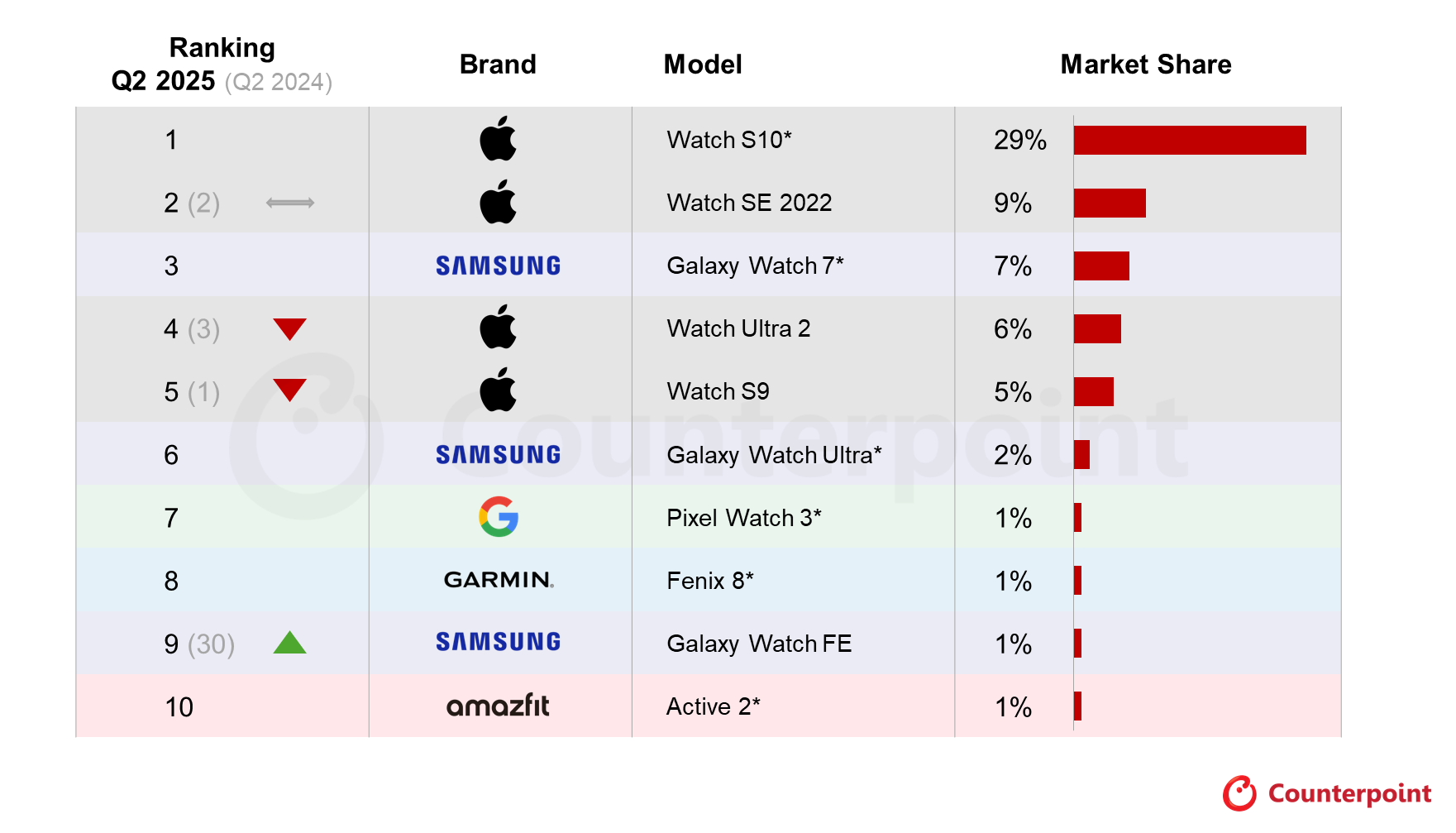
Apple maintained its lead in the global smartwatch market with a 23% share in Q1 2026, as total shipments grew 4% year-over-year. According to Counterpoint Research, a consumer shift toward premium health sensors drove a 6% increase in average selling prices, while Samsung’s market share dropped to 5%.
Why is Apple growing while Samsung’s market share drops?
Apple’s shipments rose 21% annually, according to Counterpoint Research. Much of this growth stems from the North American market, which accounts for more than half of the company’s total shipments. The report attributes this success to new model releases and a focus on advanced health and tracking features.
Samsung saw a sharp decline during the same period. Shipments fell 28% year-over-year, pushing the company to fifth place globally. Counterpoint analysts state consumers are migrating toward models that offer more sophisticated sensors and premium designs, a trend that has negatively impacted Samsung’s current positioning.
How is Huawei dominating the Chinese wearable market?
Huawei currently holds the second spot globally with a 17% market share, following a 12% increase in shipments. Its strength is concentrated in China, where the local smartwatch market grew by 15% in the first quarter. In that specific region, Huawei captured 40% of the market share, according to Counterpoint Research.
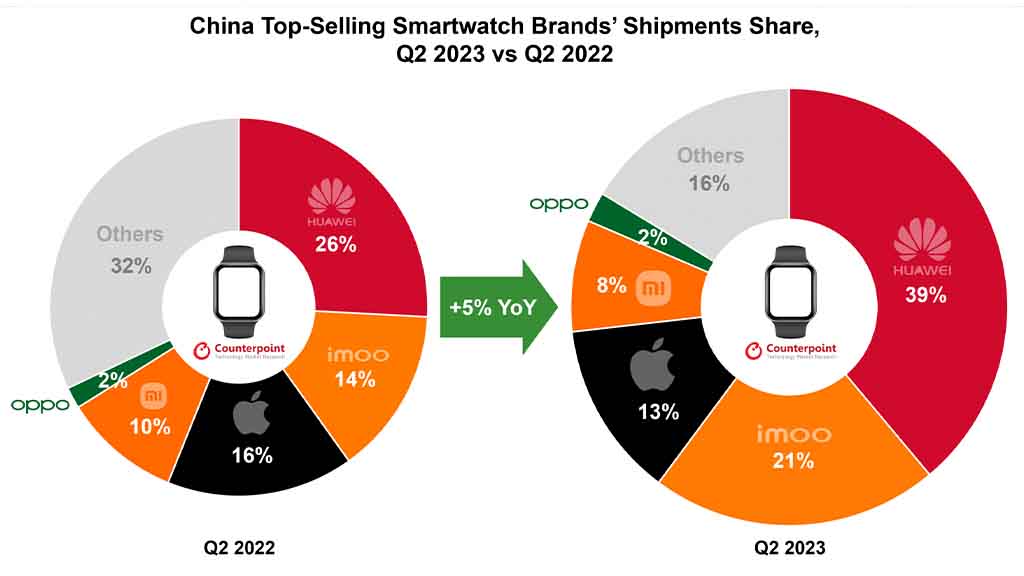
Xiaomi also continues to expand, with shipments increasing by 9% to reach a 10% global market share. These figures highlight a growing divide between Western markets, dominated by Apple, and the Asian market, where Chinese manufacturers hold significant sway.
What role do niche wearables like Imoo play?
Not all growth happens in the flagship adult segment. Imoo, a brand specializing in smartwatches for children, secured a 7% global market share with 2% growth. This suggests that specialized, age-specific wearables are becoming a stable pillar of the industry.
Future Trends: Where is the smartwatch market heading?
The data reveals a clear trajectory toward “premiumization.” The 6% increase in average selling prices proves users will pay more for hardware that functions as a health diagnostic tool rather than a simple notification screen.
We can expect future competition to center on three specific areas:
- Advanced Bio-Sensing: As users move away from basic models, brands will likely race to integrate non-invasive glucose monitoring or advanced blood pressure tracking.
- Regional Ecosystems: Huawei’s 40% share in China suggests a “walled garden” approach is working outside the US, potentially leading to more region-specific hardware features.
- Segment Diversification: The success of Imoo indicates a future where brands stop trying to make one watch for everyone and instead build dedicated devices for children, athletes, or the elderly.
| Brand | Market Share | Shipment Trend |
|---|---|---|
| Apple | 23% | +21% |
| Huawei | 17% | +12% |
| Xiaomi | 10% | +9% |
| Imoo | 7% | +2% |
| Samsung | 5% | -28% |
Frequently Asked Questions
Which smartwatch brand is currently the global leader?
Apple is the leader with a 23% market share as of Q1 2026.
Why did Samsung’s market share decrease?
According to Counterpoint Research, Samsung’s shipments fell 28% as consumers shifted toward premium models with more advanced health sensors and designs.
Which brand dominates the Chinese smartwatch market?
Huawei dominates China with a 40% market share.
Are smartwatch prices going up?
Yes, the average selling price for smartwatches globally rose by 6% in the first quarter of 2026.
Join the Conversation
Are you upgrading to a premium health-focused watch, or do you prefer basic fitness trackers? Let us know in the comments below or subscribe to our newsletter for the latest wearable tech analysis.