

Toronto’s World Cup Stadium Expansion
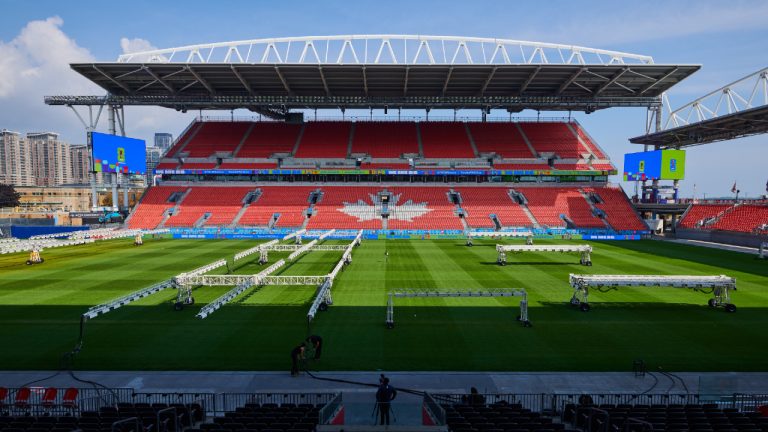
Toronto Stadium, known primarily as BMO Field, has expanded its capacity to 44,000 following a $146-million upgrade to meet FIFA standards for the World Cup. The venue will host Canada’s opening Group B match against Bosnia-Herzegovina on June 12. This evolution marks the latest chapter for a facility that began as a $63-million project in 2006.
How did BMO Field evolve into a World Cup venue?
The most recent $146-million renovation brings the venue up to FIFA standards. These upgrades include a fresh playing surface, new video boards, more suites, and an expanded visitors’ locker room. To accommodate the tournament, 16,100 temporary seats were added.
Due to sponsorship issues, the venue is rebranded as Toronto Stadium for the duration of the tournament. This follows previous major renovations between 2014 and 2016 that cost $150 million. Those earlier phases increased capacity to 30,000 and added a canopy over three stands.
What is the history behind the stadium’s construction?
The stadium’s origins are a “tangled web” that began in 2000 when FIFA president Sepp Blatter asked Canada to host the inaugural FIFA U-19 Women’s World Championship in 2002. While that event was a success, a 2002 SARS outbreak derailed Canada’s hope of staging the 2007 Women’s World Cup. FIFA subsequently advised Canada to host the 2007 Men’s U-20 World Cup instead.
To ensure a permanent tenant, Canada Soccer collaborated with Richard Peddie, then CEO of Maple Leaf Sports & Entertainment (MLSE). This led to an agreement for a Major League Soccer expansion franchise in Toronto, conditional on the stadium being completed for the 2007 U-20 tournament. The project also benefited from a 2004 International Football Association Board ruling that permitted artificial turf for international matches.
How was the stadium funded and built?
The original construction budget was set at $63 million, with an additional $10 million for land. Funding was a complex “dance” between three levels of government and the private sector. The federal government, through Infrastructure Canada, contributed $27 million, while Ontario provided $8 million.
The City of Toronto provided the land and $9.8 million, ultimately taking ownership of the stadium. MLSE covered $18 million, which included $8 million for construction and $10 million for naming rights. PCL served as the general contractor, with construction beginning on January 2, 2006.
What other sports have shaped the venue?
While built for soccer, BMO Field has expanded its utility. Upgrades between 2014 and 2016 included accommodations for a CFL field and a dedicated locker room for football players. This allowed the Toronto Argonauts to move their home games to the venue starting in the 2016 season.
The facility’s growth has been overseen by figures like Bob Hunter, who spearheaded the original construction and the subsequent $150-million upgrade. According to Kevan Pipe, the stadium served as a “turning point” for the game of soccer in Canada.
What may happen next for the venue?
Following the World Cup tournament, the venue may revert to its BMO Field branding once sponsorship issues are resolved. The use of 16,100 temporary seats suggests that capacity could fluctuate based on future international requirements.
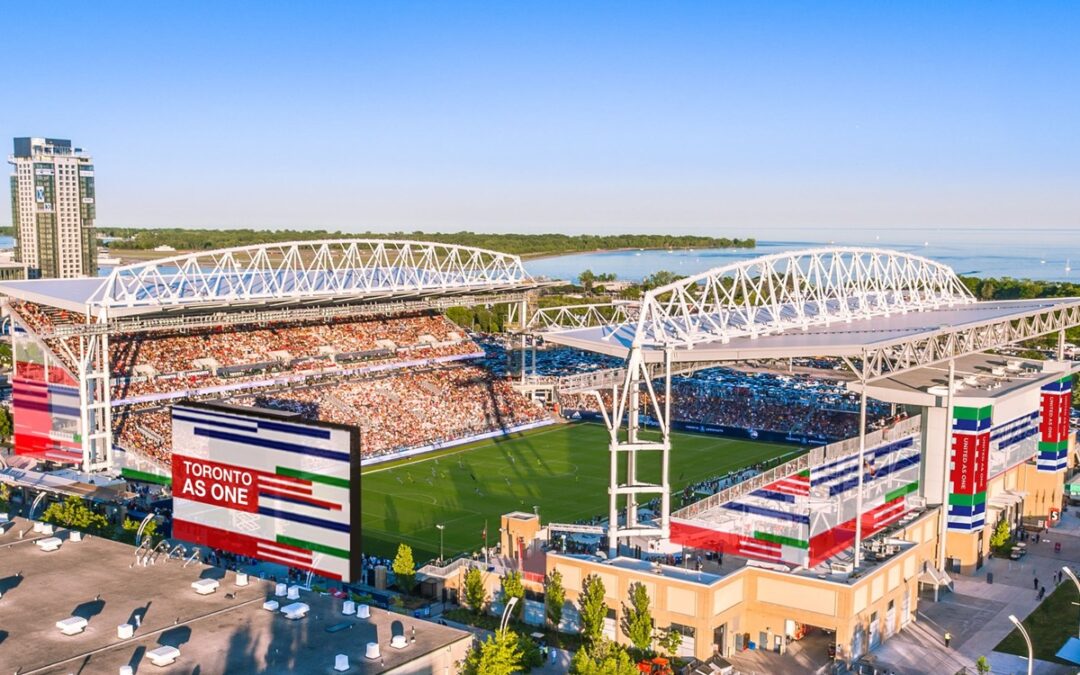
Given the stadium’s history of multi-sport adaptation, it is possible that further modifications could occur to better serve both MLS and CFL needs. Future investments may continue to flow from MLSE, which currently operates the city-owned venue.
Frequently Asked Questions
What is the current capacity of the stadium for the World Cup?
The capacity has been increased to 44,000 through the addition of 16,100 temporary seats.
Who owns Toronto Stadium (BMO Field)?
The stadium is owned by the City of Toronto and operated by Maple Leaf Sports & Entertainment.
Why was the stadium rebranded as Toronto Stadium?
The venue was rebranded for the duration of the tournament due to sponsorship issues.
Do you think multi-purpose stadiums are better for cities than sport-specific venues?