
Tracing Medieval Rewilding Through Italy’s Ancient Oaks
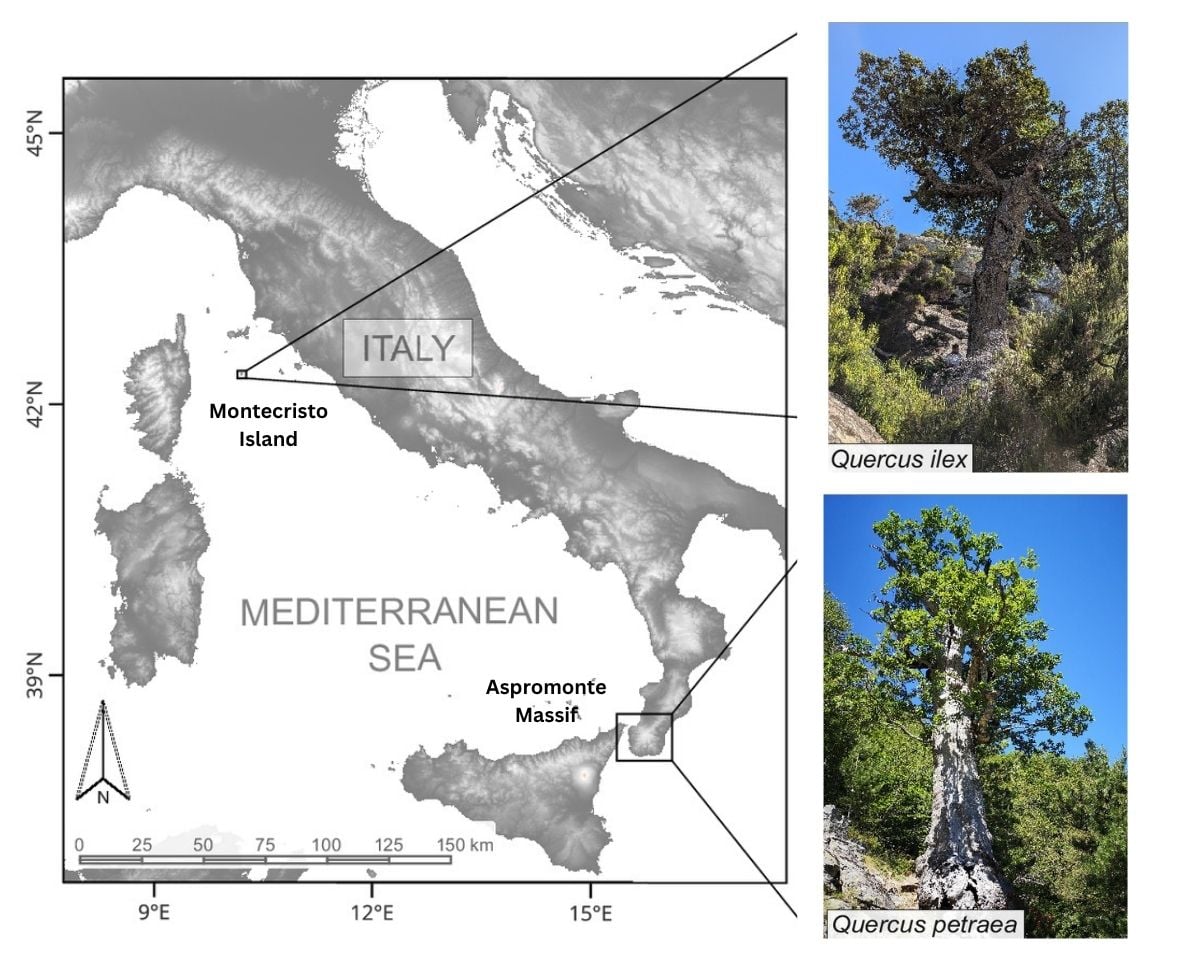
Ancient oak forests in Italy regenerated between 1400 and 1650 following population collapses caused by the Black Death, according to a 2026 study by Piovesan et al. published in Proceedings of the National Academy of Sciences (PNAS). This research demonstrates how demographic shifts trigger regional rewilding, as seen in the distinct recovery patterns of Montecristo Island and the Aspromonte mountains.
How do population declines trigger forest rewilding?
Reduced human activity allows forests to reclaim land previously used for agriculture. According to the Piovesan et al. study, the centuries following the Black Death and subsequent plague outbreaks in Italy led to a sharp drop in farming, grazing, and wood harvesting. This vacuum created the necessary conditions for oak forests to expand and regenerate across diverse landscapes.
This process isn’t just a historical curiosity. It provides a blueprint for modern rewilding initiatives. When humans step back, nature doesn’t just return; it often establishes complex structures that are more resilient than managed plantations. The Italian data shows that this rewilding was a regional phenomenon, affecting both coastal islands and high-altitude mountains simultaneously.
Why does tree size differ from actual age in ancient oaks?
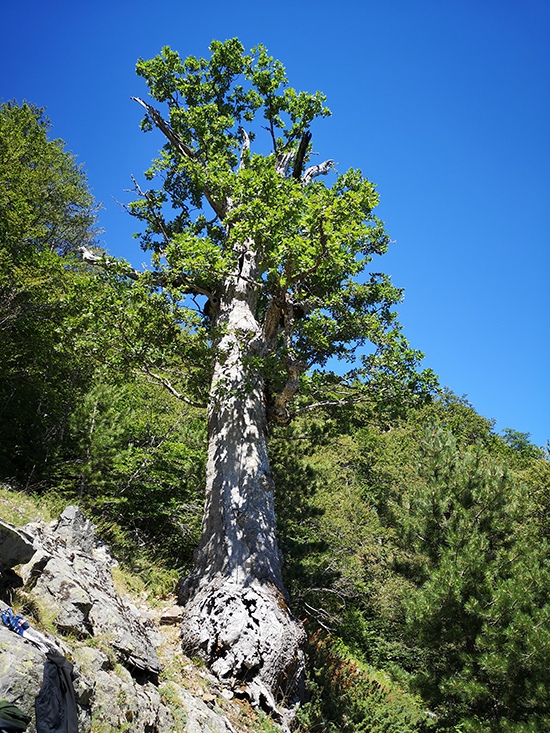
Diameter is an unreliable indicator of a tree’s age. Piovesan et al. used radiocarbon dating to reveal that the largest trees in the studied forests weren’t always the oldest. Some ancient oaks grew slowly over centuries, remaining smaller than younger trees that benefited from faster growth conditions.

This finding challenges traditional forestry assumptions. It suggests that conservationists cannot rely on visual size alone to identify and protect the most ancient genetic lineages. To accurately map ancient tree populations, researchers must use precise dating methods rather than simple measurements.
What happens when Mediterranean forests recover at different speeds?
Environmental stressors dictate the pace of forest regeneration. The 2026 study compared two drastically different sites to show how geography alters rewilding.
- Montecristo Island: A Mediterranean environment with mild growing conditions. Here, tree establishment increased rapidly, creating the dense oak forests noted in later historical records.
- Aspromonte Mountains: A high-elevation landscape with colder temperatures and shorter growing seasons. In this region, recovery was gradual, reflecting the struggle to establish in a harsher climate.
This contrast proves that while a regional trigger—like a pandemic—can start the process, the local ecosystem determines the final structure. This suggests that future climate restoration projects must be tailored to specific micro-climates rather than applying a one-size-fits-all approach.
How will these findings impact future carbon capture strategies?
The structure of ancient forests plays a critical role in climate mitigation. The study links these age patterns to “structurally complex forests,” which are known to be better at carbon capture than young, uniform forests.
Because these Italian forests preserved the evidence of a demographic shift from 600 years ago, they serve as living laboratories. Future trends in conservation will likely shift toward protecting these “legacy forests” because they sequester carbon more efficiently and maintain higher biodiversity than newly planted forests. The ability of a forest to “remember” a historical event through its age structure suggests that protecting existing old-growth is more valuable than attempting to recreate it.
Comparison of Forest Recovery Patterns
| Feature | Montecristo Island | Aspromonte Mountains |
|---|---|---|
| Climate | Mild Mediterranean | Cold, High-Elevation |
| Recovery Speed | Rapid | Gradual |
| Establishment Period | 1400–1650 | 1400–1650 |
Frequently Asked Questions
Did the Black Death actually help the environment?
According to Piovesan et al. (2026), the resulting population decline reduced human pressures like grazing and farming, which allowed forests to regenerate and expand across Italy.
Can you tell a tree’s age by its thickness?
No. The study found that some of the oldest oaks remained smaller than younger trees due to slower growth rates, proving that diameter is a poor indicator of age.
Why are ancient forests better for the planet?
Structurally complex forests, like those found in the study, are generally more effective at carbon capture and supporting biodiversity than simplified, managed forests.
What do you think about the link between human population shifts and nature’s recovery? Should we prioritize “passive rewilding” over active planting? Let us know in the comments below or subscribe to our newsletter for more insights into ecological history.