
Trifluridine/Tipiracil Fails to Improve Disease-Free Survival in ctDNA-Positive Colorectal Cancer
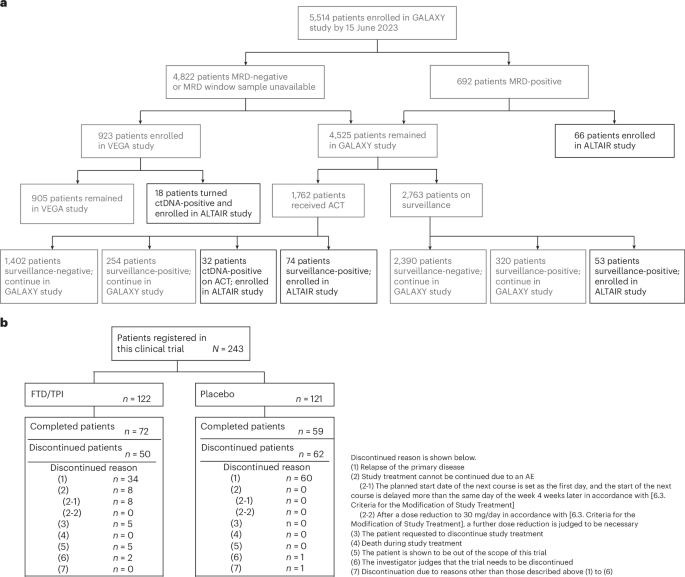
In the randomized, double-blind phase 3 ALTAIR trial, patients with resected colorectal cancer who tested positive for circulating tumor DNA during post-adjuvant surveillance did not see a significant improvement in disease-free survival when treated with trifluridine/tipiracil hydrochloride. The study, which compared the therapy against a placebo, highlights the ongoing challenges in managing recurrence in patients identified through molecular markers.
Understanding the ALTAIR Trial Findings
The primary goal of the ALTAIR trial was to determine if early intervention with trifluridine/tipiracil hydrochloride could extend the time patients remained disease-free after their initial surgery. Despite the use of circulating tumor DNA to identify patients at risk during post-adjuvant surveillance, the treatment failed to demonstrate a statistically significant benefit over the placebo group.
What May Happen Next
Following these results, researchers may look toward different therapeutic combinations or alternative treatment protocols for patients who show circulating tumor DNA after surgery. It is likely that the medical community will analyze this data to refine how circulating tumor DNA is used in clinical decision-making. Future investigations could focus on whether different patient subsets might respond differently, or if other agents might offer more success in this high-risk setting.
Frequently Asked Questions
What was the main finding of the ALTAIR trial?
The trial found that trifluridine/tipiracil hydrochloride therapy did not significantly prolong disease-free survival compared to a placebo in patients with resected colorectal cancer who were positive for circulating tumor DNA.
Who were the participants in this study?
The participants were patients with resected colorectal cancer who were identified as positive for circulating tumor DNA during their post-adjuvant surveillance period.
What type of study was this?
The ALTAIR trial was a randomized, double-blind phase 3 clinical study.
How do you think these findings might change the way doctors monitor patients after colorectal cancer surgery?