
Trump Announces US Killed Tren de Aragua Leader Niño Guerrero
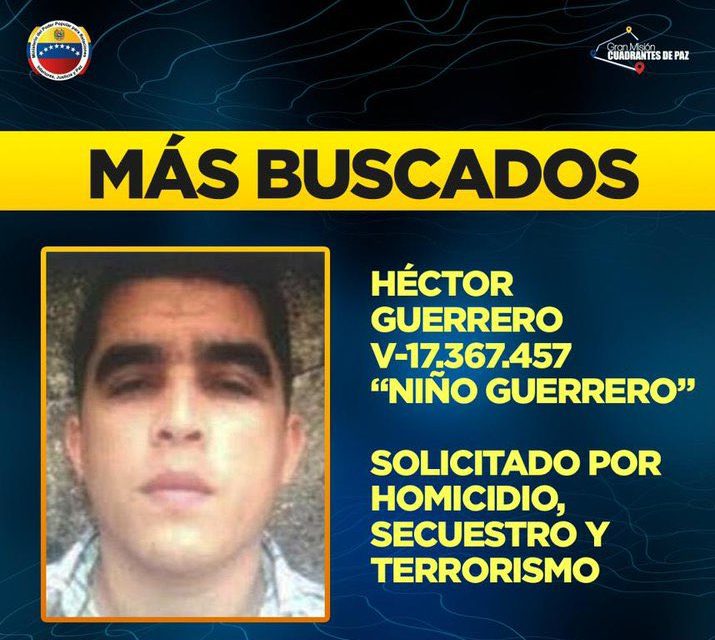
President Trump announced via Truth Social that U.S. forces killed Héctor Rusthenford Guerrero Flores, the leader of the Venezuelan gang Tren de Aragua. According to Trump, the operation was coordinated with Venezuelan partners to eliminate the 42-year-old leader, known as “Niño Guerrero,” whom the U.S. designates as a foreign terrorist organization.
What happens to Tren de Aragua after Niño Guerrero’s death?
The removal of a central leader often triggers a power vacuum within transnational criminal organizations. Tren de Aragua began 10 years ago in a Venezuelan prison in Aragua state before expanding into a multi-country network, according to NOS Nieuws.
Historically, when the U.S. eliminates high-value targets in terrorist or cartel structures, the organization either fragments into smaller, more aggressive cells or undergoes a violent succession struggle. Because Guerrero operated as a “king” with absolute control—even while imprisoned—his absence may destabilize the gang’s internal hierarchy.
How does the “terrorist” designation change U.S. operations?
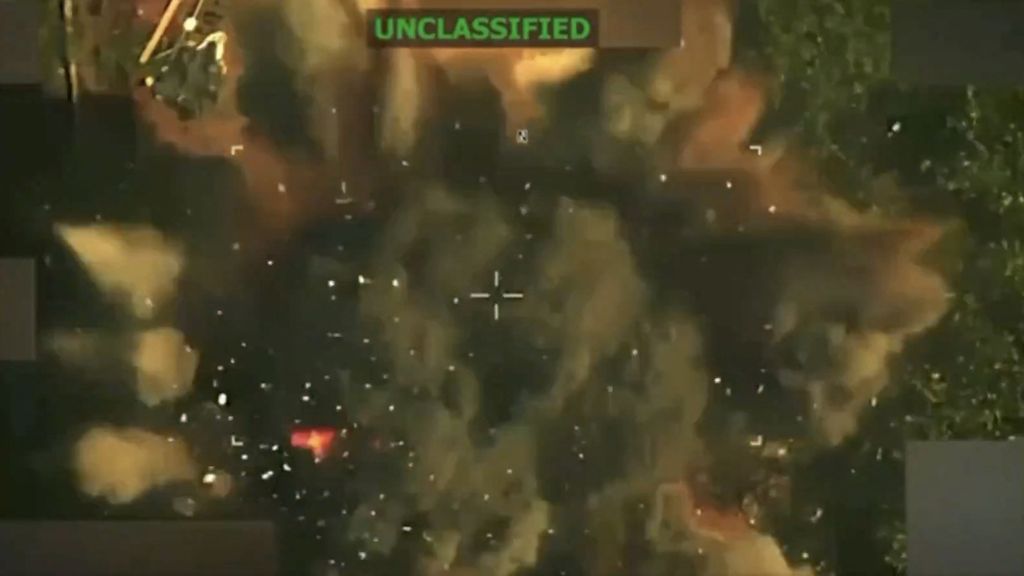
The shift from treating Tren de Aragua as a drug cartel to a “foreign terrorist organization” allows the U.S. to use military assets rather than just law enforcement. This distinction is evident in the tactics used to target Guerrero, which Trump illustrated via a Truth Social video showing an aerial view of a building followed by an explosion.
This kinetic approach has already resulted in significant casualties. NOS Nieuws reports that since the terrorist designation, the U.S. has conducted dozens of attacks on suspected drug boats in the Caribbean and Pacific, leaving more than 200 people dead.
Comparing Law Enforcement vs. Military Strikes
Traditional drug interdictions focus on seizures and arrests. The current strategy, as evidenced by the strike on Guerrero and the boat attacks, prioritizes the permanent removal of targets. This marks a departure from standard extradition processes, though the U.S. did use a different tactic in January when it abducted President Maduro from Venezuela to face drug charges.
Why is the U.S.-Venezuela security dynamic shifting?
The strike on Guerrero reveals a complex contradiction in U.S. foreign policy. While Trump has claimed that Nicolás Maduro had ties to Tren de Aragua, he simultaneously stated that the operation to kill Guerrero was “closely coordinated with our friends in Venezuela.”
This suggests a trend where tactical security goals—such as eliminating high-profile gang leaders—override broader diplomatic conflicts. The U.S. is effectively operating a dual-track policy: pursuing the highest levels of the Venezuelan government for drug charges while coordinating with elements on the ground to dismantle criminal networks.
Frequently Asked Questions
Who was Niño Guerrero?
Héctor Rusthenford Guerrero Flores was the leader of Tren de Aragua. He previously served a prison sentence for drug trafficking but escaped during a deadly prison riot in 2023.
What is Tren de Aragua?
It is a Venezuelan criminal network that started in the Aragua state prison system and grew into a transnational organization active in multiple countries.
How was the leader killed?
According to President Trump, he was killed in a U.S. operation involving an explosion, though specific dates and locations were not disclosed.
Want to stay updated on transnational security trends?
Leave a comment below with your thoughts on the U.S. strategy in South America or subscribe to our newsletter for deep-dive analysis on global crime networks.