

Trump-Iran Framework Agreement: Key Facts and Unanswered Questions
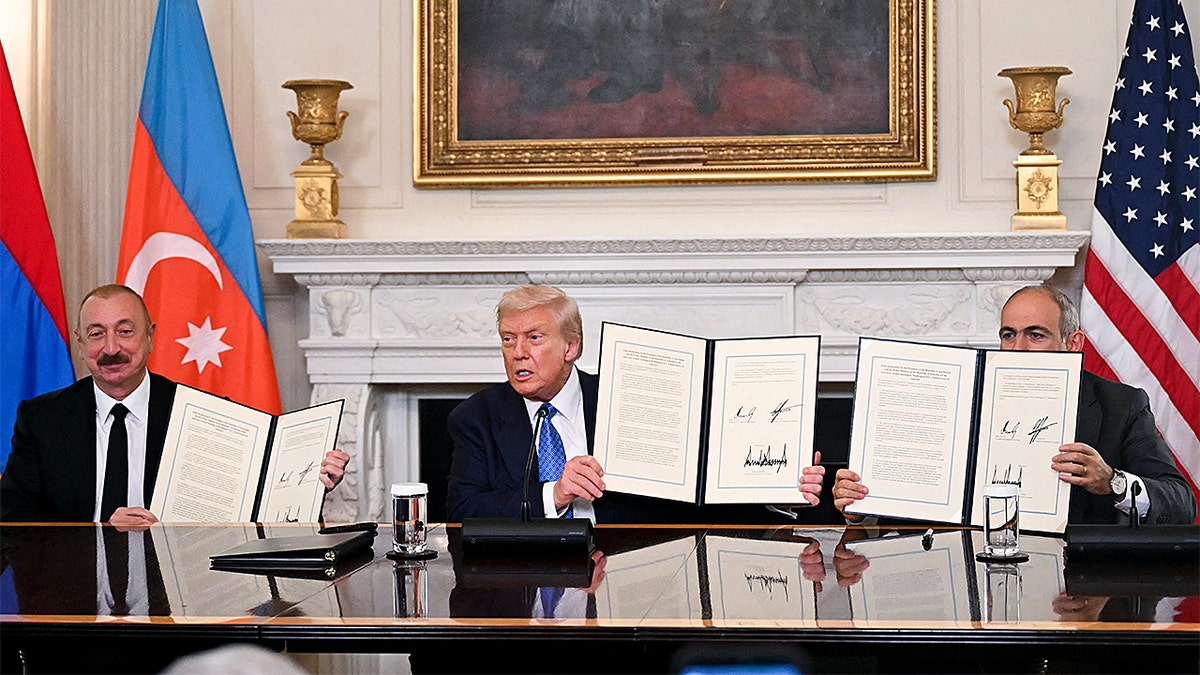
President Donald Trump and Iran have signed a framework agreement establishing a 60-day immediate ceasefire to facilitate long-term peace negotiations, according to Richard Pérez-Peña of The New York Times. The deal focuses on lifting maritime blockades in the Strait of Hormuz but defers critical disputes over nuclear enrichment and economic sanctions to future talks.
What happens to the Strait of Hormuz?
Both the U.S. and Iran agreed to lift their respective blockades of the Strait of Hormuz. However, the timeline for reopening the waterway varies by source. President Trump stated that maritime traffic should return to normal by Friday, the date of the framework’s signing ceremony in Geneva.
Other U.S. officials disagree with that timeline, suggesting the process could take weeks. The U.S. military must first ensure the waterway is clear of mines before thousands of idling ships can pass safely.
A dispute remains over payment. While Trump stated there would be no tolls for passage, an Iranian official indicated that Iran intends to impose fees on ships. Legal experts cited by The New York Times note that such fees would violate international law, though it remains unclear if the U.S. will accept the arrangement.
Will Iran’s nuclear program and missile capabilities be limited?
The short-term ceasefire does not address Iran’s nuclear program. Both parties agreed to defer these discussions to long-term negotiations. It remains uncertain if Iran will stop high-level uranium enrichment or surrender its current stockpiles.
President Trump has insisted that Iran must never possess a nuclear bomb, a point he used to justify previous military actions. Iran maintains it has never intended to build a weapon. Trump suggested Iran might be allowed to continue low-level enrichment for power plant fuel.
Iran’s missile program faces a similar delay. While Israel demands a total halt to missile development, The New York Times reports that this has not been a primary priority for the Trump administration recently.
Does the ceasefire extend to the conflict in Lebanon?
The scope of the truce is contested. Pakistan, which mediated the deal, and Iran both claim the agreement mandates a cessation of hostilities on all fronts, including Lebanon. However, neither Israel nor Hezbollah—the Iranian-backed militia—are signatories to the accord.
Israeli Prime Minister Benjamin Netanyahu expressed disagreement with parts of the Trump-Iran deal on Monday. He explicitly stated that Israel will not withdraw its forces from Lebanon, though he did not rule out a general ceasefire.
The friction extends to the White House. President Trump has criticized Netanyahu’s conduct in Lebanon, calling the Prime Minister “crazy” for leading the war aggressively.
When will sanctions lift and frozen assets be returned?
Economic relief is not part of the immediate 60-day window. Sanctions relief is reserved for the long-term agreement. For Tehran, removing these sanctions is a vital requirement for any lasting peace.
The status of Iran’s frozen overseas assets remains murky. Reuters reported that the United Arab Emirates might release $10 billion in Iranian funds, though the UAE government denied this claim. Vice President J.D. Vance stated Monday that the U.S. has promised no financial benefits to Iran during the current truce.
Will gas prices drop because of the deal?
Prices are unlikely to fall immediately. Even with the blockade lifted, the backlog of ships in the Persian Gulf will take time to clear. Furthermore, the repair of oil and gas infrastructure damaged by bombing will be a lengthy process.
Analysts suggest that while long-term stability could lower energy costs, the immediate impact will be muted by these logistical and structural hurdles.
Frequently Asked Questions
How long is the current ceasefire?
The immediate ceasefire lasts for 60 days, during which both sides will negotiate a long-term peace treaty.

Who mediated the agreement between the U.S. and Iran?
Pakistan served as the mediator for the framework agreement.
Is Israel part of this peace deal?
No. Israel is not a party to the agreement, and Prime Minister Netanyahu has voiced opposition to certain terms.
Will the U.S. pay Iran to maintain the truce?
According to Vice President J.D. Vance, the U.S. has not promised any financial benefits to Iran during the 60-day ceasefire.
What do you think about the 60-day window? Is it enough time to secure a long-term peace deal? Share your thoughts in the comments below or subscribe to our newsletter for real-time geopolitical updates.