
Trump’s War on Culture: The Battle for American Art and History
Donald Trump has launched a cultural campaign focused on “American excellence” through gilt architecture and the removal of “improper ideology” from museums, according to recent reports. These efforts include a projected $600 million White House ballroom and executive orders targeting the Smithsonian’s historical narratives.
How has the Trump administration altered national art and architecture?
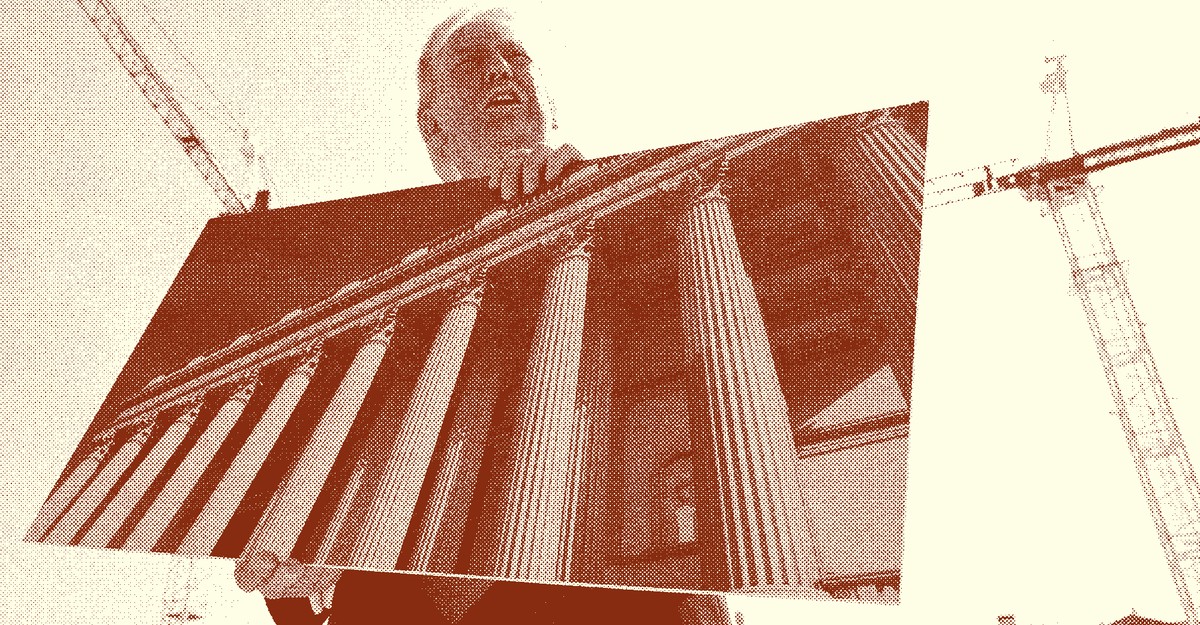
The administration’s design approach emphasizes size, gilt, and jingoism. This is evident in the Independence Arch, or “Arc de Trump,” which could become the world’s tallest triumphal arch featuring gold-lettered inscriptions and gilded statues.

At the White House, the administration razed the East Wing to build a ballroom with a projected cost of $600 million. The Rose Garden was also paved over to mimic the beach club at Mar-a-Lago, complete with yellow-striped umbrellas.
Trump previously installed himself as chairman of the Kennedy Center and added his name to the building to promote a “Vision for a Golden Age in Arts and Culture.” A federal judge recently ordered the removal of his name from the center.
What measures were taken to change museum exhibits?
In March, Trump issued an executive order to “Restor[e] Truth and Sanity to American History.” This order directed J.D. Vance to remove “improper ideology” from the Smithsonian.
The administration later launched a review to eliminate “divisive or partisan narratives” from museums. In August, the Smithsonian was ordered to provide internal memos and plans for upcoming shows for vetting purposes.
Specific actions include the National Museum of American History briefly cutting a mention of Trump’s impeachments in July. Additionally, a federal appeals court recently permitted the removal of a slavery exhibit from a park in Philadelphia.
How does this compare to previous U.S. cultural campaigns?
U.S. administrations have historically used art to extend influence. During World War I, Woodrow Wilson’s Committee on Public Information created the “I Want You” Uncle Sam posters. Franklin D. Roosevelt used the War Advertising Council to promote Rosie the Riveter during World War II.
Other leaders used more restrictive measures. Richard Nixon monitored anti-war activists like Jane Fonda and attempted to deport John Lennon in 1972. In 1990, Congress mandated a “decency and respect” standard for National Endowment for the Arts grants following controversy over Andres Serrano’s Piss Christ.
These actions mirror theories from a 1947 George Orwell essay, which argued that authoritarian campaigns produce superficial literature because they treat history as something to be created. Anne Applebaum noted a similar trend in 20th-century Soviet propaganda, where “inspiring” posters clashed with an “impoverished reality.”
What may happen to American museums next?
The influence of the administration may face continued limits through artistic resistance. In January, the National Museum of African Art opened a show featuring LGBTQ artists from Africa and the diaspora.
Other projects, such as an augmented-reality display on the National Mall highlighting five women, are sidestepping the administration’s stance on DEI. Lonnie Bunch, the 73-year-old secretary of the Smithsonian, stated in March that he has not allowed any changes at the institution.
However, future stability is uncertain. Reports suggest Bunch may be inching closer to leaving his post. The administration may continue to use the threat of withholding funding to pressure museums and artists into obeying its vision.
Frequently Asked Questions
What was the goal of the March executive order regarding museums?
The order sought to “Restor[e] Truth and Sanity to American History” and directed J.D. Vance to remove “improper ideology” from the Smithsonian.
What is the “Arc de Trump”?
It is the nickname for the Independence Arch, which the president has embraced and which could be the tallest triumphal arch in the world.
How did the administration target the National Museum of American History?
The museum briefly removed a mention of Trump’s impeachments from an exhibit in July, and the administration ordered the Smithsonian to submit internal memos and show plans for vetting in August.
How should a society balance national identity with intellectual liberty in its public museums?