
TSMC Capacity Shortage Drives Tech Giants to Samsung Foundry
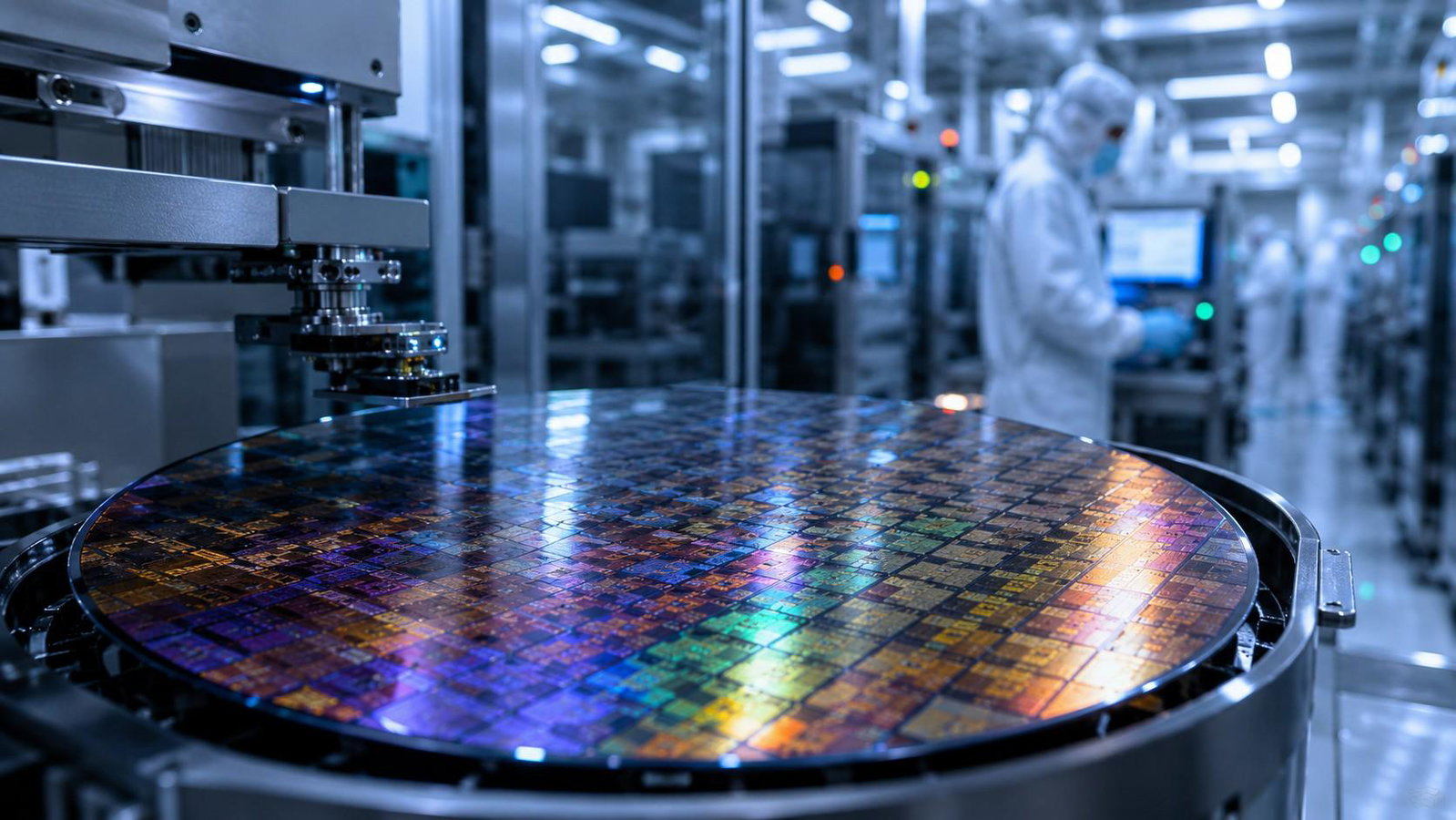
TSMC has exhausted much of its advanced node production capacity, forcing major clients including AMD, Google, and Tesla to evaluate Samsung Foundry as an alternative. According to industry reports, the surge in demand for AI, server, and autonomous driving chips now exceeds the available supply from the world’s largest contract chipmaker.
Why are AI giants moving to Samsung Foundry?
The shift is driven by the saturation of advanced nodes. TSMC’s most sophisticated production lines are currently occupied by high-volume clients like NVIDIA and Apple, who secure priority access through massive orders. This leaves other companies with ambitious roadmaps fighting for remaining slots.
Samsung Foundry is becoming a strategic necessity not because it has surpassed TSMC in technology, but because it has open capacity. While TSMC maintains a recognized lead in production yields—the percentage of usable chips per wafer—the lack of available space makes Samsung’s capacity a competitive advantage.
Which companies are switching their chip production?
Several industry leaders are diversifying their supply chains to avoid production delays. The affected sectors span from cloud computing to electric vehicles.
/dqc/media/media_files/2026/03/20/samsung-and-amd-expand-strategic-partnership-for-next-generation-ai-memory-2026-03-20-11-44-51.png "Which companies are switching their chip production?")
AMD and the Server Market
AMD is reportedly in discussions with Samsung to produce future CPUs starting in 2028. Because modern chip competitiveness relies as much on the production node as the architecture, this move could alter the balance of power in the PC and server markets.
Google’s AI Infrastructure
Google is pursuing two distinct paths. The company is evaluating Samsung for its next-generation Axion processors and the tenth generation of its Tensor Processing Units (TPUs), codenamed “Icefish.” These TPUs, developed with MediaTek, are critical for Google’s AI data center capacity.
Tesla and Automotive AI
Tesla has confirmed that its AI6 chip will be manufactured at Samsung’s facility in Texas. Similarly, BYD is in negotiations for future autonomous driving chips, and Groq—a specialist in Large Language Model (LLM) accelerators—already utilizes Samsung’s services.
How does Samsung compare to TSMC in the current market?
The competition between these two giants is a trade-off between precision and availability. TSMC remains the industry benchmark for efficiency and high yields, but its “closed” status for new advanced-node clients creates an opening for competitors.
| Feature | TSMC | Samsung Foundry |
|---|---|---|
| Technical Lead | Industry Leader (High Yields) | Competitive (Improving Yields) |
| Capacity | Saturated/Limited | Available/Expanding |
| Primary Edge | Reliability & Performance | Strategic Availability |
What happens next for the semiconductor industry?
The industry is moving from a technical bottleneck to an industrial one. If demand for AI and autonomous systems continues to climb, Samsung is positioned to regain significant credibility in the foundry space. This pressure on TSMC also opens a window for Intel Foundry to attract clients who cannot wait for TSMC slots to open.
For companies like Google and AMD, the risk of lower yields at Samsung is outweighed by the risk of having no chips at all. This creates a new market reality: availability is now as valuable as technological superiority.
Frequently Asked Questions
Why can’t TSMC just build more factories?
Building advanced fabrication plants (fabs) takes years and billions of dollars. Demand for AI chips has scaled faster than the physical construction of these facilities.
Will using Samsung affect chip performance?
Potentially. TSMC generally has higher yields and better power efficiency. However, Samsung is closing the gap, and for many companies, a slightly less efficient chip is better than no chip.
Which companies are most affected by this shortage?
Companies specializing in AI accelerators (like Groq), autonomous driving (Tesla, BYD), and cloud infrastructure (Google) are most affected due to their reliance on the most advanced nodes.
What do you think? Will Samsung’s available capacity be enough to challenge TSMC’s dominance, or will the yield gap keep them in second place? Share your thoughts in the comments below or subscribe to our newsletter for the latest in semiconductor trends.