
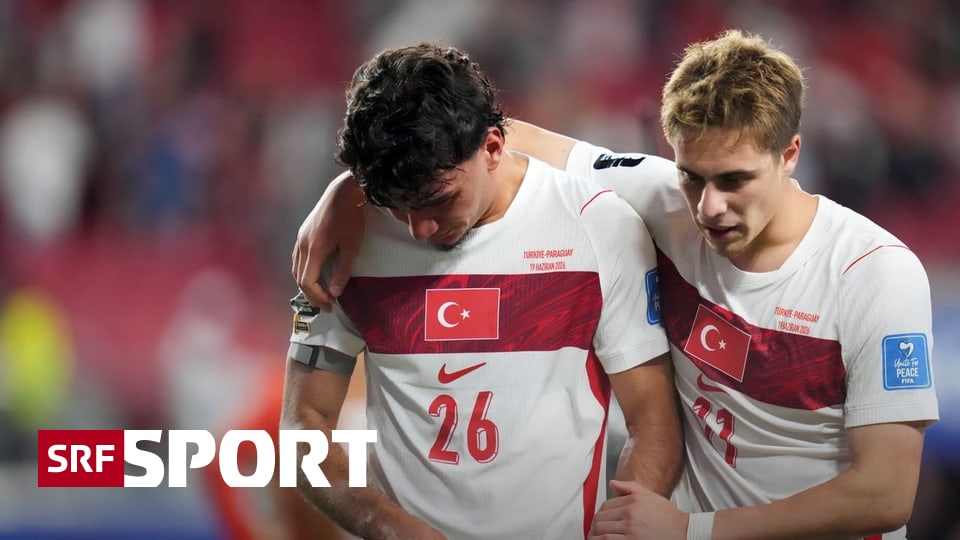
Turkey Eliminated From 2026 World Cup After Early Exit
Turkey exited the 2026 World Cup following two consecutive losses to Australia (0-2) and Paraguay (0-1), marking a disappointing return to the tournament for the first time since 2002. According to match reports, the Turkish squad failed to score a single goal despite fielding a highly touted “golden generation” of young talents.
Why did Turkey’s “Golden Generation” fail to deliver?
The Turkish national team entered the 2026 World Cup with immense momentum. Fans in Istanbul celebrated the team’s departure with massive car convoys, driven by the emergence of stars like Real Madrid’s Arda Güler, Kenan Yildiz, and Can Uzun. Many observers claimed this was the best Turkish squad in history.
However, talent didn’t translate to results. Turkey lost 0-2 to Australia in Vancouver and 0-1 to Paraguay at the San-Francisco-Bay-Area Stadium. The gap between individual skill and tournament experience became evident. Arda Güler described the exit as “shameful” in a statement cited by the SID news agency, noting that the players were weeping in the locker room.
This highlights a growing trend in international football: the reliance on “wonderkids” who dominate club football but struggle with the psychological weight of national expectation. When compared to the 2002 squad, which relied on seasoned veterans like Hakan Sükür, the 2026 team lacked the clinical edge needed to break through disciplined defenses.
How are new FIFA rules changing player behavior?
The match against Paraguay showcased a significant shift in FIFA’s disciplinary approach. Paraguay’s Miguel Almiron received a red card after speaking to Turkey’s Mert Müldür with his hand covering his mouth. Under new regulations, this action triggers an automatic red card regardless of the words spoken.
According to tournament officials, this strict stance follows the precedent set by the Gianluca Prestianni incident, where FIFA sought to eliminate hidden communication to combat racism and abuse on the pitch. This marks a transition toward zero-tolerance officiating that removes the referee’s discretion regarding the content of the speech.
For players, this means “micro-behaviors” that were previously ignored are now match-deciding events. Even with a 45-minute man advantage resulting from Almiron’s dismissal, Turkey could not score, proving that tactical superiority in numbers cannot compensate for a lack of offensive cohesion.
What happens when national euphoria meets tournament reality?
The emotional trajectory of the Turkish campaign serves as a case study in the volatility of sports fandom. The transition from “huge euphoria” at the airport to a “nightmare” in the United States happened in less than two matches. This cycle is becoming more common as social media amplifies expectations before a ball is even kicked.
The fallout is not just sporting but cultural. While the team’s qualification via playoffs showed an upward trend—following a quarter-final run in the previous European Championship—the World Cup’s higher stakes exposed a fragility in the team’s mental preparation. The contrast is sharp: the 2002 team built a legacy of resilience, while the 2026 team collapsed under the weight of being labeled “the best ever.”
Future trends suggest that national teams will need to integrate sports psychology more deeply into their preparation to protect young stars from the “shame” and public scrutiny described by Güler.
Frequently Asked Questions
Why was Miguel Almiron sent off during the Turkey vs. Paraguay match?
Almiron was given a red card for speaking to an opponent with his hand over his mouth, a gesture that FIFA now punishes automatically following the Gianluca Prestianni case.
When was the last time Turkey qualified for a World Cup?
Turkey last participated in the World Cup in 2002, where they finished in third place.
Which young players were highlighted in the 2026 Turkish squad?
The squad featured several high-profile talents, including Arda Güler (Real Madrid), Kenan Yildiz, and Can Uzun.
For more analysis on international tournament trends, explore our guide on youth development in elite football or visit the official FIFA disciplinary code for more on current rule changes.
Join the Conversation
Do you think FIFA’s new “hand-over-mouth” red card rule is too strict, or is it necessary to clean up the game? Let us know in the comments below or subscribe to our newsletter for weekly football insights.