
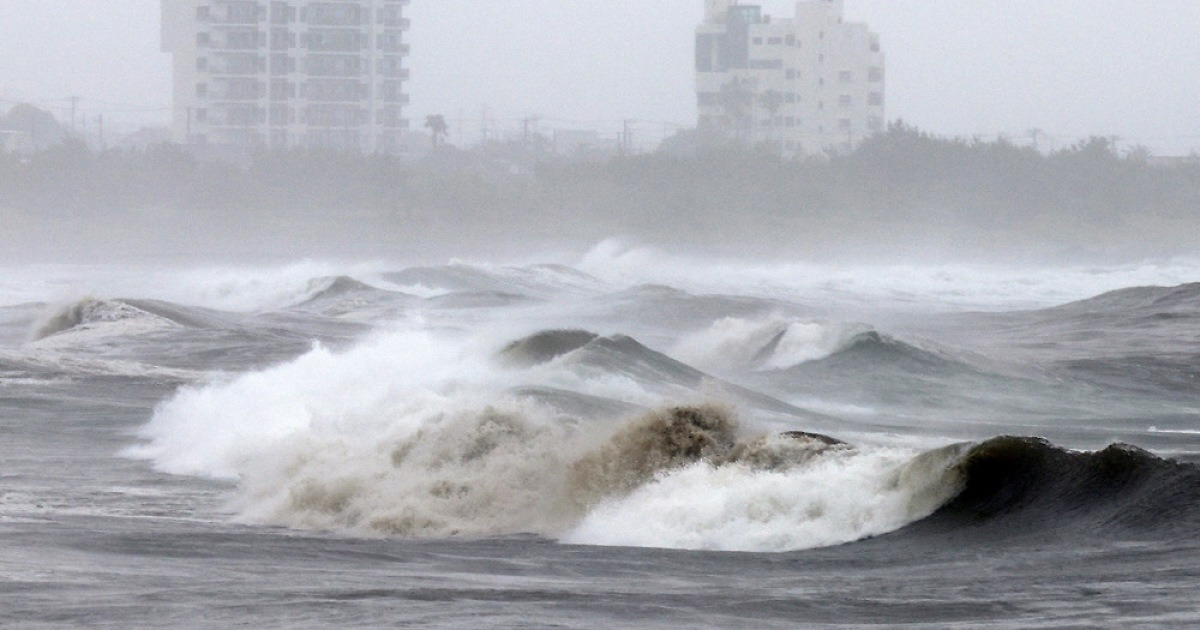
Typhoon Rose Hits Japan: First Level 5 Emergency Warning Issued in Wakayama
The Shifting Calendar of Extreme Weather: Why Early-Season Storms are the New Normal
For decades, meteorological patterns followed a predictable rhythm. In East Asia, the typhoon season had a traditional start and end. However, recent events—such as the rare early-June landfall of major storms in Japan—signal a disruptive shift in global weather patterns.
When a “Level 5” emergency alert is triggered for the first time under a new system, it isn’t just a bureaucratic milestone. it is a warning. We are witnessing a trend where the window for “safe” weather is shrinking, and the intensity of early-season storms is climbing.
This shift is largely driven by rising sea surface temperatures. Warmer oceans act as high-octane fuel for tropical cyclones, allowing them to organise and intensify faster and earlier in the year than previously recorded.
The Menace of Linear Precipitation Zones in Urban Jungles
One of the most dangerous trends in modern meteorology is the increased frequency of linear precipitation zones. Unlike a typical storm that moves across a region, these zones anchor themselves, dumping record-breaking rainfall on a narrow strip of land for hours or days.
In hyper-dense metropolises like Tokyo, this creates a “concrete funnel” effect. When millions of square metres of impermeable asphalt meet a linear rain belt, the result is immediate urban flash flooding, overwhelming even the most sophisticated sewage systems.
Data from the World Meteorological Organization (WMO) suggests that the intensity of heavy precipitation events has increased globally, with urban areas facing the highest risk due to the “Urban Heat Island” effect, which can further enhance rainfall intensity.
The Domino Effect on Global Logistics
The impact of these storms extends far beyond the rain. We are seeing a trend of “cascading failures” in infrastructure. A single storm now triggers a synchronized collapse of:
- Aviation: Massive cancellations at hubs like Haneda and Narita.
- Rail: Shutdowns of high-speed networks (Shinkansen) to prevent derailments.
- Education: Widespread school closures that disrupt local economies and childcare.
From “Grey” to “Green”: The Evolution of Urban Resilience
As traditional concrete levies and pipes reach their limits, the future of city planning is shifting toward “Sponge Cities.” This concept, pioneered in parts of China and now being adopted globally, involves replacing impermeable surfaces with permeable materials.
Instead of trying to channel water away as quickly as possible (which often just moves the flood downstream), Sponge Cities aim to absorb water where it falls. This includes:
- Bioswales: Landscaped depressions that capture and filter stormwater.
- Permeable Pavements: Special asphalt that allows water to seep into the ground.
- Urban Wetlands: Creating parks that double as temporary reservoirs during peak flooding.
For more on how urban planning is evolving, check out our deep dive on The Future of Sustainable Cities.
AI and the Next Generation of Disaster Forecasting
The transition to “Level 5” alerts highlights a critical need: hyper-local precision. Traditional forecasting tells us a city will be hit; AI-driven forecasting tells us which street corner will flood.
The future of disaster management lies in the integration of AI with IoT (Internet of Things) sensors. Imagine river sensors that communicate in real-time with city traffic lights, automatically rerouting cars away from a bridge seconds before it becomes impassable.
We are moving toward a “Predict and Prevent” model. By analysing historical data and real-time atmospheric pressure, AI can now predict the formation of linear precipitation zones with much higher accuracy, giving cities a crucial head start in deploying temporary barriers.
Frequently Asked Questions
Q: Why are typhoons happening earlier in the year?
A: Rising global ocean temperatures provide the energy necessary for storms to form earlier in the spring and early summer than they did in previous decades.
Q: What is the difference between a Level 4 and a Level 5 alert?
A: While Level 4 generally indicates a high risk of flooding and suggests evacuation, Level 5 is a “Special Warning” indicating that a disaster is either imminent or already occurring, requiring immediate life-saving action.
Q: Can “Sponge Cities” really stop urban flooding?
A: They cannot stop a catastrophic storm entirely, but they significantly reduce the peak volume of runoff, preventing sewage overflows and reducing the severity of flash floods.
Stay Ahead of the Storm
Is your city prepared for the next extreme weather event? We want to hear from you. Share your experiences with urban flooding or your thoughts on climate adaptation in the comments below!
Subscribe to our newsletter for weekly insights on climate resilience and global trends.