
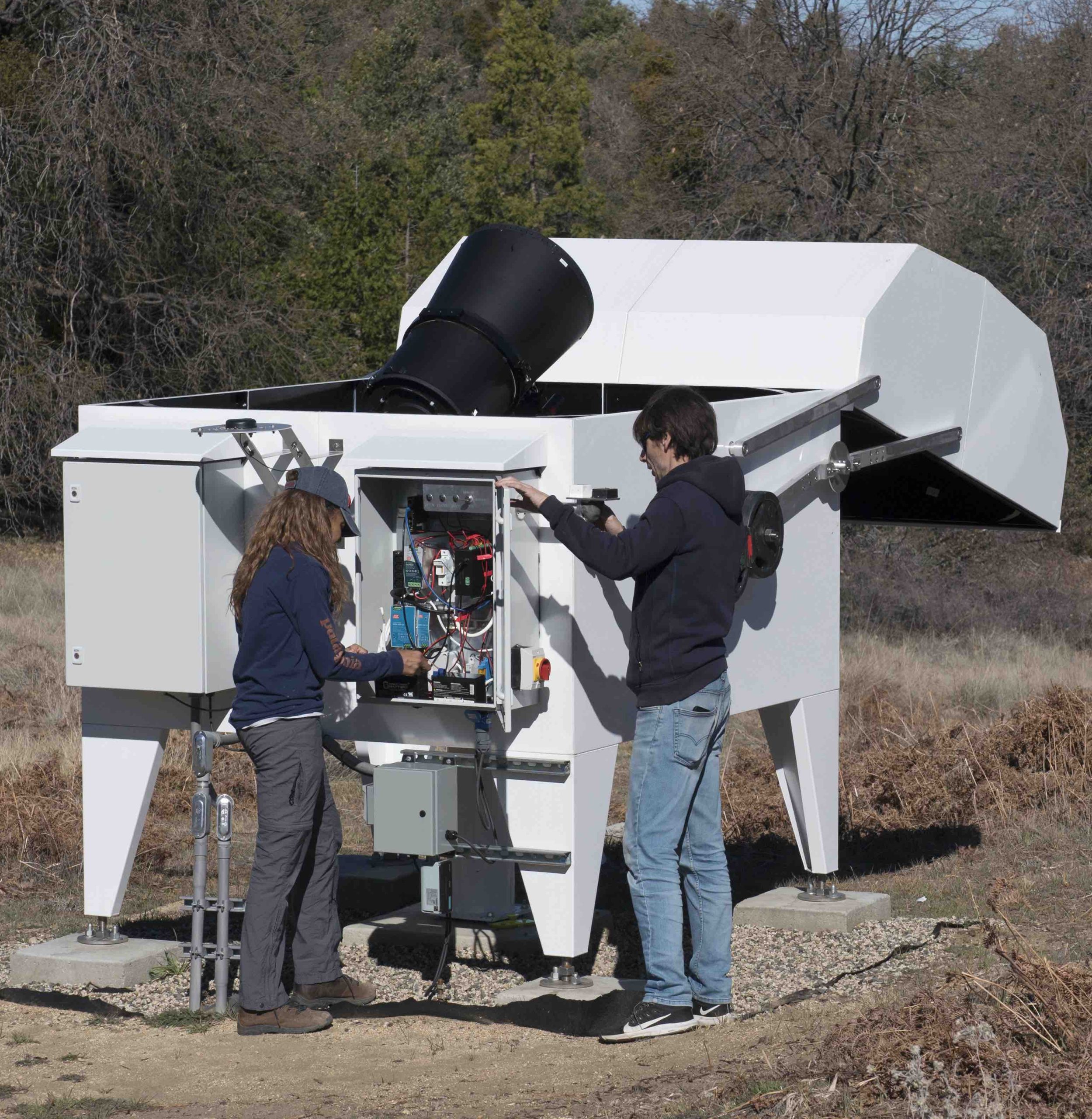
u-blox GNSS Receiver Enables Sub-Nanosecond Sync for Optical SETI Array – Inside GNSS
A u-blox ZED-F9T high-precision GNSS timing receiver now enables sub-nanosecond synchronization for PANOSETI, a distributed optical telescope array led by UC Berkeley. According to project data, the system achieved a 0.7 nanosecond standard deviation over a 1-kilometer baseline, removing the need for costly fiber-optic infrastructure in remote observatory sites.
Why is sub-nanosecond timing critical for PANOSETI?
PANOSETI, or Pulsed All-sky Near-infrared Optical SETI, scans the sky for fast-transient optical and near-infrared signals that could indicate extraterrestrial intelligence. To detect these signals, researchers at UC Berkeley must coordinate timing across widely separated telescope nodes with extreme precision.
Without this synchronization, the array cannot accurately correlate data from different locations. Dan Werthimer, Chief Scientist of the PANOSETI project, stated that achieving this level of synchronization without fiber is a “significant step forward for distributed instrumentation.”
How does GNSS synchronization compare to fiber-based systems?
Traditionally, high-precision timing has relied on fiber-based infrastructure, such as the White Rabbit protocol. While accurate, these systems require physical cables to connect every node in a network.

According to the PANOSETI team, fiber is often impractical and expensive to deploy at the remote sites where telescopes are located. The transition to the u-blox ZED-F9T receiver allows the array to maintain timing precision without the need for physical cabling between nodes.
| Feature | Fiber (White Rabbit) | GNSS (u-blox ZED-F9T) |
|---|---|---|
| Infrastructure | Physical fiber cables | Wireless satellite signals |
| Deployment | Costly/Difficult in remote areas | Flexible/Remote-ready |
| Precision | Ultra-high | Sub-nanosecond (0.7ns to 200ps) |
What are the future applications for wireless precision timing?
u-blox indicates that the results from the PANOSETI project extend beyond the search for extraterrestrial intelligence. The ability to sync remote nodes without cables has immediate implications for other high-tech sectors.
Distributed Sensor Networks
Industrial arrays that monitor seismic activity or atmospheric changes can now be deployed in wilderness areas without the overhead of laying fiber. This reduces installation costs and speeds up deployment timelines.
Critical Infrastructure Resilience
According to u-blox, this technology improves the resilience of critical infrastructure. By removing a single point of failure—the physical cable—networks become less susceptible to physical damage or sabotage.
Frequently Asked Questions
What is PANOSETI?
PANOSETI (Pulsed All-sky Near-infrared Optical SETI) is a UC Berkeley-led program using a distributed telescope array to scan the sky for signs of extraterrestrial intelligence.
What is the u-blox ZED-F9T?
It is a high-precision GNSS timing receiver used to synchronize clocks across different locations without needing physical cables.
Why is fiber-optic timing a problem for telescopes?
Fiber is expensive and difficult to install in the remote, high-altitude, or rugged environments where observatories are typically built.
Want to stay updated on the latest in GNSS and astronomical technology? Leave a comment below with your thoughts on wireless synchronization or subscribe to our newsletter for more technical deep dives.