
U.S. Foreign Assistance Laws and Policies on Reproductive Health
The U.S. Foreign assistance landscape has long been shaped by a complex web of legal restrictions and policy directives aimed at regulating reproductive health funding. These rules, many dating back to the 1970s, govern how American taxpayer dollars are used to support global family planning, abortion access and sterilization programmes. While designed to ensure voluntarism and informed choice, they have sparked ongoing debates about human rights, public health, and the role of government in reproductive decision-making.
Historical Foundations and Key Provisions
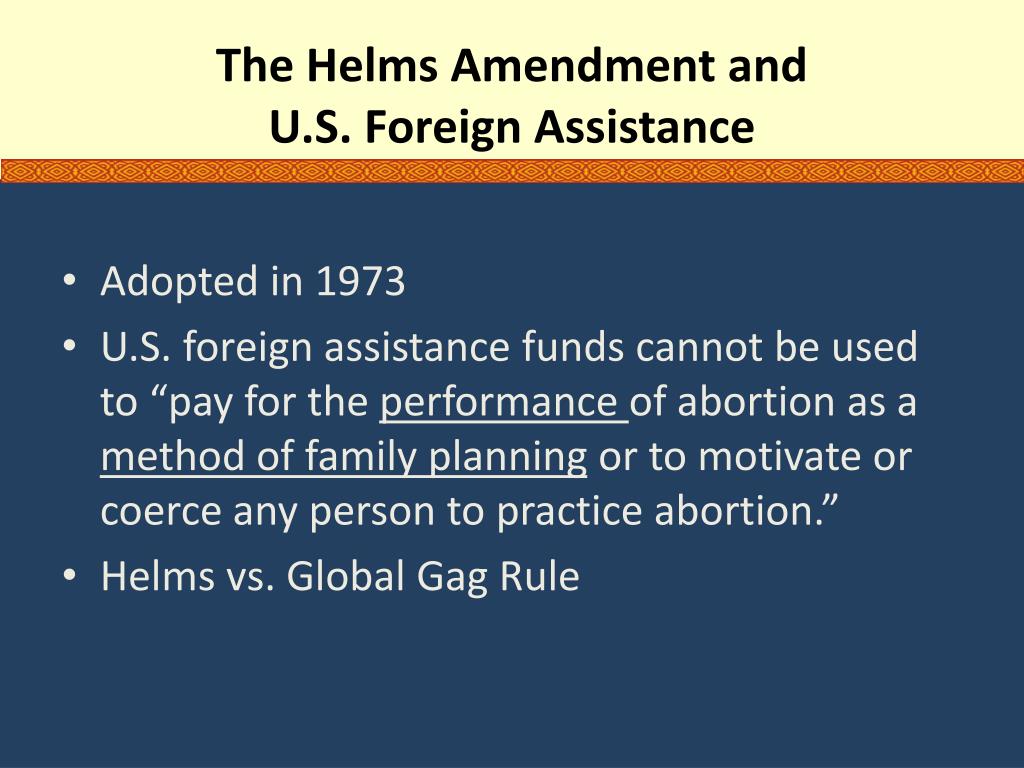
The Helms Amendment of 1973, a cornerstone of these policies, prohibits U.S. Foreign aid from funding abortions as a method of family planning or using financial incentives to encourage the procedure. A 1994 clarification by the Leahy Amendment clarified that “motivate” does not block access to pregnancy options counseling where legal. Other critical provisions include the 1978 Involuntary Sterilization Amendment, which bans coercive sterilization practices, and the 1985 Kemp-Kasten Amendment, which restricts funding for programmes involving “coercive abortion or involuntary sterilization.”
The Peace Corps Provision of 1978 allows abortion funding only in cases of rape, incest, or life endangerment, a rule that took effect in 2015. Meanwhile, the Mexico City Policy, revived in 2025, requires recipients of U.S. Family planning aid to pledge against promoting abortion services—a rule now expanded to apply to most foreign assistance under the PHFFA Policy.
Significance and Controversies
These policies have had profound implications for global health initiatives. By limiting funding for abortion-related services, they influence access to comprehensive reproductive care in low-resource settings. The restrictions also raise questions about the balance between religious or political values and public health priorities. For example, the 1994 UNFPA funding conditions require the U.S. Contribution to be kept separate from other funds and prohibit its use in China, reflecting longstanding concerns about how aid is allocated.

The Tiahrt Amendment of 1998 further complicates matters by banning targets or incentives in family planning projects, aiming to prevent coercive practices. However, critics argue that such restrictions can inadvertently hinder effective program implementation by limiting data-driven approaches.
Potential Future Scenarios
As global health priorities evolve, these policies could face renewed scrutiny. A shift in political leadership might lead to changes in the Mexico City Policy or the PHFFA provisions, potentially expanding or contracting restrictions on reproductive health funding. Meanwhile, the ongoing debate over UNFPA’s role highlights tensions between supporting international family planning efforts and enforcing strict compliance with U.S. Legal frameworks.
Future legislative actions could also address gaps in current regulations, such as the 2004 reallocation of UNFPA funds to USAID programmes. However, any modifications would likely require navigating complex political and ethical considerations, as well as maintaining compliance with existing statutory requirements.
Frequently Asked Questions
What does the Helms Amendment prohibit? It bans the use of U.S. Foreign aid to fund abortions as a method of family planning or to coerce individuals into undergoing the procedure.
How does the Mexico City Policy affect global health programmes? It requires recipient organizations to pledge against promoting abortion services, applying to most U.S. Foreign assistance under the PHFFA Policy since 2025.
What conditions apply to U.S. Funding for UNFPA? The U.S. Contribution must be kept in a separate account, cannot fund abortions, and is reduced dollar-for-dollar if UNFPA spends funds in China.
How do these policies shape the intersection of politics and public health in international aid?