
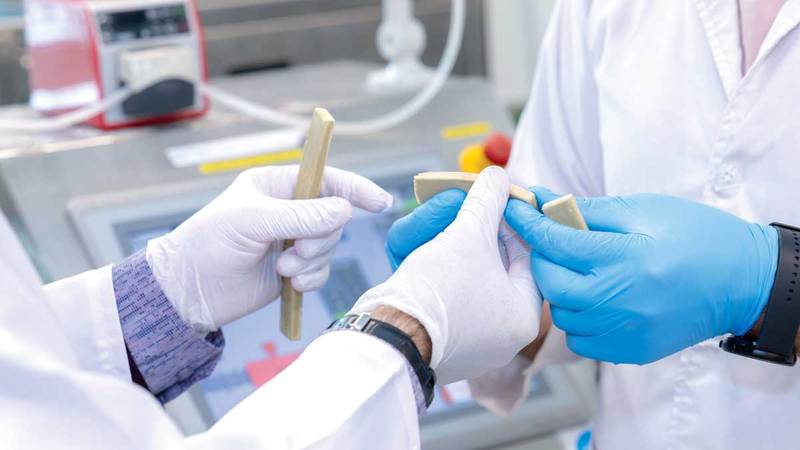
UAE University Develops AI-Powered Sustainable Meat Alternatives
A research team from the Department of Food Science at United Arab Emirates University has developed protein-rich, animal-free alternatives for chicken, fish, and eggs. By combining AI, molecular simulation, and 3D printing, the researchers created sustainable food options that mimic the texture and nutritional profile of real meat.
How is AI creating meat alternatives?
The team utilized a “bottom-up approach” to bridge the gap between plant proteins and animal textures. According to Professor Dr. Sajid Maqsood, an expert in sustainable food systems, the researchers studied interactions between various plant proteins at a molecular level.

To achieve a texture close to real meat, the team employed “molecular docking simulation.” This specific technology is typically used in drug discovery to identify how molecules fit together, but here it was used to determine which proteins were most compatible for building the desired food structure.
Can plant-based fish be healthier than the original?
The research process allows for the intentional enhancement of a product’s nutritional value. Dr. Ibrahim Khalifa, a researcher in food sciences, noted that natural fish contains very low levels of fiber.
By using this scientific approach, the team was able to incorporate fiber directly into the fish alternative’s formula. This modification makes the substitute potentially more beneficial for health and nutrition than the animal-based version.
How does 3D printing reduce food waste?
The adoption of 3D printing technology allows the team to produce high-protein foods in precise, varied shapes. This level of accuracy significantly optimizes the manufacturing process.
The research team confirmed that this method could reduce waste by up to 95% when compared to traditional food manufacturing processes.
What happens next for these alternatives?
The success of these protein-rich substitutes may lead to more sustainable dietary options for consumers. Future developments could involve expanding the range of animal-free proteins or refining the molecular structures to match other types of meat.
The use of AI and 3D printing is likely to remain a central part of the strategy to lower production waste and increase the nutritional density of sustainable foods.
Frequently Asked Questions
What specific food alternatives did the UAEU team develop?
The research team developed animal-free, protein-rich alternatives for chicken, fish, and eggs.
Which technologies were used to create these proteins?
The team used a combination of artificial intelligence (AI), molecular simulation, and 3D printing.
How much waste is reduced by using 3D printing in this process?
According to the research team, 3D printing can reduce waste by up to 95% compared to traditional manufacturing.
Would you choose a meat alternative if it were nutritionally superior to the original animal product?