

Ukraine UK France Germany Announce 5 Conditions for Russia in Joint Statement
The Five Conditions for a Ukraine-Russia Ceasefire: A New European Strategy
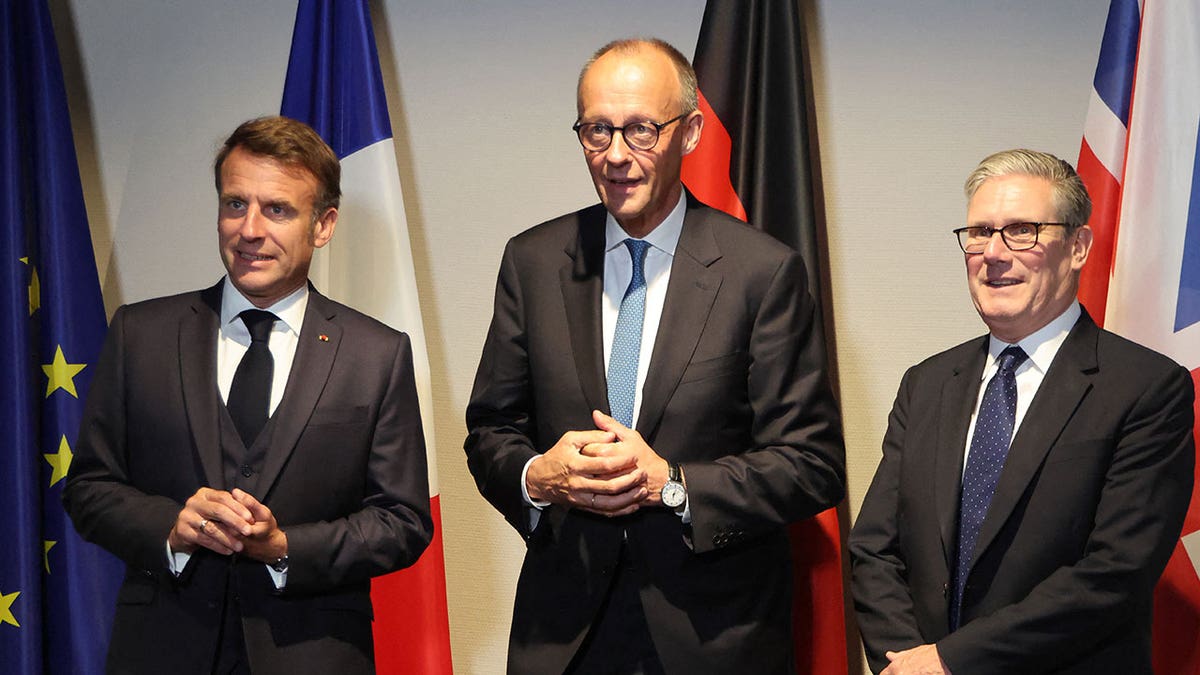
On June 7, 2026, Ukrainian President Volodymyr Zelensky met with UK Prime Minister Keir Starmer, French President Emmanuel Macron, and German Chancellor Friedrich Merz in London. The leaders issued a joint statement outlining five conditions for a “just and lasting” peace deal with Russia, signaling a coordinated European approach to end the war. The conditions include an immediate ceasefire, respect for current borders, and safeguards for Ukraine’s sovereignty.
Key Conditions and Their Strategic Implications
The first condition demands an “immediate and comprehensive” ceasefire, a move aimed at halting further civilian casualties and territorial losses. The statement emphasizes that “current lines of contact should serve as the starting point for negotiations,” a clear reference to Ukraine’s 2022 territorial integrity. This aligns with Zelensky’s repeated calls for a return to pre-2022 borders, a stance that has been a sticking point in prior talks.
The second condition focuses on Ukraine’s sovereignty, stating that the nation must “freely choose its security alliance or mechanisms.” This clause appears to counter Russian pressure for a neutral Ukraine, reinforcing Western support for Kyiv’s NATO aspirations. A third condition mandates “credible and legally binding security guarantees,” a nod to the EU and NATO’s role in ensuring long-term stability.
The fourth condition ties the release of frozen Russian assets to a peace agreement, stipulating that sanctions will remain in place until Russia compensates Ukraine for war damages. The final condition emphasizes that “European security interests must be protected,” requiring EU and NATO consensus on any peace terms. These conditions reflect a shift toward a more unified European stance, with the UK, France, and Germany acting as a bloc.
European Unity and the Road to Peace
The meeting underscored a rare alignment among Western leaders, who have historically differed on Ukraine policy. Starmer, Macron, and Merz jointly endorsed Zelensky’s proposal for direct talks with Russia, a move that contrasts with earlier US-led initiatives. The leaders also prioritized bolstering Ukraine’s air defense systems, a response to recent Russian strikes that have targeted civilian infrastructure.
Challenges and Unanswered Questions
Russia has yet to respond to the joint statement, with Kremlin spokesperson Dmitry Peskov offering no