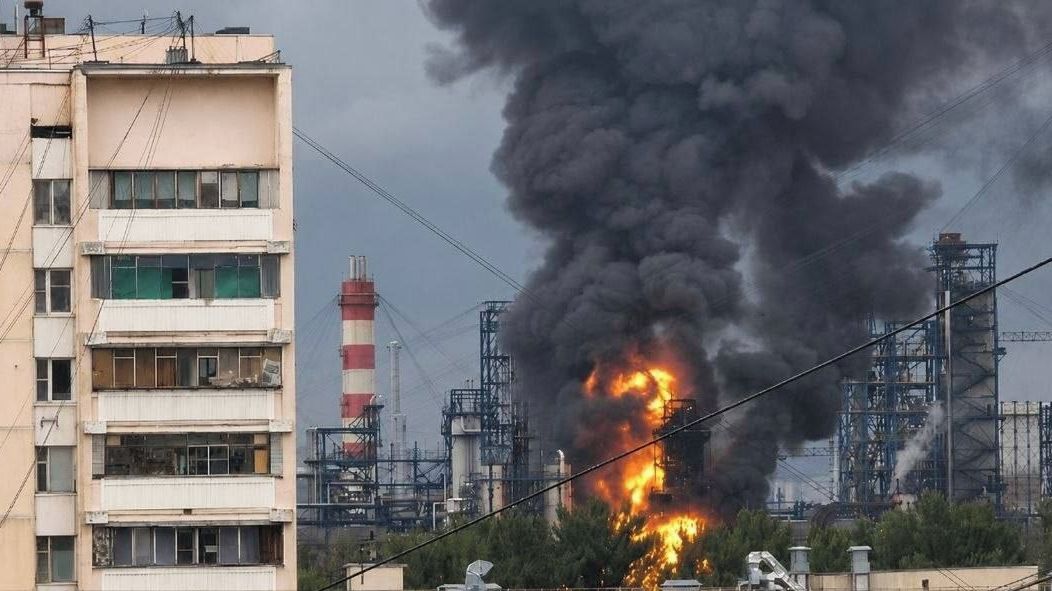
Ukraine’s Drone Campaign Triggers Growing Fuel Crisis in Russia
Russian fuel supplies face deepening instability as Ukrainian drone strikes on critical oil infrastructure reach record levels. Data from the news outlet Meduza and reports from Bloomberg indicate that processing volumes have plummeted to 21-year lows, forcing the Kremlin to implement emergency measures including export bans and the authorization of lower-quality fuel production.
Why are Russian fuel supplies failing?
The core of the crisis lies in the systematic targeting of oil refineries by Ukrainian long-range drones. According to Bloomberg records, at least eight of Russia’s ten largest refineries were attacked in May alone. By mid-June, the Moscow refinery—which supplies 70% of the capital’s fuel—was forced to halt operations following a drone strike. This campaign has successfully pushed Russian oil processing down to 4.28 million barrels per day in late May, a significant drop from the five-million-barrel threshold maintained during previous crises in 2025, according to Sergey Vakulenko, a senior fellow at the Carnegie Berlin Center.
How is the fuel shortage affecting the Russian economy?
The impact is currently manifesting as localized rationing and rising costs. Research from the server The Bell shows that fuel purchase limits have been implemented in over 50 regions across the Russian Federation. While major urban centers have largely avoided total depletion, the ripple effect is hitting the wider economy. The Russian state statistics agency reports that gasoline prices rose by approximately one percent in a single week in June. Experts warn that if the scarcity of diesel continues, it risks triggering a broader food-supply crisis, as the agricultural and logistics sectors rely heavily on stable fuel prices.
What are the long-term consequences of current refinery damage?
The damage to refineries is proving harder to repair than previous infrastructure hits. Sergey Vakulenko notes that the Ukrainian military is increasingly targeting specific, complex machinery responsible for gasoline production rather than peripheral storage tanks. To combat the shortfall, the Russian government has officially lowered fuel quality standards, allowing the sale of fuel that may damage modern engines. Additionally, Moscow has extended a ban on gasoline and diesel exports through the end of July to keep remaining supply within the country.
Comparison: 2025 vs. 2026 Processing Levels
| Period | Processing Volume (Daily) | Market Status |
|---|---|---|
| Late 2025 | ~5.0 million barrels | Crisis managed |
| June 2026 | <4.0 million barrels | Severe shortage |
Frequently Asked Questions
- Is the fuel crisis nationwide or just in border regions?
- While it started in border areas and occupied territories, The Bell reports that more than 50 Russian regions have experienced some form of fuel restriction or rationing.
- Can Russia fix the damaged refineries quickly?
- Repairing specialized refinery equipment is technically challenging. Vakulenko suggests that if the drone campaign continues for three to four months, the cumulative damage may become difficult to reverse.
- What is the main strategy for the Russian government?
- The Kremlin has banned exports of gasoline and diesel and lowered production standards for domestic fuel to keep local pumps operational, according to government directives cited by Meduza.
How do you think global oil markets will react if Russian processing continues to fall? Share your thoughts in the comments below or subscribe to our energy newsletter for weekly updates on this developing situation.