
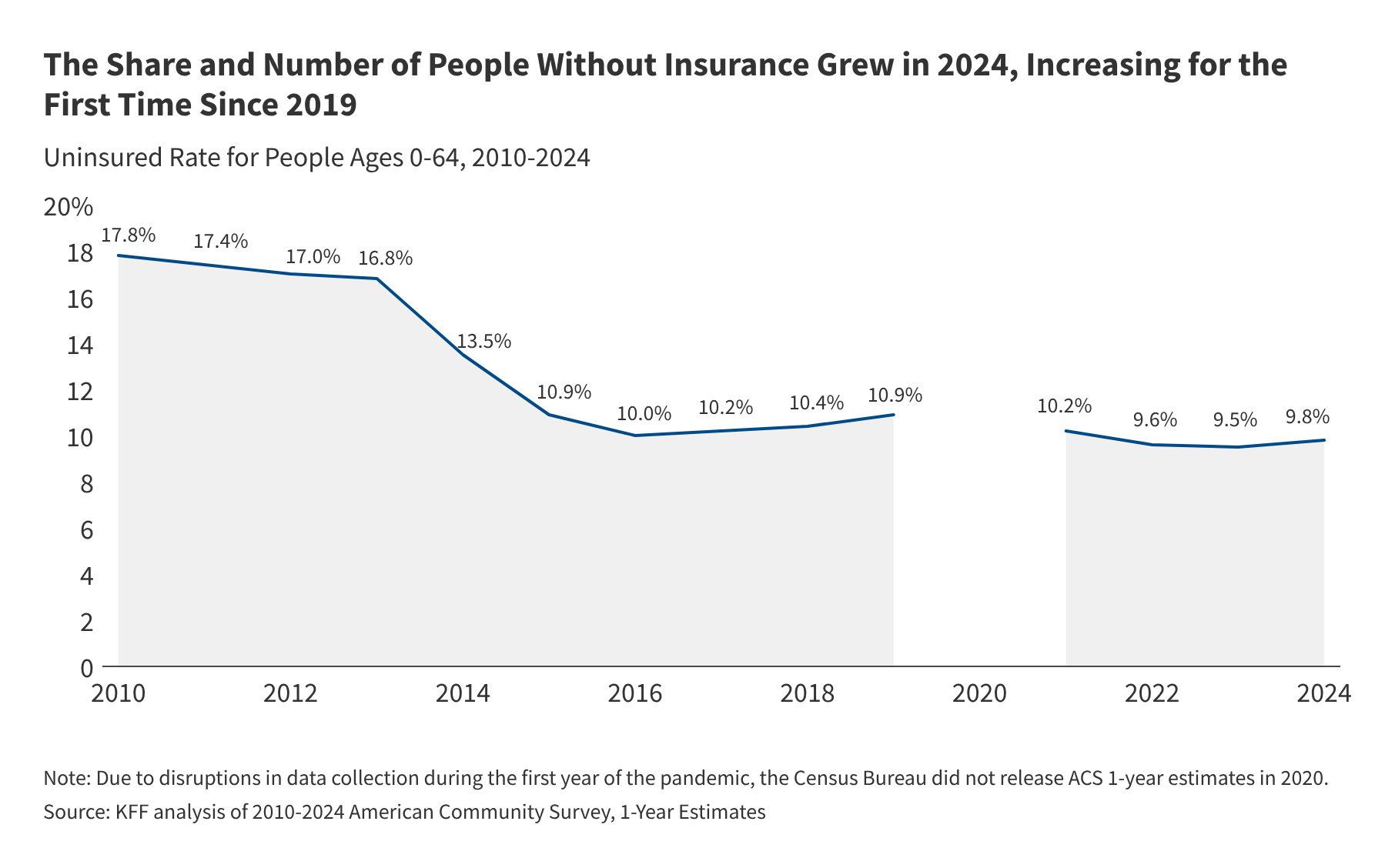
Uninsured Rates in 2024: Causes, Trends, and Financial Impact
The number of people without health coverage in the U.S. increased for the first time since 2019, reaching 26.7 million people ages 0-64 in 2024. According to provided data, the uninsured rate for those under age 65 rose from 9.5% to 9.8%, a trend driven primarily by a decline in Medicaid coverage.
A drop in Medicaid enrollment pushed the uninsured rate higher in 2024. While ACA Marketplace and other non-group coverage increased during the same period, these gains didn’t fully offset the loss of Medicaid coverage for adults and children.
Why did the uninsured rate increase in 2024?
The increase stems from a decline in Medicaid coverage that outweighed growth in other areas. While more people enrolled in non-group coverage, including ACA Marketplace options, the total number of uninsured people ages 0-64 still climbed by more than 1.3 million.

Cost remains the primary barrier. In 2024, 61.7% of uninsured adults ages 18-64 cited unaffordable coverage as the reason they lack insurance.
Who is most affected by the lack of health insurance?
Low-income families represent 80.1% of the uninsured population. Additionally, 85.1% of those without coverage have at least one worker in the family, and 63.7% are people of color.

Demographic disparities persist despite overall coverage gains. American Indian or Alaska Native, Hispanic, Black, and Native Hawaiian or Pacific Islander people are more likely to be uninsured than White and Asian people.
Age also plays a role. Adults ages 19-64 are more likely to be uninsured than children, with rates of 11.3% and 5.9% respectively. This reflects limited public coverage availability in certain states.
What are the primary barriers to obtaining coverage?
Many uninsured individuals lack access to employer-sponsored plans. Among working adults without insurance in 2024, 71% were either ineligible for or not offered coverage by their employer.
Public coverage gaps also exist. About 52.2% of uninsured people may be eligible for Medicaid or subsidized Marketplace coverage, but barriers to enrollment or a lack of awareness prevent them from signing up.
Financial pressures have increased. The expiration of enhanced premium tax credits has made Marketplace coverage more expensive, which may make it unaffordable for some users.
How does being uninsured impact health and finances?
Lack of insurance leads to delayed or skipped medical care. In 2024, 38.6% of uninsured adults reported forgoing needed care or medication due to cost. This is more than twice the rate of those with private (17.0%) or public (18.8%) coverage.
The impact is more severe for those with chronic conditions. Uninsured adults with chronic health needs are three to four times more likely to forgo medical care than insured adults with the same conditions.
Financial distress is common among the uninsured. 59% of uninsured adults reported difficulty paying for health care, compared to 30% of insured adults. This group is more likely to use payday loans, overdraw checking accounts, or be contacted by debt collection agencies.
Medical debt is also more prevalent. More than 60% of uninsured adults reported health care debt, while 44% of insured adults reported the same. This debt often forces individuals to borrow money or deplete their savings.
What may happen next?
If barriers to enrollment persist, the number of people delaying critical care could rise, potentially increasing mortality rates since Medicaid is known to reduce mortality and improve service utilization.

Financial distress may intensify for the 42% of uninsured individuals under 65 living in non-expansion states. Without policy changes, these populations may remain nearly twice as likely to be uninsured as those in expansion states.
Further increases in Marketplace costs following the expiration of tax credits could potentially push more eligible individuals into the uninsured category.
Frequently Asked Questions
How many people were uninsured in 2024?
There were 26.7 million people ages 0-64 without health coverage in 2024.
What caused the increase in the uninsured rate?
The increase was driven by a decline in Medicaid coverage that was not fully offset by increases in non-group and ACA Marketplace coverage.
What is the main reason adults lack insurance?
The high cost of insurance is the primary reason, with 61.7% of uninsured adults ages 18-64 stating that coverage is not affordable.
Do you believe the disparity in Medicaid expansion across states is the primary driver of health inequality?