

US bombs Iran’s water facilities: Why that’s so significant | US-Israel war on Iran News
United States airstrikes in southern Iran targeted telecommunications and water reservoirs in Sirik following the downing of a US Apache helicopter near the Strait of Hormuz, according to the Islamic Revolutionary Guard Corps (IRGC) and WANA. Iran alleges these strikes target critical civilian infrastructure during a period of extreme national water scarcity.
Why did the US launch strikes in Iran?
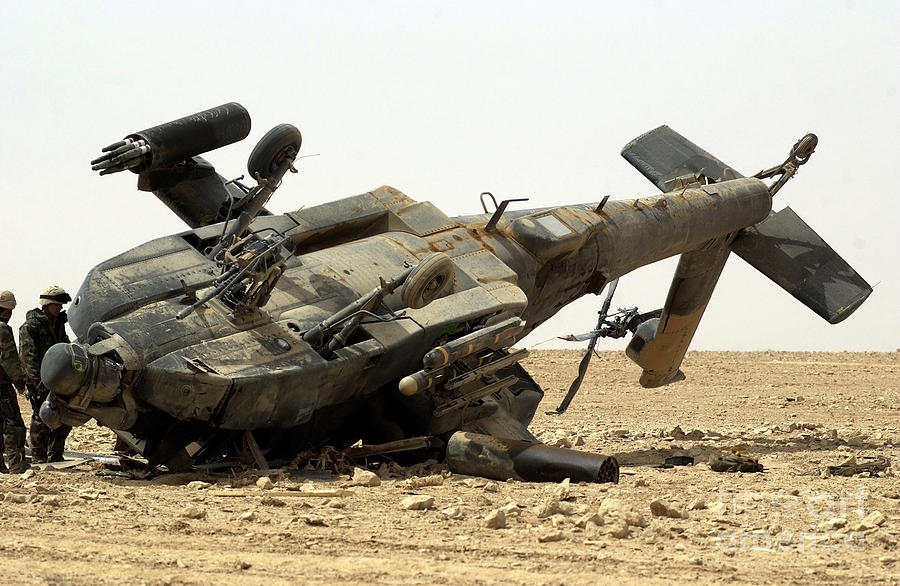
The US military launched waves of attacks late Tuesday as a “proportional response” to the downing of a US Apache helicopter patrolling the Strait of Hormuz. President Donald Trump stated on social media that Iran deliberately shot down the aircraft, though he noted the two pilots involved were safe and uninjured.
The Pentagon described the operations as “self-defence strikes.” While an official inquiry into the crash is ongoing, the US targeted communications and radar facilities to neutralize perceived threats.
Which targets were hit in the Iranian attacks?
The IRGC reported that US strikes hit multiple locations, including Jask, Minab, Qeshm Island, and the port of Bandar Abbas. In the town of Sirik, the strikes destroyed a telecommunications tower and two concrete water storage reservoirs in the Bamani district of Hormozgan Province.
WANA, an Iranian news outlet, reported that these reservoirs provide essential drinking water to 10 villages and more than 20,000 residents in the city of Kouhestak. Initial damage estimates for the water infrastructure range between $780,000 and $830,000.
Iran retaliated by striking US military bases located in Jordan, Kuwait, and Bahrain, according to the IRGC.
How does this compare to previous strikes on water infrastructure?
This is not the first time US operations have impacted Iranian water supplies. On March 7, Iranian Foreign Minister Abbas Araghchi reported that a US strike hit a desalination plant on Qeshm Island. Araghchi stated that the March 7 attack cut off water to 30 villages, calling it a “dangerous move with grave consequences.”
While the March 7 strike targeted a desalination plant—which converts seawater for drinking and irrigation—the recent strikes hit storage reservoirs. Both targets are critical in the Gulf region where freshwater is scarce. The cumulative effect of these strikes hits a country already enduring its fifth consecutive year of drought.
By November 2025, the water crisis had reached a peak where 19 major dams ran dry and Tehran’s Amir Kabir Dam held only 8% of its capacity, according to Al Jazeera.
Is targeting water reservoirs a war crime?
Isa Bozorgzadeh, a spokesman for Iran’s water industry, claimed the strikes on the Sirik reservoirs constitute a war crime. Under international humanitarian law, drinking water installations, treatment plants, and pipelines are classified as civilian property and are not legitimate military targets.
The 2004 Berlin Rules on Water Resources, adopted by the International Law Association (ILA), further prohibit the destruction of water installations if such actions cause “disproportionate suffering to civilians.” Because the Kouhestak region relies on these reservoirs for basic survival, Iranian officials argue the US has violated these non-binding international legal principles.
Frequently Asked Questions
What triggered the latest US-Iran escalation?
The escalation began after a US Apache helicopter was shot down near the Strait of Hormuz on Tuesday, prompting the US to launch “self-defence strikes” on Iranian radar and communication sites.
How many people lost water access in Sirik?
According to WANA, the destruction of two water reservoirs impacted more than 20,000 residents in Kouhestak and 10 surrounding villages.
What are the Berlin Rules on Water Resources?
Drafted in 2004, these are international legal principles that forbid countries from destroying water installations if the act results in disproportionate suffering for the civilian population.
Which US bases did Iran target in retaliation?
The IRGC claimed it carried out retaliatory strikes against US military bases in Bahrain, Kuwait, and Jordan.
What do you think about the targeting of civilian infrastructure in modern conflicts? Share your thoughts in the comments below or subscribe to our newsletter for deep-dive geopolitical analysis.