
US-Iran Deal Could Take Months to Restore Normal Trade Through Strait of Hormuz
Why is the Strait of Hormuz Critical to Global Trade?
The Strait of Hormuz, a vital maritime chokepoint, has been a focal point of global trade for decades. Before the conflict in Iran, it handled 20% of the world’s oil and gas supplies, according to shipping data from Kpler. The recent peace deal signed by US President Donald Trump aims to restore this flow, but experts warn the process will be slow. “The strait remains littered with mines laid by Iran since the conflict began,” said Jakob Larsen, chief safety and security officer at BIMCO, a major shipping association. “It will take weeks to clear the vessels and months to address the mine threat.”
What Are the Main Challenges in Reopening the Strait?
The primary obstacle is the presence of sea mines dropped by Iran during the conflict. Scott Savitz, a senior engineer at Rand, described mine warfare as “a game of unknowns.” “You don’t know how many mines are in the water, where they were placed, or how effective your countermeasures will be,” he said. Clearing the strait could involve specialized vessels, helicopters, and even mine-hunting dolphins, according to Savitz. However, experts estimate full clearance might take up to six months, as noted in a classified defense briefing cited by *The Washington Post*.
What Impact Will This Have on Global Markets?
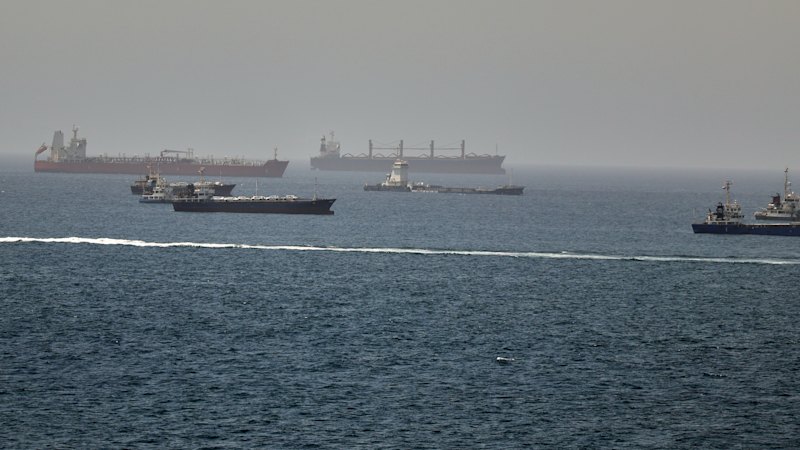
The war has already disrupted global supply chains, with Brent crude oil prices rising 8% since February. Despite Trump’s claim that the strait would be fully open by Friday, shipping companies like Maersk have not altered their operations. “At this stage, there are no changes to our operations in the region,” the company stated. Meanwhile, Kpler reported over 500 ships stranded in the strait, creating a backlog that could delay cargo for weeks. “The strait reopens onto a backlog,” a Kpler report noted, highlighting the logistical hurdles ahead.

How Will Oil Prices Respond to the Peace Deal?
Morgan Stanley’s oil strategist, Martijn Rats, predicted oil shipments through the strait might only reach 80% of pre-war levels by December. “Fuel prices will be slow to drop,” he said, as global inventories remain low. Even if the ceasefire holds, initial shipments will prioritize replenishing reserves rather than boosting supply. Rystad Energy, another research firm, warned that traffic might resume only tentatively, with daily oil flows potentially limited to 5 million barrels—a fraction of the 20 million barrels that passed through before the war.
Why Are Shipping Companies Hesitant to Resume Operations?
Companies are cautious due to the risk of renewed conflict and the uncertainty surrounding the peace deal. David Jetter, a partner at Baker Botts, said larger multinational firms might delay operations until they see “evidence that it is not dangerous.” Ship tracking data shows only a few vessels have ventured through the strait since the deal was announced. “Many will prefer to wait and see how the deal holds,” Kpler’s analysis stated, noting that market skepticism remains high.
What Role Do Mine-Clearing Technologies Play?
Clearing mines in the strait will require advanced technologies. Savitz outlined methods including wood and fibreglass boats, helicopter-dragged equipment, and dolphins trained to detect mines. However, the process is time-consuming. “It could take days to open a narrow corridor but months to clear the strait fully,” he said. The U.S. Navy’s use of dolphins in mine warfare is not new, though their deployment in the region has not been officially confirmed.
What Are the Long-Term Implications of the Conflict?
The conflict has already strained global economies, with rising petrol and grocery prices affecting consumers worldwide. Agricultural and manufacturing sectors face ongoing challenges due to fertilizer and cargo shortages. “The war has caused hip-pocket pain for consumers and shaken businesses,” according to a report from *The Washington Post*. Experts warn that even with the peace deal, the economic fallout could persist for months, particularly in regions reliant on stable energy and trade routes.
How Does This Compare to Past Conflicts?
The current situation bears similarities to the 1980s Iran-Iraq War, when the strait also became a battleground. However, modern mine-clearing technologies and international efforts to stabilize the region offer some hope. Unlike past conflicts, the 2026 deal includes a 60-day negotiation period for final terms, adding a layer of uncertainty. “The US-Iran memorandum is an important de-escalation but not a resolution,” Rystad Energy noted, highlighting the fragile nature of the agreement.
FAQ
How long will it take to clear the Strait of Hormuz?
Experts estimate full mine clearance could take up to six months, though a narrow corridor might open within days. “It could take just days to open a narrow corridor but months to clear the strait fully,” said Scott Savitz of Rand.
Will oil prices drop immediately after the deal?
No. Morgan Stanley’s Martijn Rats predicted oil shipments might only reach 80% of pre-war levels by December, with prices remaining stable as inventories are replenished.
What risks do ships still face?
Ships risk attacks or sinking if the ceasefire collapses. BIMCO’s Jakob Larsen stated, “We still consider it very risky for ships to commence transit.”

Did You Know?
Mine-hunting dolphins, trained by the U.S. Navy, could be deployed to assist in clearing the strait. However, their involvement would not put the animals at risk, as mines detonate upon detecting metal boats.
Pro Tips for Businesses
Companies should monitor shipping updates from Kpler and BIMCO. Delayed cargo may require alternative routes or increased inventory buffers. For industries reliant on fertilizers, diversifying supply chains could mitigate risks.
Stay Informed
Follow updates from *The Washington Post* and Kpler for real-time shipping data. Subscribe to our newsletter for analysis on global trade and energy markets.