
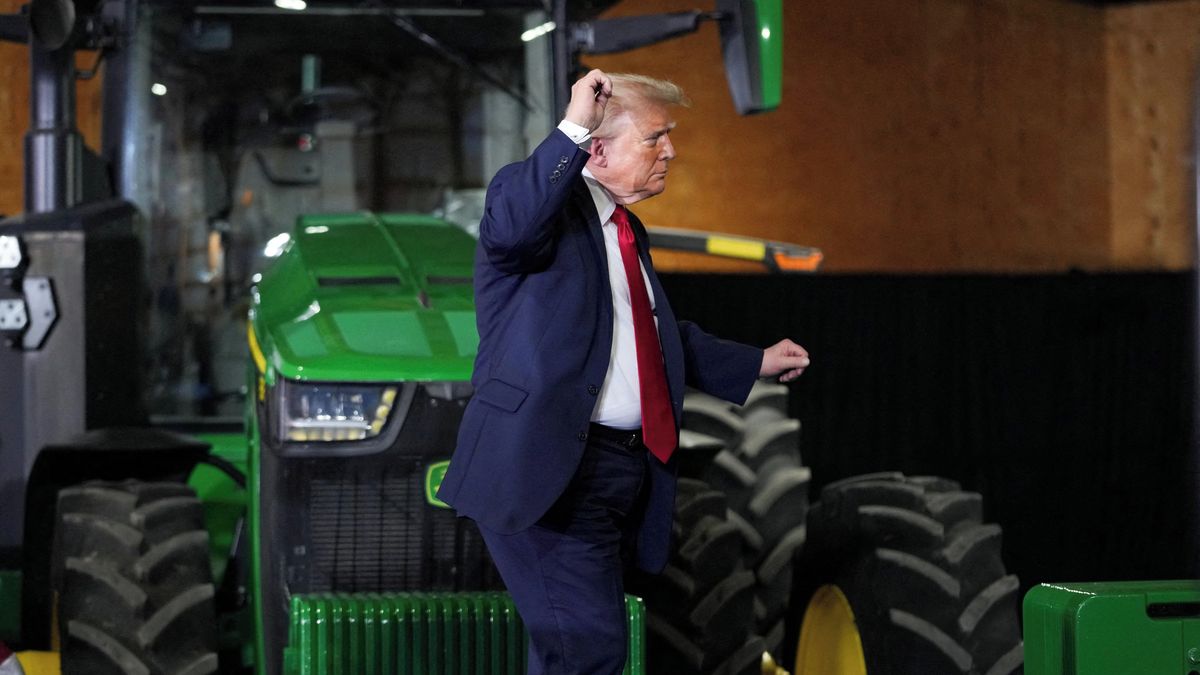
US Midwest Farmers Face Crisis and Rural Revolt Against Trump
U.S. Midwest farmers are currently battling a “triple crisis” consisting of severe drought, economic fallout from a trade war, and surging fuel and fertilizer costs triggered by a war in Iran. According to recent reports, these pressures are fueling a “rural revolt,” with approval ratings for President Trump plummeting among key agricultural constituencies in states like Iowa.
Why are production costs skyrocketing for Midwest farmers?
Agricultural expenses have surged due to a combination of trade tariffs and geopolitical instability. Chris Gould, a lifelong Republican operating a family farm near Chicago, Illinois, reports that everything from machinery to seeds and diesel has become more expensive.
The situation intensified following a war in Iran initiated at the end of February. Mark Mueller, a corn and soybean grower, detailed a rapid spike in fertilizer prices. Costs rose from $795 per ton to $850 at the start of the war, jumping to $950 after Tehran closed the Hormuz Strait, and eventually hitting $1,050 per ton—a nearly one-third increase.
How has the trade war impacted crop yields and profits?
Trade tariffs intended to create “fair trade” have instead led to significant revenue losses. China responded to U.S. tariffs by shifting its soybean purchases—a key regional commodity—to other nations, including Argentina.
Some farmers attempted to mitigate these losses by switching crops. Chris Gould noted that betting on corn last year saved his livelihood, though these gains were later offset by the rising costs of fuel and fertilizer caused by the conflict in Iran.
Is there a “rural revolt” happening in the heartland?
Data suggests a sharp decline in political loyalty within the agricultural belt. CNN analyst Harry Enten describes a “rural revolt” in Iowa, noting that the state has shifted from a “field of dreams” to a “field of nightmares” for the president.
Polling from Fox News highlights this shift. In October 2024, Trump led rival Kamala Harris by 18 percentage points in Iowa; by May, his approval rating in the state dropped to minus 14 percent. Furthermore, 68 percent of white farmers now disagree with the president’s economic policies, a stark reversal from January when 52 percent supported them.
What are the human and financial consequences of the crisis?
The financial strain is pushing many operations toward collapse. According to Farm Policy News, 62 Chapter 12 bankruptcy proceedings were initiated in April alone. This represents a 130 percent increase compared to April 2025 and the highest monthly total since February 2020.
The crisis has also taken a psychological toll. David Brown, a behavioral health specialist at Iowa State University, told NBC News that farmers are 3.5 times more likely to die by suicide than the general population based on 2021 data. Brown emphasizes that as the risk of losing a family farm increases, so does the risk of suicide.
What may happen next for the agricultural sector?
The future of the Midwest farming economy likely depends on the resolution of the conflict in Iran. President Trump has promised to end the war soon to drive prices down, but skepticism remains among those facing immediate bankruptcy.

If economic conditions do not stabilize, analysts suggest the “rural revolt” could spread to other agricultural states across the Midwest. This may lead to further shifts in voting patterns during upcoming elections as farmers prioritize economic survival over party loyalty.
Frequently Asked Questions
What specific projects in Washington D.C. have frustrated farmers?
Farmers have expressed frustration over the construction of a new White House ballroom, the restoration of the reflecting pool in front of the Lincoln Memorial, and the proposed construction of a Victory Arch near Arlington National Cemetery.
How much did fertilizer prices increase for some farmers?
According to grower Mark Mueller, fertilizer prices rose from $795 per ton to $1,050 per ton following the start of the war in Iran and the closure of the Hormuz Strait.
What is the current trend in farm bankruptcies?
Bankruptcies are rising, with 62 Chapter 12 filings in April, marking a 130 percent increase over the previous April and the highest level since February 2020.
Do you believe government infrastructure projects should be prioritized over agricultural subsidies during economic crises?