
US Midwest Farmers Face Economic Crisis and Rural Revolt
Midwest farmers are currently battling a “triple crisis” fueled by severe drought, aggressive trade tariffs, and skyrocketing fuel and fertilizer costs linked to the war in Iran. According to reporting from CNN and NBC News, these economic pressures have sparked a “rural revolt,” leading to a surge in Chapter 12 bankruptcies and a sharp decline in political support within traditionally Republican strongholds.
Why are Midwest farm costs spiraling out of control?
The financial squeeze on American farmers isn’t coming from one single source; it’s a collision of nature and geopolitics. While drought has damaged yields, the economic blow comes from the aftermath of trade tariffs and the war in Iran, which began in late February.

For many, the cost of basic inputs has become unsustainable. Chris Gould, a lifelong Republican farmer near Chicago, Illinois, reports that everything from agricultural machinery to seeds, fertilizers, and diesel has become more expensive. While some farmers initially supported tariffs believing they would fix “unfair” trade deals, the reality shifted when China responded by purchasing key commodities, like soybeans, from competitors such as Argentina instead of the U.S.
How does the war in Iran impact the price of fertilizer?
The connection between a conflict in the Middle East and a field in Iowa is found in the supply chain. When Tehran closed the Strait of Hormuz—a critical artery for oil and fertilizer exports—prices jumped almost immediately.
Mark Mueller, a corn and soybean grower in Iowa, provided a stark example of this volatility to NBC News. Before the war, his fertilizer cost $795 per ton. That price climbed to $850 at the start of the conflict, then hit $950 following the closure of the Strait of Hormuz. Within two weeks, Mueller was paying $1,050 per ton—a nearly 33% increase.
Is there a “rural revolt” happening in the American heartland?
The economic pain is translating into a political shift. Harry Enten, a data analyst for CNN, describes a “rural revolt” taking hold, particularly in Iowa. He notes that Iowa has transformed from a “field of dreams” into a “field of nightmares” for the current administration.
The data supports this trend. According to Fox News polling, Trump’s approval rating in Iowa plummeted from an 18-point lead over Kamala Harris in October 2024 to a negative 14% balance by May. Furthermore, a Fox News survey revealed that 68% of white farmers—historically a loyal voting bloc—now disagree with the president’s economic policies, a massive swing from January when the split was 52% in his favor.
In interviews conducted by NBC News reporter Peter Nicholas, 11 out of 13 farmers who had previously voted for Trump described the current economic climate as “terrible,” “unstable,” or “miserable.”
What is the “Washington disconnect” farmers are feeling?
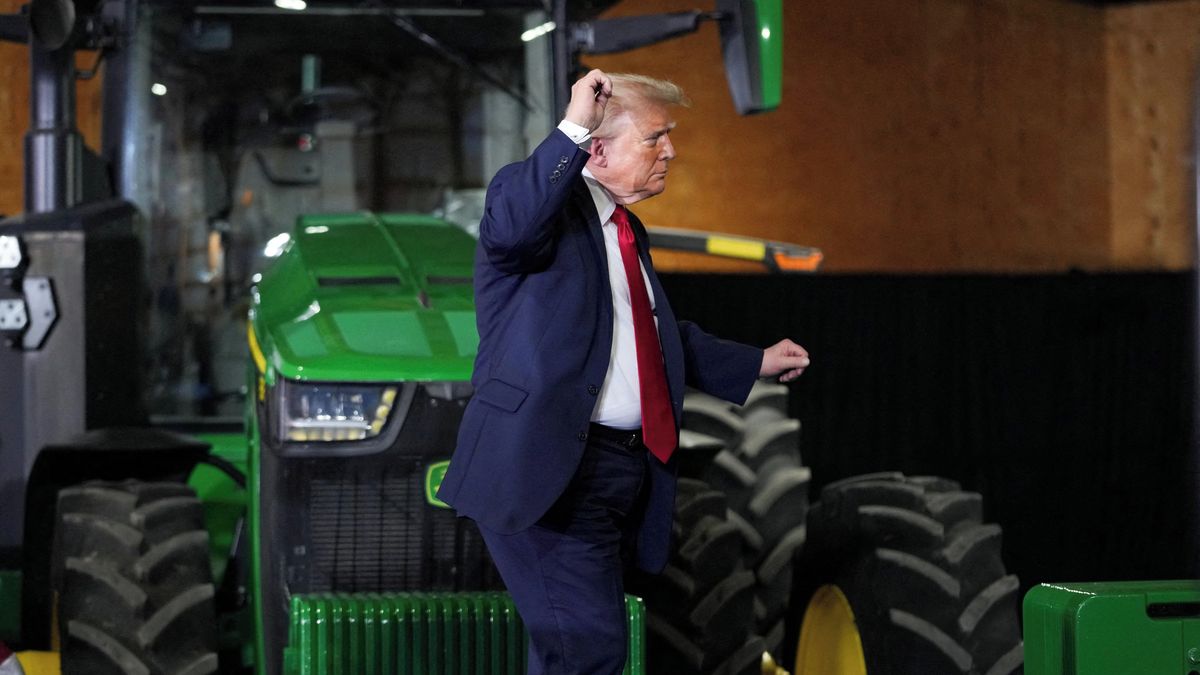
A recent visit by the president to Custer Farm in Chippewa Falls, Wisconsin, highlighted a growing gap between government priorities and rural reality. While the president promised to end the war and lower prices, he spent a significant portion of his speech discussing luxury construction projects in Washington, D.C.
These projects include a new White House ballroom, the restoration of the mirror pond in front of the Lincoln Memorial, and a proposed Victory Arch near Arlington National Cemetery. The ballroom alone is estimated to cost $1 billion in taxpayer funds. CNN reporter Jeff Zeleny noted a heavy silence in the room when these projects were mentioned, suggesting that farmers struggling to survive are not interested in D.C. monuments.
What is the human cost of the farm crisis?
The financial strain is leading to a rise in both business failures and personal tragedies. According to Farm Policy News, April saw 62 Chapter 12 bankruptcy filings—a 130% increase compared to April 2025 and the highest monthly total since February 2020.
:quality(70):focal(1530x1695:1540x1705)/cloudfront-us-east-1.images.arcpublishing.com/shawmedia/MHBPX6EQE5FLLFISKMI6P454YU.JPG "What is the human cost of the farm crisis?")
More alarmingly, there is a correlation between farm loss and mental health. David Brown, a behavioral health specialist at Iowa State University, told NBC News that farmers are 3.5 times more likely to die by suicide than the general population, based on 2021 data. Brown emphasizes that because a farmer’s entire life and legacy are tied to the land, the risk of losing the farm directly increases the risk of suicide.
Frequently Asked Questions
Why are soybean farmers struggling specifically?
Due to U.S. tariffs, China has shifted its purchasing power away from American soybeans, buying instead from countries like Argentina.
How did the Iran war affect farming costs?
The conflict and the closure of the Strait of Hormuz caused spikes in the price of diesel and fertilizers, which are essential for crop production.
What is a Chapter 12 bankruptcy?
It is a specific type of bankruptcy designed for “family farmers” to reorganize their debts and keep their operations running.
Do you think government subsidies are enough to save family farms, or is a total shift in trade policy required? Let us know your thoughts in the comments below, or subscribe to our newsletter for more deep dives into the American agricultural economy.