
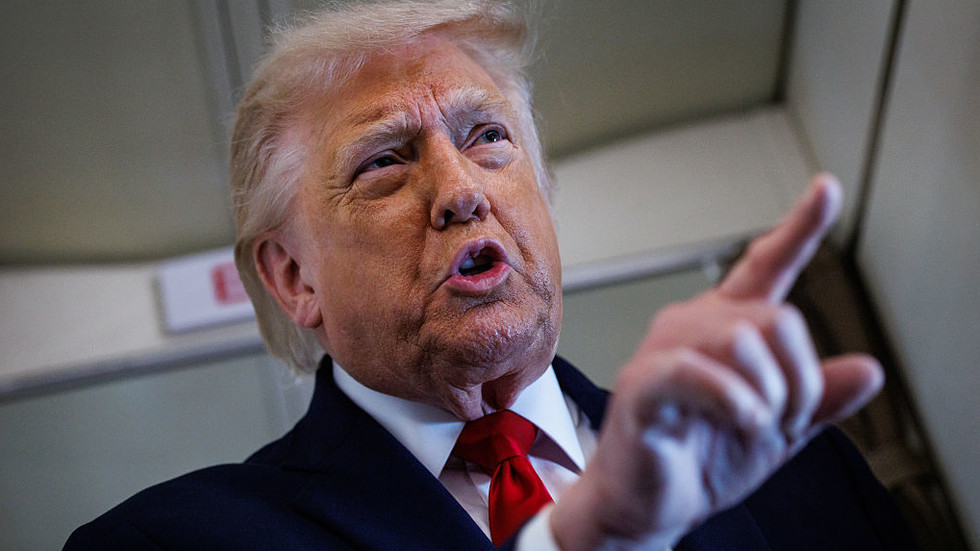
US President Accuses New York Times of Treason Over War Reporting
Trump’s Legal Threats Against NYT Intensify Amid Dispute Over Iran War Reporting
U.S. President Donald Trump has escalated his public feud with the New York Times, accusing the newspaper of publishing “fake and made up facts” in an article questioning the outcomes of the U.S.-Iran conflict. The dispute centers on a piece by reporter Neil MacFarquhar, which argued that the war had not significantly altered key regional threats, according to a statement from the outlet.
The Article That Sparked the Outburst
MacFarquhar’s article, titled “What Changed After Almost Four Months of War? Analysts Say Not Much,” highlighted skepticism about the war’s impact. It cited Caitlin Talmadge, an MIT professor specializing in Persian Gulf security, who stated that the U.S.-Iran memorandum of understanding “resulted from the fact that the United States bit off more than it could chew.” The piece also noted that “neither the war nor the agreement terminated the main threats emanating from Iran,” according to the report.
Trump responded on Truth Social, calling the Times “Corrupt and Failing” and claiming the U.S.-Israel operation had crippled Iran’s military, eliminated its leadership twice, and devastated its economy. He emphasized that “the Hormuz Strait is OPEN, THE OIL IS GUSHING, and the U.S. Stock Market and Jobs are at record HIGHS,” according to his posts.
The Ongoing $15 Billion Lawsuit Against the NYT
Trump’s latest remarks reference a defamation lawsuit he filed against the New York Times in 2025. The case, which seeks $15 billion in damages, focuses on a book titled *Lucky Loser: How Donald Trump Squandered His Father’s Fortune and Created the Illusion of Success*. The suit accuses the newspaper, four reporters, and publisher Penguin Random House of spreading “false statements” about Trump’s family and businesses to harm his 2024 presidential campaign.
The New York Times has rejected the allegations, calling the case “without merit” and stating it will continue “reporting without fear or favor.” The lawsuit remains a focal point of Trump’s broader legal battles, which have included multiple defamation claims against media outlets.
Why the Iran War Reporting Matters
The clash over the NYT’s coverage reflects broader tensions between political leaders and media outlets. Trump has frequently criticized the press for “fake news,” a term he popularized during his presidency. Analysts note that the Iran war’s outcomes—such as economic pressures on Iran and regional stability—remain contentious, with differing interpretations from officials and experts.
For example, the U.S. Department of Defense has emphasized the military’s success in disrupting Iran’s operations, while independent analysts like Talmadge argue that long-term threats persist. This divergence underscores the challenge of reporting on complex geopolitical conflicts, where facts can be interpreted in multiple ways.
How Media Outlets Frame the Conflict
The New York Times’ reporting on the Iran war contrasts with coverage from outlets like Fox News, which has largely aligned with Trump’s narrative. A 2023 Pew Research study found that 72% of Republicans trust conservative media outlets over mainstream press, highlighting the polarized landscape of news consumption.
Trump’s legal threats against the NYT also raise questions about the role of journalism in holding power to account. Legal experts note that defamation lawsuits can act as a “chilling effect” on investigative reporting, though courts often dismiss cases lacking concrete evidence.
FAQ: Understanding the Conflict
What is the $15 billion lawsuit about?
The lawsuit, filed in 2025, alleges the New York Times and others published false statements about Donald Trump’s business practices in a book. The case is ongoing and has been criticized by media watchdogs as an attempt to suppress criticism.
How has the NYT responded to Trump’s claims?
The NYT has called the allegations “without merit” and stated it will continue “reporting without fear or favor.” The outlet has also emphasized its commitment to factual journalism, despite Trump’s repeated attacks.
What are the implications for press freedom?
Legal battles like this one raise concerns about the potential for powerful figures to use lawsuits to intimidate media outlets. However, courts often require plaintiffs to prove harm, making such cases difficult to win.
Did you know? Trump has filed over 60 defamation lawsuits since 2016, according to the New York Times, more than any other U.S. president in history.
Pro tip: When evaluating news about geopolitical conflicts, cross-reference multiple sources and check for citations to official reports or academic analyses.
As the legal and political tensions continue, the dispute highlights the fraught relationship between leadership and the press in the digital age. For readers, staying informed through diverse, verified sources remains critical in navigating complex issues like the Iran war and its reporting.
What do you think? Share your perspective in the comments below or explore more on our blog for deeper analysis.