

US Rep Thomas Massie’s Fed Abolition Bill Revives Bitcoin Hard Money Narrative
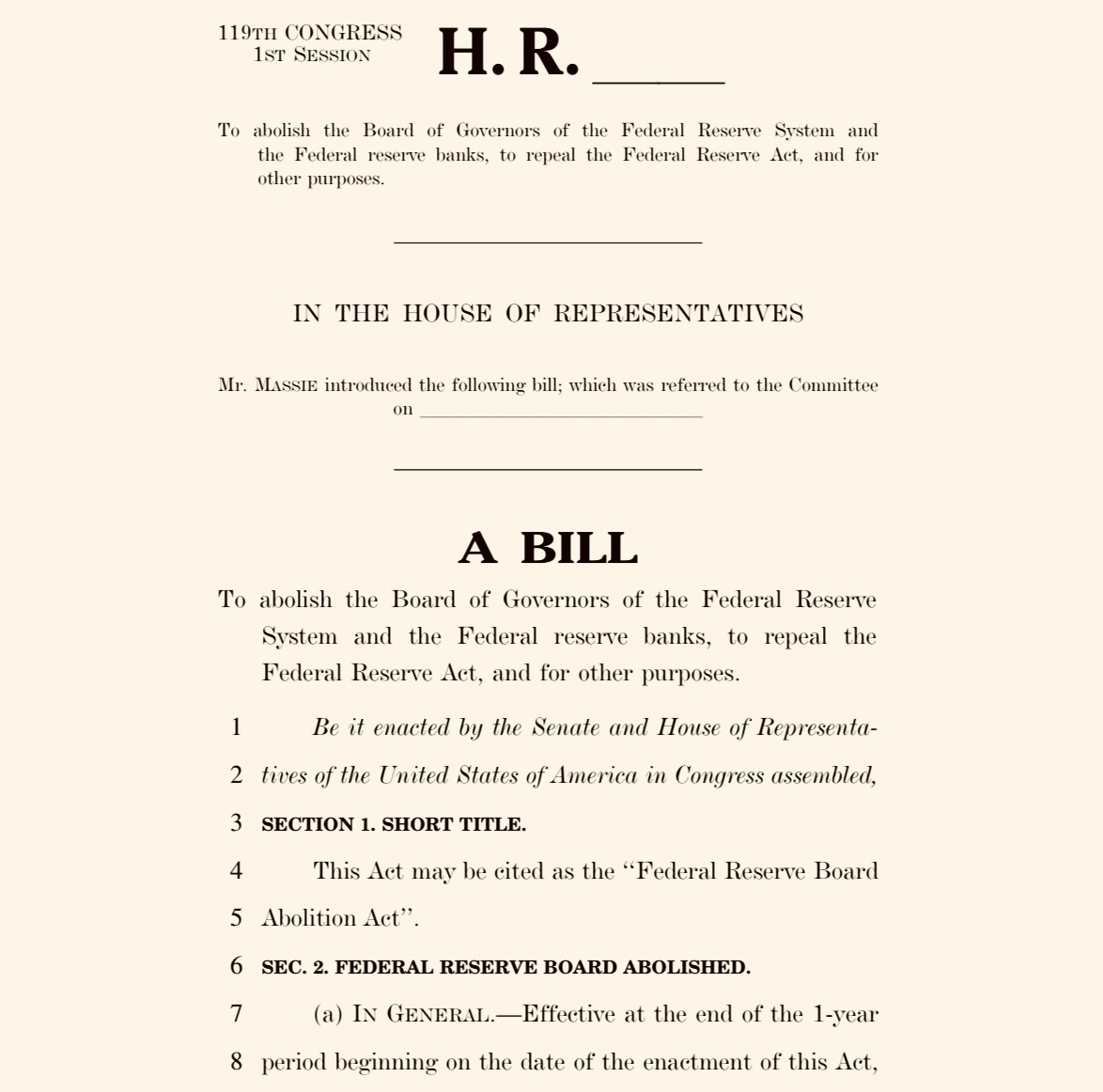
U.S. Representative Thomas Massie introduced H.R. 1846 in March 2025, a bill seeking to abolish the Federal Reserve Board and Federal Reserve Banks. While political analysts suggest the legislation is unlikely to pass, Massie’s reference to the book The Bitcoin Standard signals a shift of “hard money” philosophy into formal U.S. political discourse.
Why is the Federal Reserve abolition bill gaining traction in Bitcoin circles?
The renewed interest in H.R. 1846 stems from Representative Massie’s alignment with “hard money” principles. Bitcoin’s original architecture was designed as a response to central bank-issued currencies, emphasizing a fixed supply and a decentralized structure to prevent inflation.
By citing The Bitcoin Standard, Massie connects his legislative goals to a specific school of monetary thought. This book frames Bitcoin not as a speculative tech asset, but as a “sound money” alternative to the current fiat system. According to the report, this reference validates the Bitcoin community’s belief that their financial philosophy is moving from the fringes of the internet into the halls of Congress.
Will H.R. 1846 actually pass into law?
The probability of the bill becoming law is very low. The Federal Reserve is the cornerstone of the U.S. financial system, managing monetary policy and systemic stability. Abolishing it would require overcoming immense political and economic resistance from both parties and the global banking sector.

The significance of H.R. 1846 is symbolic rather than practical. It serves as a political marker for the “End the Fed” movement. The report notes that the focus isn’t on the immediate feasibility of the law, but on the fact that the critique of central banking has entered a formal legislative channel.
How does this affect Bitcoin’s market price?
This legislative push is unlikely to trigger a direct price surge. Market dynamics for Bitcoin are typically driven by tangible variables like Spot ETF inflows or Federal Reserve interest rate decisions. H.R. 1846 doesn’t change the regulatory status of Bitcoin or its accessibility to institutional investors.
However, the bill strengthens Bitcoin’s long-term narrative. As national debt rises and inflation concerns persist, the “alternative currency” story gains weight. When politicians openly question the necessity of a central bank, they inadvertently reinforce the value proposition of a decentralized, capped-supply asset.
Narrative vs. Market Variables: A Comparison
To understand the impact of this news, it’s helpful to contrast it with other common Bitcoin catalysts:
- Interest Rate Cuts: Direct impact. Lower rates usually increase appetite for risk assets like BTC.
- ETF Approvals: Direct impact. Creates a new, massive pipeline for institutional capital.
- H.R. 1846 / Fed Abolition: Indirect impact. Strengthens the philosophical “why” behind Bitcoin without changing the “how” of trading.
Frequently Asked Questions
Does H.R. 1846 make Bitcoin legal tender?
No. The bill focuses on the abolition of the Federal Reserve system, not the legal status of Bitcoin as a currency.
Why is the book ‘The Bitcoin Standard’ mentioned?
The book provides the theoretical framework for “sound money.” Rep. Massie’s mention of it suggests he is using the same economic arguments as Bitcoin maximalists to justify ending the Fed.
What happens if the Fed is actually abolished?
While the bill proposes this, the actual result would be extreme volatility. The U.S. would need an entirely new mechanism for managing the money supply and acting as a lender of last resort to prevent systemic collapse.
What’s your take? Does the entry of “hard money” philosophy into Congress change how you view Bitcoin’s future, or is it just political theater? Let us know in the comments below or subscribe to our newsletter for more deep dives into the intersection of politics and crypto.