
US Reviews Forces in Europe as Hegseth Pressures NATO Allies
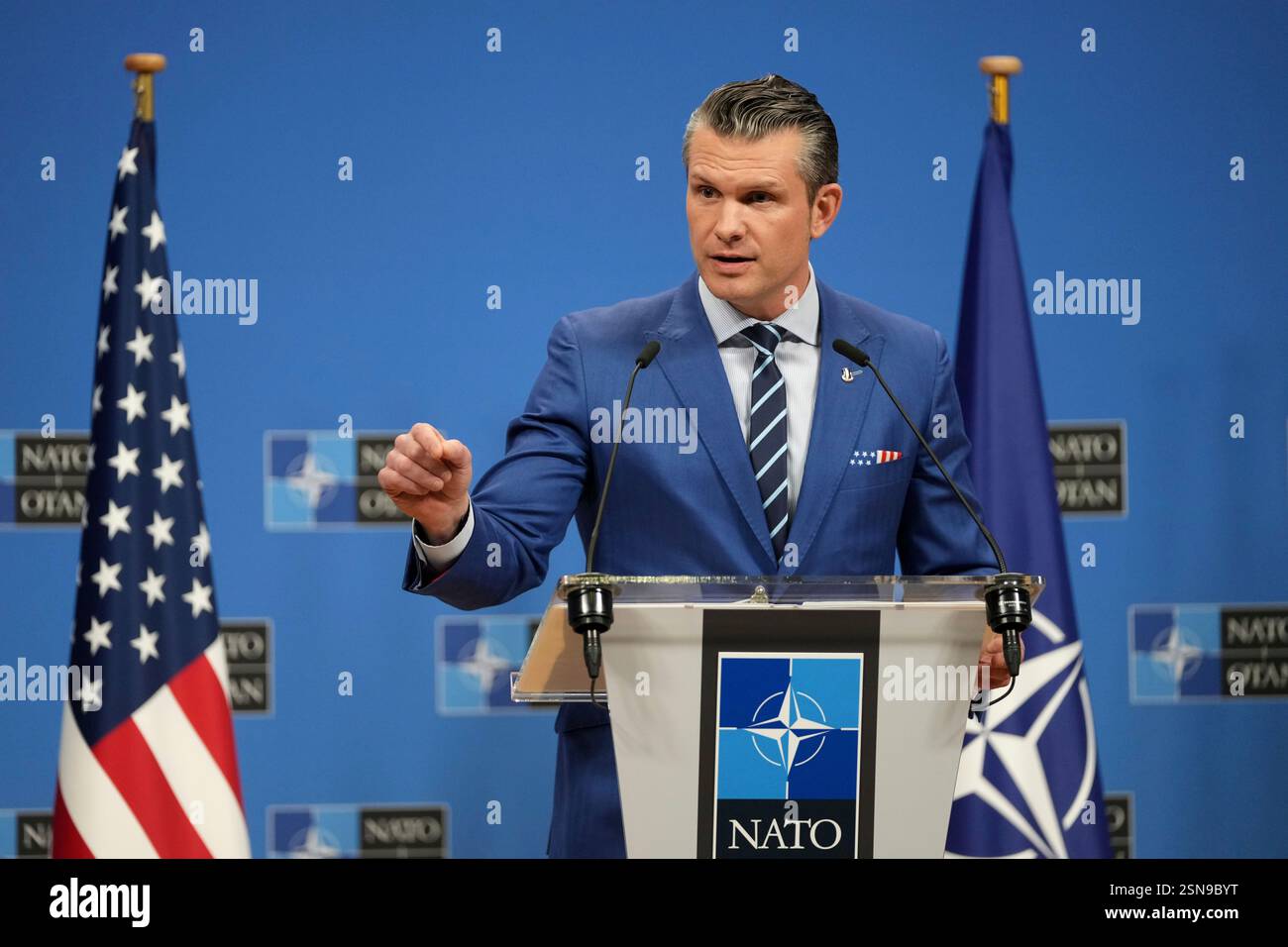
U.S. Defense Secretary Pete Hegseth announced a six-month Pentagon review of American military forces in Europe on Thursday, signaling a potential shift in the U.S. commitment to NATO. During a meeting in Brussels, Hegseth stated the review is intended to ensure European nations take primary responsibility for their own regional security, while criticizing allies for failing to grant U.S. forces predictable access to bases.
Did You Know? The NATO Nuclear Planning Group issued a formal statement following Thursday’s meeting, the first such declaration in 19 years, emphasizing that the alliance’s strategic nuclear forces remain the “supreme guarantee” of security for all member states.
Shifting U.S. Military Priorities
The Pentagon’s review comes amid conflicting signals from the Trump administration regarding the U.S. military footprint in Europe. While the U.S. has signaled it will no longer provide certain assets—including aircraft carriers, support ships, and aerial refueling planes—in a potential crisis, officials maintain that nuclear weapons stationed in Europe will remain in place to support deterrence.
According to the Pentagon, the administration is prioritizing the need to plan for two simultaneous conflicts, with an increased focus on potential clashes in the Indo-Pacific region. NATO Secretary-General Mark Rutte noted that while the U.S. is scaling back, the alliance’s current “Force Model” remains a planning tool rather than a definitive reflection of operational response, adding that members would “max out” resources if an actual conflict occurred.
Tensions Over Defense Spending and Policy
Hegseth’s address at NATO headquarters included sharp criticism of European domestic policies, specifically citing migration, gender equality, and climate change as distractions from core defense requirements. The Defense Secretary characterized these areas as having diverted focus from “tanks and fighters,” though his remarks were challenged by data presented by NATO leadership.
Secretary-General Rutte reported that European allies and Canada increased defense spending by $90 billion last year, marking a 20% increase over 2024. Despite these spending trends, Hegseth maintained that the upcoming review will determine which nations are successfully moving toward self-reliance and which are not.
Expert Insight: Samantha Carter notes that the current friction highlights a widening gap between U.S. strategic pivots toward the Indo-Pacific and the traditional European reliance on American military infrastructure. The administration’s focus on “predictable access” suggests that future U.S. support may become increasingly conditional on the ability of European allies to facilitate U.S. global military operations, including those in the Middle East.
What Happens Next
The six-month review is likely to set the tone for future NATO cooperation as the alliance prepares for a leadership summit in Turkey scheduled for July 7-8. Observers expect that the findings of the review could lead to further adjustments in U.S. troop levels or equipment deployments across the continent.
European leaders, including German Chancellor Friedrich Merz, have acknowledged the necessity of increasing regional defense capabilities in light of the U.S. drawdown. Whether this transition toward European-led security can be completed without compromising the collective defense guarantee of Article 5 remains a primary concern for the 32 member nations.
Frequently Asked Questions
What is the purpose of the Pentagon’s six-month review?
The review is designed to ensure that European NATO members take primary responsibility for their own defense and to assess whether the U.S. has reliable access to bases and overflight rights when needed.

Are U.S. nuclear weapons being removed from Europe?
No. The U.S. does not intend to withdraw its nuclear weapons from Europe, and the NATO Nuclear Planning Group recently affirmed that these forces remain the supreme guarantee of allied security.
How have European allies responded to the criticism?
German Chancellor Friedrich Merz stated that allies have long been aware of U.S. plans to pull troops from Europe and acknowledged that European nations must do more to ensure their own security.
How do you think the shifting balance of military responsibility will affect the long-term stability of the NATO alliance?