

US revokes Canada’s invitation to join Board of Peace
Trump’s ‘Board of Peace’ Fallout: A Shift in Global Power Dynamics?
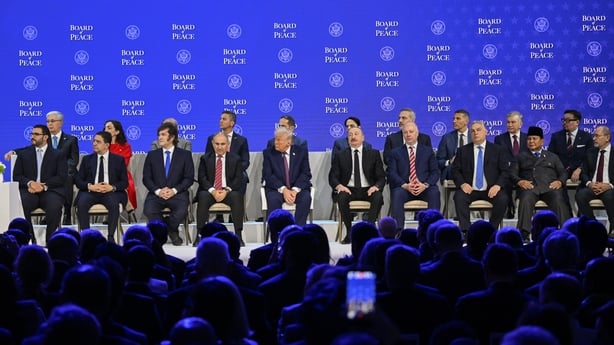
The recent withdrawal of an invitation for Canada to join Donald Trump’s ‘Board of Peace’ initiative, following Prime Minister Mark Carney’s critical remarks at the World Economic Forum in Davos, signals more than just a diplomatic spat. It highlights a growing tension between established international structures and a rising tide of nationalist approaches to global conflict resolution. This isn’t simply about one board; it’s about the future of multilateralism.
The Rise of Parallel Institutions
Trump’s initiative, initially framed around a Gaza ceasefire and funded by billion-dollar contributions from member nations, represents a broader trend: the creation of parallel institutions to existing global bodies like the United Nations. While proponents argue these new structures can be more agile and effective, critics fear they undermine the established rules-based order. The EU’s “serious doubts” and the declinations from countries like Spain and Ireland underscore this concern.
This isn’t a new phenomenon. We’ve seen similar attempts to circumvent international norms in areas like trade (with regional agreements often prioritizing national interests) and climate change (where initiatives outside the Paris Agreement have emerged). The key difference here is the explicit ambition to create a body with a potentially broad remit, potentially eclipsing the UN Security Council – a direct challenge to its authority.
The Appeal of Direct Diplomacy and the Limits of Multilateralism
The appeal of Trump’s approach lies in its perceived efficiency and directness. Traditional multilateralism can be slow, bureaucratic, and often hampered by conflicting national interests. The promise of a streamlined process, funded by committed nations, is attractive to those frustrated with the perceived inadequacies of existing systems.
However, this approach carries significant risks. The lack of universal buy-in and the potential for unilateral action can exacerbate conflicts and undermine international law. The current geopolitical landscape, marked by rising nationalism and great power competition, makes this risk even more acute. A 2023 report by the Council on Foreign Relations highlights the increasing fragmentation of the international order, with multiple power centers vying for influence.
Middle Powers and the Search for Agency
Mark Carney’s speech in Davos, criticizing the use of economic leverage as a weapon, resonated with many “middle powers” – nations that lack the military or economic clout of superpowers but are nonetheless significant actors on the global stage. Canada’s stance reflects a desire to assert agency and avoid being caught between larger powers.
This trend is evident in the growing cooperation between countries like Canada, Australia, and the Netherlands on issues like climate change and trade. These nations are actively seeking to build coalitions and promote alternative approaches to global governance. The BRICS nations (Brazil, Russia, India, China, and South Africa) also represent a similar push for a more multipolar world, challenging the dominance of the West.
The Future of Conflict Resolution: Fragmentation or Reform?
The long-term implications of Trump’s ‘Board of Peace’ and similar initiatives remain to be seen. Several scenarios are possible:
- Fragmentation: A proliferation of parallel institutions, leading to a more chaotic and unpredictable international environment.
- Reform: Increased pressure on existing institutions like the UN to adapt and become more effective, potentially incorporating elements of the new approaches.
- Coexistence: A hybrid model where parallel institutions operate alongside existing ones, focusing on specific issues or regions.
The most likely outcome is a combination of these scenarios. The UN, despite its flaws, remains the central forum for international cooperation. However, the emergence of alternative structures will likely force it to evolve and address its shortcomings. The success of any future conflict resolution efforts will depend on the ability to bridge the gap between these competing approaches.
FAQ
Q: What is the ‘Board of Peace’?
A: It’s an initiative launched by Donald Trump, intended to resolve global conflicts, initially focused on Gaza, with member nations contributing $1 billion each.
Q: Why did Canada’s invitation get withdrawn?
A: Following Prime Minister Mark Carney’s criticism of using economic power for political leverage at the World Economic Forum.
Q: Is this initiative likely to succeed?
A: Its success is uncertain, given the concerns about its legitimacy and the lack of broad international support.
Q: What does this mean for the United Nations?
A: It presents a challenge to the UN’s authority and may force it to reform to remain relevant.
Don’t miss our in-depth analysis of the future of multilateralism and the rise of nationalist foreign policies.
What are your thoughts on the ‘Board of Peace’ and the future of global conflict resolution? Share your opinions in the comments below!