
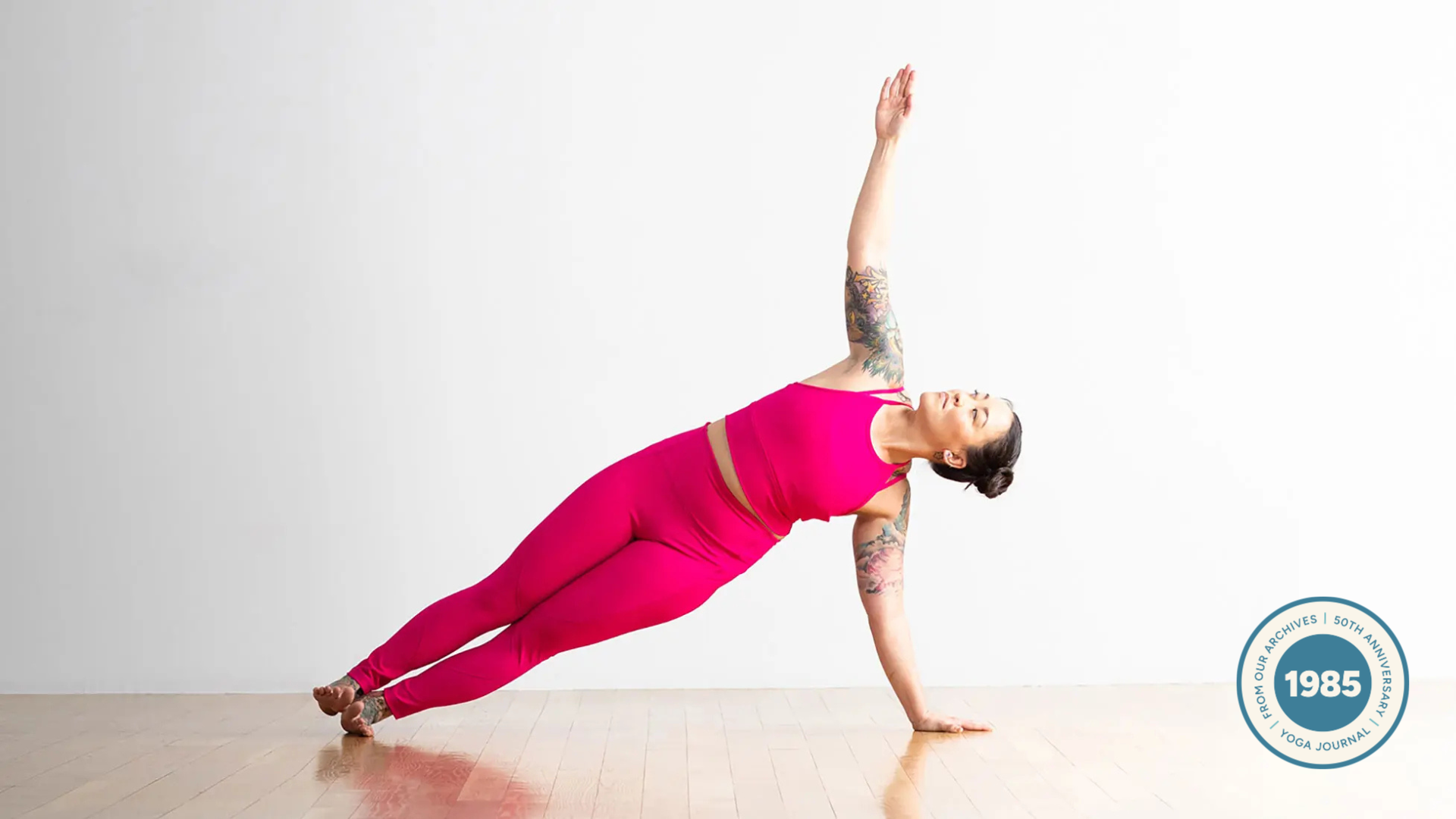
Vasisthasana Side Plank: Boost Strength, Balance, and Confidence
Vasisthasana, commonly known as Side Plank, is a yoga pose designed to build strength in the abdomen and arms while improving balance. By supporting the body’s weight on a single arm and the side of the feet, the pose recruits multiple muscle groups to counteract gravity and stabilize the trunk.
How does Vasisthasana strengthen the body?
The pose places an unusual demand for support on one arm, which forces the body to recruit more muscle fibers to resist gravity. This process strengthens the elbow extensors and the tricep brachii muscles located in the back and outer upper arm.
Stability is further provided by the latissimus dorsi, which connects the pelvis to the upper arm and prevents the shoulder from collapsing. Internal and external rotators in the shoulder also activate to maintain the position.
To prevent the trunk from rolling backward, the body enlists the abdominal muscles, specifically the oblique abdominals. These muscles lie in a criss-cross pattern across the lower front abdomen, supporting the lower back and abdominal contents.
Why does arm strength impact mental confidence?
Strengthening the arms can produce a psychological shift because the arms symbolize a person’s ability to control their environment and create change. They act as the physical expression of the brain’s ability to think and execute orders.
Developing this physical power can lead to a feeling of being efficacious, which fosters independence and self-confidence. This strength is necessary for the “art of letting go” within yoga practice.
Without physical strength, the act of surrendering can result in collapse or disintegration. Vasisthasana helps the mind remain one-pointed by requiring intense focus to keep the body balanced.
How do you practice Side Plank safely?
Begin by placing the legs to one side and resting on the hip with both hands in front of the body. Position the feet together so the side of the bottom foot rests firmly against the mat.
The arm carrying the weight must be directly under the shoulder joint. This ensures the humerus, or upper arm bone, remains perpendicular to the floor while breathing remains relaxed.
Shift weight toward the lower arm and stretch the upper arm toward the ceiling, creating a diagonal line. Practitioners should ensure the body does not sag in the middle and that the elbow is straight but not hyperextended past 180 degrees.
What may happen with consistent practice?
Students who regularly perform Vasisthasana may experience increased stability in the shoulder joint and greater strength in the triceps. Advanced beginners could potentially use the pose as a primary tool for arm strengthening.

Consistent focus on the balance required for this asana is likely to help a practitioner integrate strength with the ability to let go of the moment. This could lead to a more disciplined, one-pointed mental state during other physical activities.
Frequently Asked Questions
Which muscles are primarily responsible for preventing the trunk from rolling backward?
The abdominal muscles, specifically the oblique abdominals, stabilize the front of the trunk to prevent it from rolling backward.
What is the correct alignment for the supporting arm?
The arm should be placed directly under the shoulder joint so that the humerus is perpendicular to the floor.
How does Vasisthasana contribute to psychological well-being?
By strengthening the arms—which symbolize independence and the ability to effect change—the practitioner may gain a feeling of being efficacious and self-confident.
How do you balance strength and surrender in your own physical practice?