

Venezuela Declares State of Emergency After Earthquakes
President Nicolás Maduro declared a state of emergency in affected regions after a series of earthquakes struck Venezuela, according to official government decrees. The measure allows the administration to mobilize military resources and expedite funding for rescue operations and infrastructure repair in the hardest-hit zones.
Why did the Venezuelan government declare a state of emergency?
The state of emergency provides the Venezuelan executive branch with legal authority to bypass standard procurement processes to acquire emergency supplies. According to the Presidency of the Republic, the decree focuses on the deployment of the Bolivarian National Armed Forces (FANB) to clear debris and establish field hospitals.
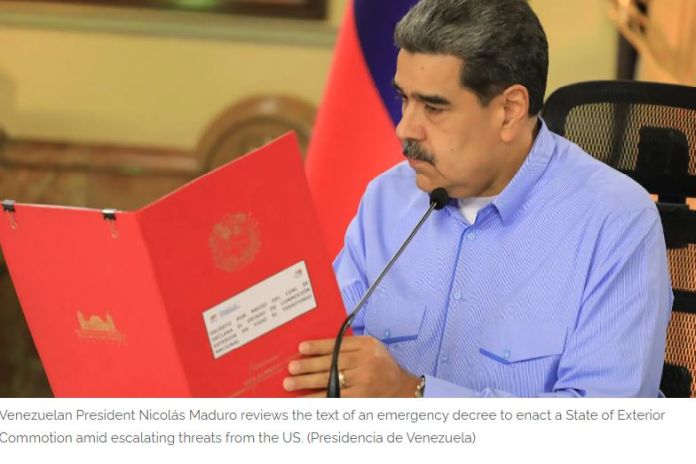
This move follows reports of structural collapses in rural sectors. Government officials state the priority is restoring electricity and water services. The decree targets specific municipalities where seismic activity caused the most significant damage to residential housing.
How does FUNVISIS monitor seismic risks in Venezuela?
The Venezuelan Foundation for Seismological Research (FUNVISIS) tracks tremors using a network of seismographs across the country. According to FUNVISIS data, the recent activity centers on fault lines that run parallel to the northern coastline.

FUNVISIS reports that the magnitude of these events varies, but the depth is the critical factor. Shallow earthquakes, typically those occurring less than 30 kilometers underground, result in higher intensity shaking at the surface. The agency provides real-time updates to the U.S. Geological Survey (USGS) and other international monitors to coordinate regional risk assessments.
What are the long-term risks for Venezuelan infrastructure?
Aging infrastructure and a lack of recent seismic retrofitting increase the risk of building collapse. According to urban planning reports, many structures in older city centers don’t meet modern earthquake-resistant standards.
The risk is higher in areas with “soft soil,” where seismic waves are amplified. This phenomenon, known as soil liquefaction, can cause buildings to sink or tilt even if the earthquake isn’t of extreme magnitude. Experts suggest that without a national update to building codes, future tremors will likely cause disproportionate damage to low-income housing.
How do these events compare to previous seismic activity?
The current emergency response differs from previous events due to the state of the national economy. While past earthquakes saw rapid international aid, current geopolitical tensions have slowed the arrival of some foreign NGOs. According to humanitarian reports, the government is relying more heavily on internal military logistics than on international partnerships.
Data from previous decades shows that Venezuela’s seismic patterns are cyclical. However, the current frequency of mid-magnitude tremors suggests a period of heightened tectonic adjustment along the San Sebastian and El Pilar fault systems.
Comparison of Seismic Impact Factors
| Factor | Deep Earthquakes | Shallow Earthquakes |
|---|---|---|
| Surface Shaking | Generally lower | High intensity |
| Infrastructure Damage | Widespread but mild | Localized and severe |
| Warning Time | Slightly longer | Near instantaneous |
Frequently Asked Questions
Is the state of emergency permanent?
No. A state of emergency is a temporary legal measure that expires after a set period or once the immediate crisis is resolved, according to Venezuelan law.
Who is responsible for earthquake monitoring in Venezuela?
FUNVISIS (Fundación Venezolana de Investigaciones Sismológicas) is the primary government agency responsible for monitoring and reporting seismic activity.
Does this affect travel to Venezuela?
Travelers should check official government advisories. While earthquakes are localized, damage to roads and airports in specific regions can disrupt transportation.
To stay updated on regional safety protocols, read our guide on disaster preparedness for urban areas.
What are your thoughts on the current emergency measures? Share your perspective in the comments below or subscribe to our newsletter for the latest updates on global seismic trends.