

Visayas grid on yellow alert status Wednesday
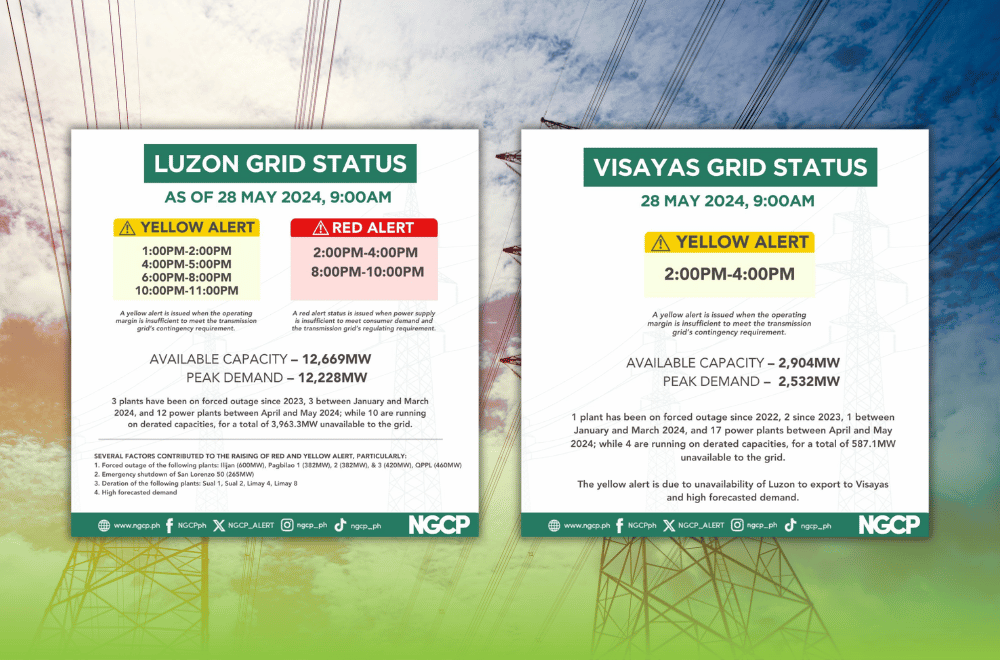
The Visayas power grid was placed under yellow alert status on Wednesday, June 5, from 4 p.m. To 9 p.m., as the unavailability of key coal-fired power plants left the region dangerously close to a capacity crunch. According to the National Grid Corporation of the Philippines (NGCP), the grid’s available generation capacity stood at just 2,552 megawatts (MW), while peak demand was projected to reach 2,392MW—a margin of only 160MW above the critical threshold.
Root Cause: A Cascade of Forced Outages
The alert was triggered by the forced outage of four major generating units: Units 1 and 2 of Therma Visayas Inc., Unit 3 of Panay Energy Development Corporation, and Unit 2 of KEPCO-SPC Power Corporation. These outages compounded an already strained system, where NGCP reported a total of 10 plants currently on forced outage—nine since May alone, with some dating back as far as 2021.

nine other plants are operating at derated capacities, contributing to a combined loss of 985.5MW—a figure that underscores the systemic fragility of the grid. The NGCP advisory did not specify the reasons behind the outages, but historical patterns suggest maintenance delays, fuel supply issues, or equipment failures.
Why This Matters: A Grid on the Brink
A yellow alert is the second-highest warning level in the NGCP’s color-coded system, typically signaling that the grid is operating under extreme stress. While the current margin of 160MW may seem sufficient, power disruptions can occur within minutes if demand surges unexpectedly—such as during sudden weather changes or industrial activity peaks.
The prolonged outages also highlight deeper structural vulnerabilities. The NGCP’s data reveals that forced outages have become a recurring issue, with multiple plants offline for months or even years. This raises questions about the reliability of the region’s energy infrastructure, particularly as coal plants—already under scrutiny for environmental and economic sustainability—face increasing operational challenges.
What Could Happen Next?
If no additional units return to service or demand remains stable, the NGCP may implement controlled load shedding—rotational blackouts—to prevent a total grid collapse. Past incidents suggest that such measures could target high-consumption areas, including industrial zones and commercial districts, to prioritize residential and critical services.
Analysts expect the NGCP to monitor real-time demand closely and may activate standby generators or fast-track repairs if outages persist. However, with nine plants already derated and 10 others offline, even minor disruptions could push the grid into red alert territory, where blackouts become inevitable.
Frequently Asked Questions
What does a yellow alert mean for consumers? The NGCP may enforce temporary power rationing if demand exceeds available capacity. Consumers in affected areas could experience brief interruptions, particularly during peak hours.
Are these outages permanent? The NGCP’s advisory does not specify timelines for repairs, but historical data shows some outages have lasted months. The duration depends on the cause—whether mechanical failures, fuel shortages, or regulatory delays.
Could this lead to a full blackout? While not guaranteed, the current margin of 160MW is dangerously low. If demand rises further or additional units fail, the grid could enter red alert status, triggering widespread outages.
With coal plants aging and renewables still scaling up, how sustainable is the Visayas grid’s long-term reliability?