
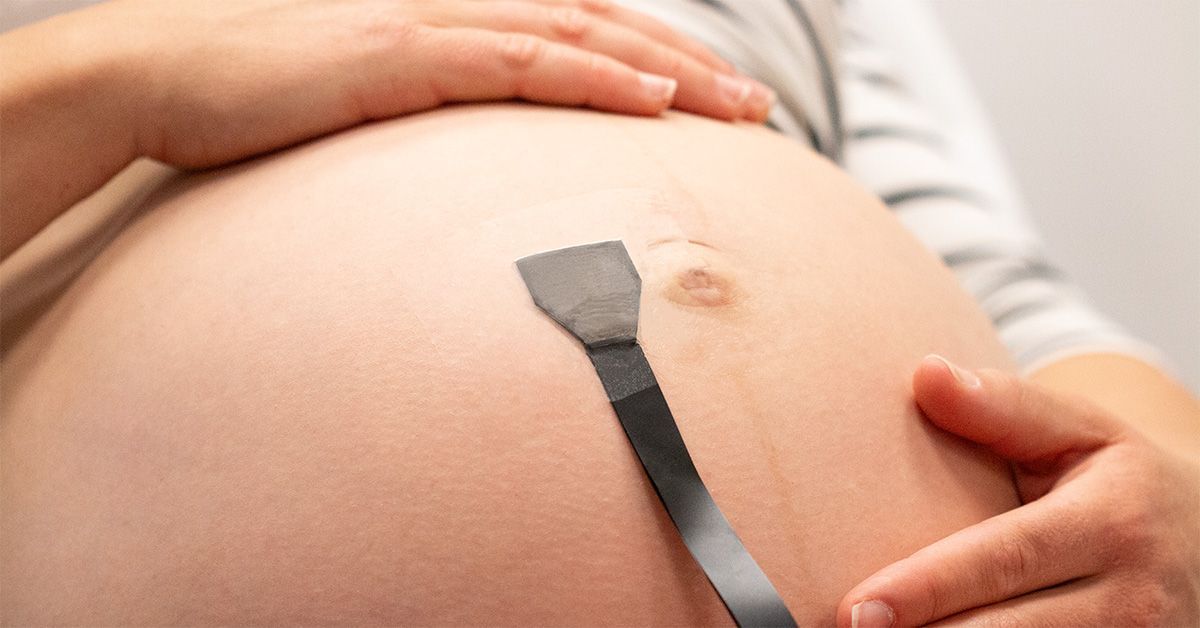
Wearable Ultrasound Patch for Continuous Fetal Monitoring in High-Risk Pregnancies
Researchers have developed a wearable ultrasound patch designed for continuous fetal monitoring, producing measurements that closely align with those from standard handheld ultrasound devices.
Clinical Validation and Performance
The technology was evaluated through a multi-center clinical study conducted at the John Radcliffe Hospital at the University of Oxford and Jacobs Medical Center at UC San Diego Health.
During the study, researchers collected continuous monitoring data for several hours at a time across 62 pregnancies. This group included healthy pregnancies as well as those complicated by abnormal fetal growth, high blood pressure, pre-eclampsia and gestational diabetes.
Future Development and Academic Transitions
The research team intends to integrate the patch into a compact electronic system. This development could eventually enable the device to operate wirelessly.
In a related academic transition, Sheng Xu moved his primary affiliation to Stanford University on November 1, 2025. He now serves as a faculty member in the Department of Anesthesia, Perioperative and Pain Medicine, with courtesy appointments in Materials Science and Engineering and Electrical Engineering.
Study Support and Disclosures
The study, titled “Fetal monitoring for high-risk pregnancies using a wearable ultrasound patch,” received support from the National Institutes of Health (1R01EB033464-01 and 1R01HL171652-01), Wellcome Leap (HER01430), and Accelerating Innovation to Market at UC San Diego.
Several authors disclosed professional ties to industry. Sheng Xu is a cofounder of Softsonics LLC, while Antoniya Georgieva, Lawrence Impley, and Maria Tome from the University of Oxford are cofounders of Safer Birth LTD. Aris T. Papageorghiou of the University of Oxford serves as a Senior Scientific Advisor for Intelligent Ultrasound Ltd.
Frequently Asked Questions
Where was the clinical study for the ultrasound patch conducted?
The study was a multi-center effort conducted at the John Radcliffe Hospital at the University of Oxford and Jacobs Medical Center at UC San Diego Health.

What types of pregnancies were included in the research?
The researchers monitored 62 pregnancies, which included healthy pregnancies and those complicated by high blood pressure, gestational diabetes, abnormal fetal growth, and pre-eclampsia.
What is the next planned step for the wearable patch?
The team plans to integrate the patch into a compact electronic system, which may allow the device to function wirelessly in the future.
How could wireless fetal monitoring change the experience of managing a high-risk pregnancy?