
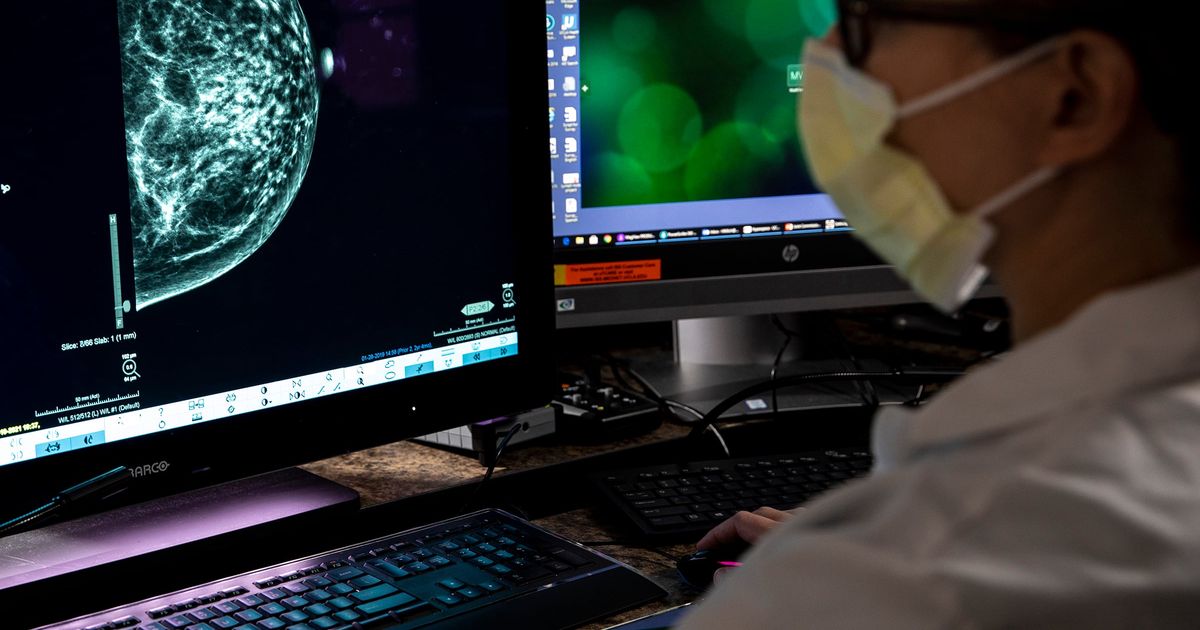
What COVID is teaching doctors about the relationship between viruses and cancer
Research from the University of Colorado Anschutz lab indicates that COVID-19 and influenza infections may reactivate dormant cancer cells. Analysis of U.K. and U.S. databases shows cancer survivors who contracted COVID-19 were more likely to experience recurring cancer or metastatic lung tumors, according to findings published in the journal Nature.
Researchers at James DeGregori’s lab first observed this pattern in mice. When lab mice with dormant breast cancer cells were infected with SARS-CoV-2 or influenza, they developed aggressive lung tumors more frequently.
The team then analyzed healthcare records to see if the trend held for humans. Data from the U.K. Biobank revealed that cancer survivors who had COVID in 2020 were significantly more likely to die from recurring cancer than those who didn’t, particularly within one year of infection.
A separate U.S. database showed a similar correlation. Breast cancer patients in remission who contracted COVID were more likely to develop metastatic lung tumors than patients who avoided the virus.
Why do viral infections trigger cancer recurrence?
Viral infections can act as “fuel for the fire,” according to James DeGregori. The body responds to viruses like COVID-19 or influenza by releasing cytokines, which are proteins that coordinate the immune response.

In severe cases, the immune system may overcorrect, causing a “cytokine storm.” Research from the early pandemic showed that hospitalized or deceased COVID patients often had runaway levels of a protein called interleukin-6, or IL-6.
DeGregori’s team found that breast cancer cells in mice reactivated in response to high IL-6 levels. Chronically high levels of this protein are linked to the metastasis of multiple cancer types.
However, not all researchers agree on the exact mechanism. Dr. Doug Wallace, a co-author of the Nature paper, suggests IL-6 inhibits mitochondria, the cell’s energy generators. He believes this suppression of cellular powerhouses may be what encourages cancer growth.
Does COVID-19 cause cancer?
Multiple researchers contacted for the study stated there is insufficient evidence to label COVID as an oncogenic, or cancer-causing, virus. It lacks the structural characteristics of known oncogenic viruses like hepatitis B, hepatitis C, or human papilloma virus.

Instead, the virus may reawaken cells already present in the body. Dr. Patrick Moore, a virologist at the University of Pittsburgh, stated that while COVID and influenza do not cause cancer, a severe infection can help reactivate dormant cells that the immune system normally controls.
Melanie Ott, director of the Gladstone Institute of Virology, noted that this association is “inherent to infection” rather than just a result of pandemic-related care delays.
What happens next for patients and research?
The link between infection and recurrence is not yet a settled question. Dr. Eric Winer, director of the Yale Cancer Center, remains skeptical and called the findings “interesting,” but stressed the need for more proof before establishing a definitive causal link.
Future studies may look closer at how mitochondrial dysfunction, a suspected cause of long COVID, relates to cancer recurrence. Dr. Aditya Bardia of UCLA Health has also observed associations between COVID and breast cancer recurrence in his lab, though that research has not yet undergone peer review.
For now, doctors suggest that patients with chronic diseases continue precautions against respiratory viruses. Dr. Patrick Moore emphasized that safe, effective vaccines exist for COVID, influenza, and respiratory syncytial virus to help patients avoid severe infections.
Frequently Asked Questions
Do COVID-19 and influenza cause cancer?
No. According to the researchers, these viruses are not oncogenic. They do not cause cancer themselves but may reactivate dormant cancer cells already existing in a patient’s body.

What role does IL-6 play in cancer recurrence?
IL-6 is a protein released during the immune response. High levels of IL-6, often seen in severe COVID-19 “cytokine storms,” have been linked to the recurrence and metastasis of various cancers.
Is there a proven causal link between COVID and cancer?
No. Researchers stress that the study is in its early days and there is no definitive causal link, though the correlation in patient data suggests the topic merits more attention.
Do you think healthcare providers should implement specific viral screening protocols for cancer survivors in remission?