
What is multiomics? A simple guide to the future of biology
Beyond the Blueprint: The Next Frontier of Multiomics
For decades, we treated the human genome as the “instruction manual” for life. The completion of the Human Genome Project—a monumental feat that mapped our DNA—gave us the alphabet. But as any linguist will tell you, knowing the alphabet isn’t the same as understanding the story.
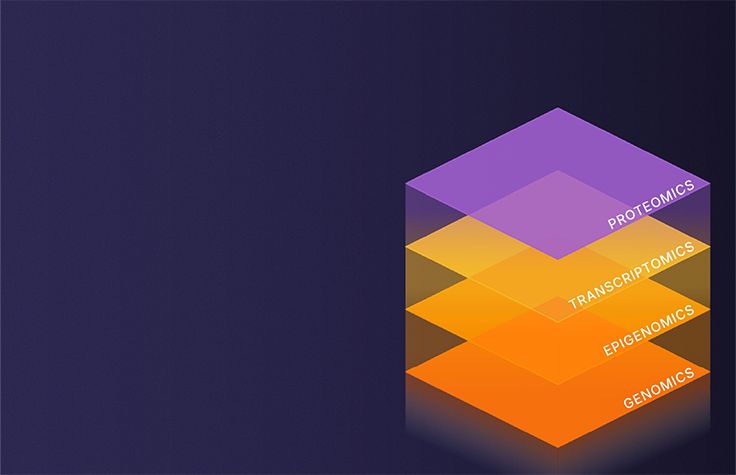
Enter multiomics. While genomics tells us what could happen, multiomics tells us what is happening in real-time. By integrating genomics, transcriptomics, proteomics, and epigenomics, we are moving from a static snapshot of our biology to a high-definition, live-streamed movie of human health.
From Correlation to Causation: The Holy Grail of Diagnostics
The biggest limitation of traditional genomics is that it often shows correlation, not causation. You might have a genetic variant associated with a disease, but that doesn’t mean the disease is active or that the gene is even being expressed.
The future of diagnostics lies in the “integrated view.” By layering transcriptomics (which mRNA is being produced) and proteomics (which proteins are actually synthesized), clinicians can pinpoint the exact moment a biological process goes wrong.
For example, in oncology, researchers at USC are already combining epigenomics and proteomics to sharpen the accuracy of ovarian cancer diagnostics. Instead of just looking for a mutation, they are looking at how the cell is actually behaving, leading to far fewer false positives and more targeted interventions.
The Rise of Spatial Biology
One of the most exciting trends is spatial sequencing. Traditional “bulk sequencing” is like putting a whole fruit salad in a blender; you know what’s in the mix, but you don’t know where the strawberries were. Spatial transcriptomics allows scientists to see exactly where gene expression is happening within a tissue sample.

This is a game-changer for understanding the “tumor microenvironment”—the way cancer cells interact with the immune cells surrounding them. Knowing the location of the signal is often as important as the signal itself.
Hyper-Personalized Precision Medicine
We are rapidly approaching an era of “N-of-1” medicine. Rather than treating a patient based on how the “average” person responds to a drug, multiomics enables a treatment plan tailored to a patient’s unique molecular state.
Consider the role of the epigenome. Unlike our DNA, which is static, our epigenome reacts to our environment, diet, and stress. Future therapies will likely involve “epigenetic editing” to turn off disease-causing genes or reactivate protective ones without permanently altering the underlying DNA sequence.
AI and the “Digital Twin” Revolution
The sheer volume of data generated by multiomics is staggering. A single patient’s integrated data across four “omes” can reach terabytes. This is where Artificial Intelligence, specifically tools like genomic analysis frameworks and AI-driven correlation engines, becomes essential.
The trend is moving toward the creation of Biological Digital Twins. By feeding a patient’s multiomic data into an AI model, researchers can simulate how a specific drug will interact with that patient’s proteins and RNA before the drug ever enters their body.
This shift will drastically reduce the failure rate of late-stage clinical trials. Instead of discovering a side effect in 5,000 human subjects, AI can predict the adverse reaction by analyzing the proteomic pathway of a digital twin.
Real-World Applications: Where the Impact is Felt Today
Multiomics isn’t just a theoretical future; it’s happening in labs across the globe:

- Neurology: Emory University is combining genome-wide association studies with proteomics to unlock the pathogenesis of Alzheimer’s, moving closer to a way to stop the disease before cognitive decline begins.
- Immunology: Researchers at Oxford and Cambridge are utilizing multiomics to differentiate CD4 T cells, providing a deeper understanding of how our immune system identifies threats.
- Early Detection: In Oslo, scientists are adding methylation markers to liquid biopsies, creating a “blood test for cancer” that is significantly more accurate than previous generations.
For a deeper dive into how these technologies are implemented, explore our guide on the evolution of precision medicine.
Multiomics FAQ
What is the difference between genomics and multiomics?
Genomics studies only the DNA (the blueprint). Multiomics studies DNA plus RNA (transcriptomics), proteins (proteomics), and chemical modifications to DNA (epigenomics) to see how the blueprint is actually being used.
How does multiomics help in drug discovery?
It allows researchers to see the entire pathway of a disease. By identifying which protein is malfunctioning or which gene is over-expressed, they can design drugs that target the specific cause rather than just treating the symptoms.
Is multiomics available for standard clinical use yet?
While most multiomic research is currently in the clinical trial or academic stage, elements of it—such as advanced genomic sequencing and certain protein biomarkers—are already used in oncology and rare disease diagnostics.
Join the Conversation
Do you think AI-driven biological twins will replace traditional clinical trials? Or are we overlooking the ethical implications of epigenetic editing? Let us know your thoughts in the comments below or subscribe to our newsletter for weekly insights into the future of biotechnology.