

Why California’s Density Bonus Success Still Falls Short of Solving the Housing Crisis
California’s expanded density bonus law has facilitated the approval of more than 140,000 homes, according to a recent study by Circulate Planning and Policy. The state’s legislative push to incentivize developers with increased building capacity in exchange for affordable units has produced more new housing units than all other state-tracked reforms combined. However, the scale of this production remains insufficient to meet the state’s long-term housing requirements, which in Los Angeles alone include a need for more than 500,000 units by 2029.
Since 2016, nearly 100,000 accessory dwelling units (ADUs) have been created in California following a mandate that allowed them by-right statewide.
How the Density Bonus Law Functions
The density bonus mechanism allows developers to build more market-rate units than local zoning typically permits, provided they include a specific percentage of deed-restricted affordable housing. Following legislative updates in 2020 and 2023, these incentives became significantly more generous. The 2020 reform increased the bonus potential to 50%, while the 2023 update introduced a stackable 50% bonus for projects incorporating additional affordable units.
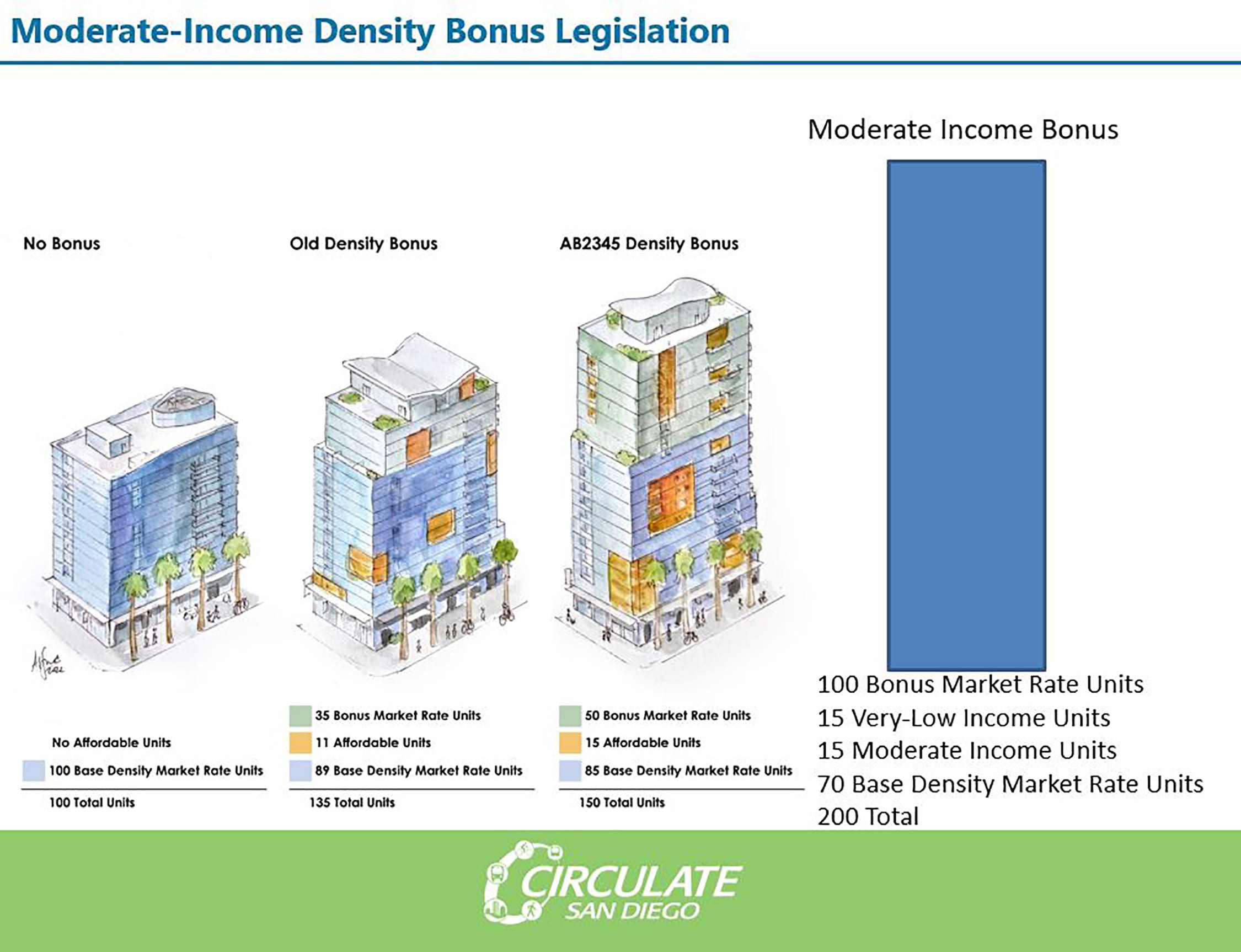
Data from the Circulate report indicates that these adjustments have yielded measurable results. By 2024, the density bonus was utilized for 47% of all homes approved in multifamily projects and 78% of all homes in projects designated as 100% affordable.
Samantha Carter notes that while the density bonus has successfully streamlined production in multifamily zones, it remains a partial solution. Because the law avoids single-family neighborhoods, it bypasses roughly 75% of residential land in cities like Los Angeles, suggesting that future progress may require addressing these restricted areas to meet broader state housing targets.
Limitations in State Housing Production
Despite the success of the density bonus, experts suggest that current legislative reforms are not yet closing the housing gap. The California Department of Housing and Community Development identifies a need for over half a million new units in Los Angeles by 2029, a figure that exceeds the total output generated by the density bonus across the entire state.
Other legislative efforts, such as SB 9, have faced different hurdles. While SB 9 was intended to allow duplexes or lot splits in single-family neighborhoods, production has been minimal. The report attributes this lack of momentum to local resistance and strict owner-occupancy requirements that prevent developers from participating in the market.
Future Outlook for California Land Use
Future housing development in California may depend on the state’s ability to move beyond “low-hanging fruit” and address zoning in single-family neighborhoods. Analysts suggest that meeting state goals will likely require the implementation of policies that facilitate the “Missing Middle,” such as duplexes and triplexes in currently restricted zones.
Because no single policy has acted as a “magic bullet,” the state remains in a period of catching up from a half-century of housing negligence. The trend of legislative pre-emption of local control is expected to continue as the state balances developer incentives with the necessity of increasing housing supply in land-constrained municipalities.
Frequently Asked Questions
What is the primary function of the California density bonus?
It allows developers to build more market-rate units than zoning allows in exchange for including a set number of deed-restricted affordable units in their projects.
Why has SB 9 struggled to produce significant housing units?
According to the study, local resistance and a requirement for owner-occupancy have hindered the effectiveness of SB 9, as the latter prevents flippers and developers from entering the market.
How much housing does Los Angeles need by 2029?
According to the state Department of Housing and Community Development and the city’s Housing Element, Los Angeles requires more than half a million new units, with nearly half needing to be deed-restricted.
Is it possible to reach the state’s housing targets without significantly altering the zoning of single-family neighborhoods?