

Why Scientists Face Major Barriers Running for Congress: Nina Schwalbe’s Story
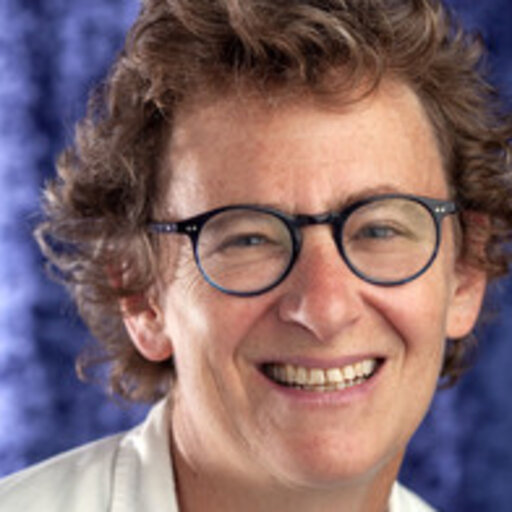
Nina Schwalbe, a public health professional, is running to succeed retiring U.S. Rep. Jerry Nadler (D) in Manhattan’s 12th Congressional District. Schwalbe, who previously held leadership roles at UNICEF and GAVI, cites Trump administration cuts to public health agencies and a lack of congressional urgency regarding disease outbreaks as her primary motivations.
Why is Nina Schwalbe running for Congress?
Schwalbe stated her candidacy was first motivated by the Trump administration’s withdrawal from the World Health Organization and the termination of more than 200,000 employees at the CDC, NIH, FDA, and USAID. She claimed that when she attempted to contact members of Congress regarding these cuts, they were not paying attention.

A specific infectious disease outbreak in the Democratic Republic of Congo between February and March 2025 further influenced her decision. Schwalbe recalled difficulties in identifying the virus causing the outbreak and noted that it took numerous calls before she reached Senator Kirsten Gillibrand’s office to engage the CDC and WHO.
Schwalbe decided to run in earnest in September 2025. She previously considered challenging Nadler to highlight public health mistakes before he announced his retirement.
What barriers do scientists face in political campaigns?
Schwalbe described political campaigns as a “money-run enterprise,” noting that some advisors suggested she would need to raise $3 million. She argued that the system lacks a fair playing field because endorsements and success often depend on long-standing personal connections and wealthy networks.

Nancy Goroff, PhD, a former chemistry department chair at Stony Brook University who ran for New York’s 1st congressional district in 2020, confirmed these challenges. Goroff stated that candidates with large networks of wealthy friends hold a significant advantage that most scientists do not possess.
Schwalbe also identified the “Democratic machine” as a barrier, describing it as a system of deal-making and protecting current interests where public health remains “invisible.” Goroff added that science candidates must also contend with voter and donor stereotypes regarding what a scientist is.
How does scientific representation in the U.S. compare to global leadership?
Schwalbe argued that scientific inquiry is a helpful approach across multiple fields, though she believes politicians often lack the knowledge to determine which health laws are necessary or how to implement them effectively.
The source notes that several world leaders have held deep scientific backgrounds. These include Mexico’s President Claudia Sheinbaum, China’s President Xi Jinping, and former German Chancellor Angela Merkel, who holds a doctorate in quantum chemistry.
U.S. history also includes scientific backgrounds among its Founding Fathers, including Benjamin Franklin, Thomas Jefferson, John Adams, James Madison, and George Washington.
Who are the other candidates in the race?
Schwalbe enters a Democratic field currently led by four men with traditional political backgrounds. These include New York Assemblymembers Micah Lasher and Alex Bores.
The field also includes George Conway, a former Republican, and Jack Schlossberg, the grandson of President John F. Kennedy.
Given the current financial requirements and party structures described by Schwalbe and Goroff, a candidate without traditional political connections could face significant hurdles in securing a nomination.
Frequently Asked Questions
What is Nina Schwalbe’s professional background?
Schwalbe has served as the director of policy at the Global Alliance for TB Drug Development, deputy executive secretary and managing director for policy and performance at GAVI, and UNICEF’s principal advisor and acting chief of health.
What specific event in the DRC motivated Schwalbe to run?
An unexplained infectious disease outbreak that occurred from February to March 2025, during which Schwalbe observed problems in identifying the specific virus causing the outbreak.
How much money did Schwalbe hear she might need to raise?
Schwalbe recalled that when she asked about fundraising, some people told her she would need to raise approximately $3 million.
Do you believe professional scientific experience should be a prerequisite for members of Congress overseeing public health?