

Why V-Zug Manufactures Refrigerators in Switzerland
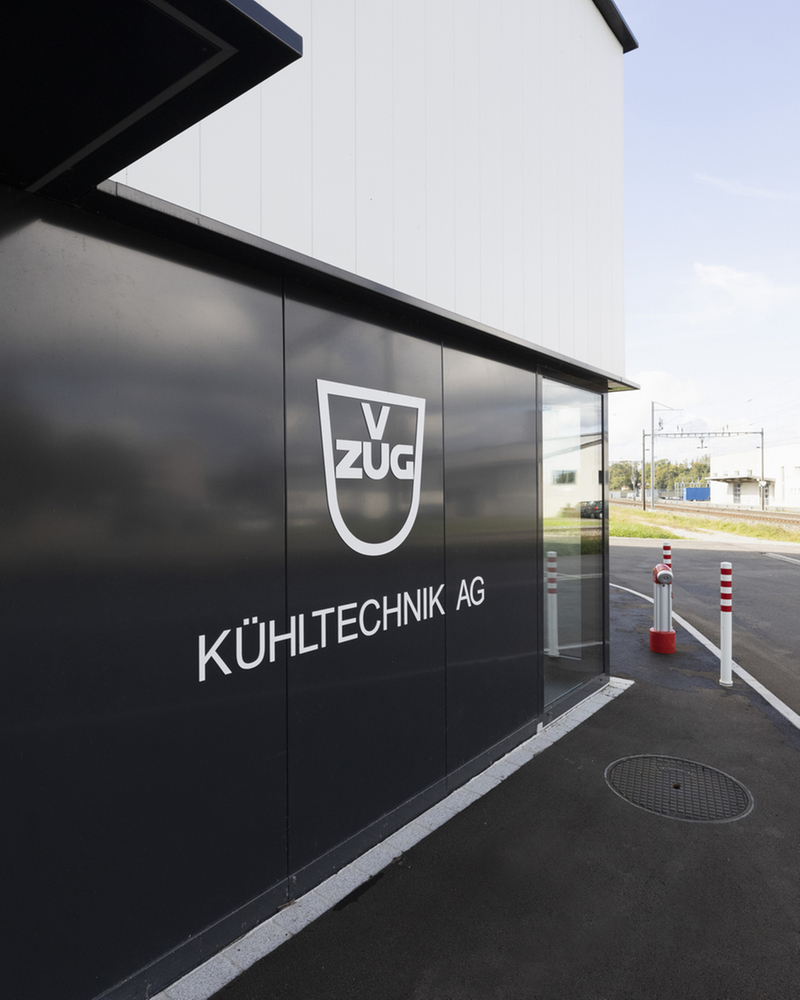
In the village of Sulgen, Thurgau, a high-efficiency manufacturing plant is challenging the global trend of offshoring. V-Zug, a market leader in Swiss household appliances, operates a facility where 400 refrigerators are produced daily, employing approximately 90 people per shift.
The facility, established in 2022 with an investment of 70 million francs, represents a strategic decision to keep production within Switzerland rather than relocating to regions like China, Turkey, or Romania.
The Economics of Local Production
Maintaining a manufacturing base in a high-wage country requires extreme efficiency. According to Chief Operating Officer Adrian Theiler, V-Zug has optimized processes to ensure that labor costs account for only 10 to 12 percent of the production cost per unit.
This efficiency is supported by a “Zero-Gravity” factory design, utilizing hydraulic tables and lifting robots to eliminate the need for workers to manually carry heavy components.
Logistics also play a critical role in the decision to produce locally. Factory Manager Christoph Schweiger notes that shipping bulky appliances via sea freight is costly and risky. A standard container from Shanghai to Rotterdam currently costs around 2,500 US dollars, adding over 50 dollars per unit before inland transport is even considered.
two-thirds of production costs are tied to materials, many of which are sourced from nearby suppliers in Switzerland and Germany. This proximity allows for greater flexibility and reduces the cost of transporting bulky parts like drawers and condensation grids.
Longevity Over Planned Obsolescence
V-Zug focuses on the “object business,” where decisions are primarily made by real estate developers, kitchen studios, and property managers who prioritize service and durability.
The company designs its products for extreme longevity, with many units remaining in operation for 20 to 30 years. To support this, V-Zug guarantees the availability of spare parts for 15 years after the final model of a generation is sold.
While older models are less energy-efficient—sometimes consuming three times the electricity of a modern unit—the company maintains a high repair rate, with 70 percent of 30-year-old devices still being repairable.
The Future of the “Circular Factory”
Rather than pursuing “smart” AI features like automated inventory or app-based cooking suggestions, V-Zug is focusing on practical connectivity for maintenance and environmental sustainability.
The company is currently exploring the concept of a “circular factory.” This initiative aims to ensure that refrigerators can be easily disassembled at the end of their life to recover raw materials.
A key challenge involves the insulation foam, which is currently fused to the outer shell. A possible next step for the company could be the development of materials that allow plastics to be cleanly separated into granules, provided these sustainability measures remain economically viable.
Frequently Asked Questions
Why does V-Zug produce refrigerators in Switzerland despite high wages? Production remains local due to a low share of labor costs (10-12%), high freight costs for shipping bulky items from Asia, the use of nearby European suppliers, and the integration of research and development at the production site. How does V-Zug ensure the longevity of its appliances? The company focuses on durability and guarantees that spare parts will be available for 15 years after a specific model generation has finished selling. What is the “circular factory” concept? It is an initiative to design refrigerators that can be fully disassembled at the end of their lifespan, allowing plastics and other raw materials to be recycled and reused.
Do you value the longevity and repairability of home appliances over the convenience of smart, AI-integrated features?