
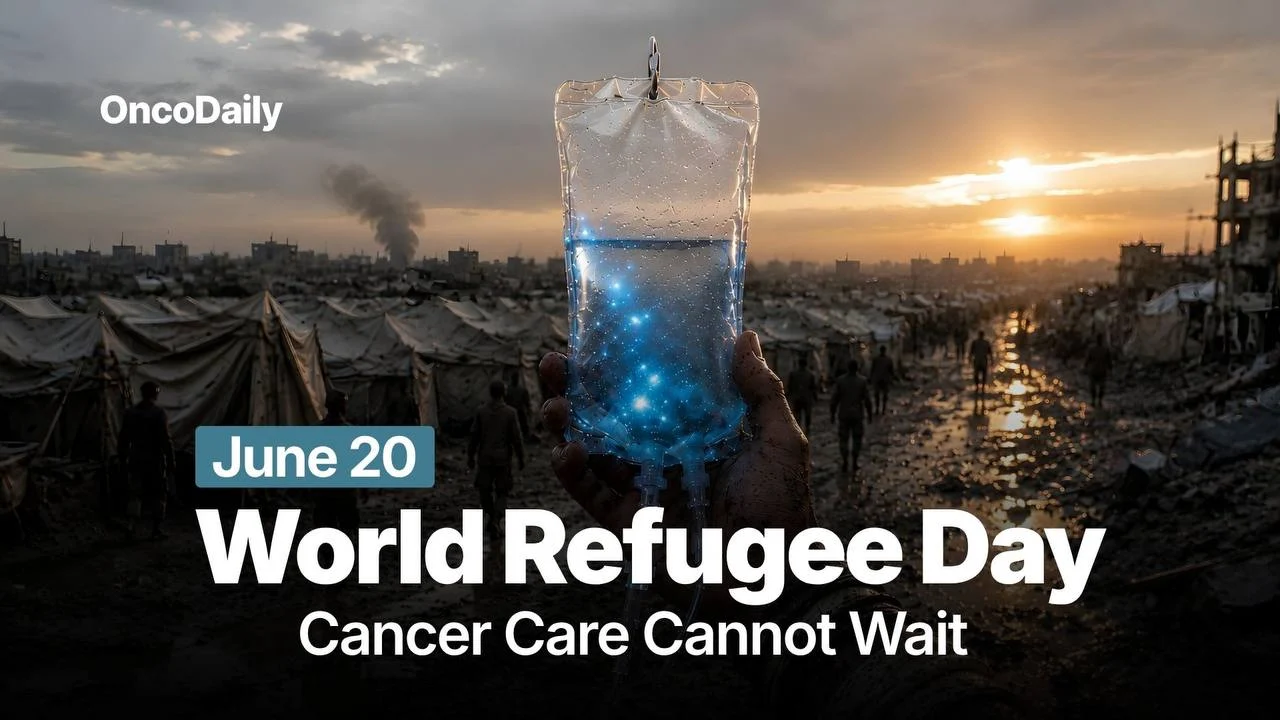
World Refugee Day: Cancer Care for Refugees Is a Global Health Crisis That Cannot Be Ignored
A 2025 systematic review of 561,850 refugees across 12 host countries reveals significant barriers to cancer prevention, diagnosis, and treatment. According to the analysis, displacement often leads to late-stage diagnoses and interrupted care, with Syrian refugees in Turkey showing stage III or IV disease rates between 68% and 76.4%.
The review, which synthesized evidence from 29 studies, found that cancer prevalence among refugee populations ranges from 0.5% to 13.3%. These variations depend on host-country health systems, study methods, and population characteristics.
Humanitarian responses traditionally prioritize acute infections, injury, malnutrition, and maternal-child health. However, the 2025 data suggests a growing need for sustained care for noncommunicable diseases as displaced people remain in host communities for years.
What are the most common cancers among refugee populations?
Breast cancer was the most frequently reported malignancy, accounting for 25.4% of cases in the 2025 systematic review. Leukaemia followed at 16.9%, with central nervous system cancers at 7.0% and lung cancer at 4.8%.
Researchers noted these figures do not represent a universal profile for all refugees. Instead, they highlight the necessity for services that treat both adult malignancies and pediatric cancers.
Why is cancer often diagnosed late in displaced people?
Displacement creates overlapping barriers that delay diagnosis. According to the source, these include language differences, financial hardship, lack of documentation, and transportation difficulties.
In Turkey, studies of Syrian refugees found that 68% to 76.4% of patients were diagnosed with stage III or IV disease. Patients may ignore symptoms or seek care only when they become severe due to fragmented referral pathways and competing priorities like food security and housing.
How does funding affect cancer treatment for refugees?
Limited resources often lead to difficult triage decisions. Historical data from UNHCR Exceptional Care Committees in Jordan show that between 2010 and 2012, only 246 of 511 cancer treatment applications were approved.
The primary reason for denial was poor prognosis. A subsequent analysis from 2016 to 2017 in Jordan found that only 40% of 289 applications for treatment were approved and funded.
What happens to children with cancer during displacement?
Refugee children face structural barriers alongside caregivers navigating poverty and legal uncertainty. Pediatric care requires specialized multidisciplinary teams and transfusion support, which are often unavailable in humanitarian settings.
Evidence from Turkey indicates that Syrian refugee children with cancer experienced poorer outcomes compared to non-refugee children treated in the same environment.
How can global health systems improve refugee cancer care?
The 2025 review suggests integrating refugee care into national cancer-control and universal-health-coverage plans. This approach could reduce inequities between refugees and host communities.
Key priorities include creating interoperable medical records so patients do not lose pathology reports when crossing borders. Other suggested steps include adapting HPV and hepatitis B vaccination programs and establishing sustainable financing partnerships between governments and philanthropic groups.
Future efforts may focus on closing the research gap in African and Asian refugee settings and low-income host countries to better understand the full cancer-care continuum.
Frequently Asked Questions
What is World Refugee Day?
Observed every year on June 20, it is a United Nations international day that honors the courage of people forced to flee their homes and calls attention to their rights, safety, and dignity.
Why are refugees often diagnosed with cancer at a later stage?
Diagnosis is often delayed by disrupted healthcare access, transportation costs, language barriers, lack of medical documentation, and limited access to screening programs.
Which cancers are most commonly reported among refugees?
According to the 2025 systematic review, the most frequently documented are breast cancer (25.4%), leukaemia (16.9%), central nervous system cancers (7.0%), and lung cancer (4.8%).
How should national health systems balance emergency aid with long-term chronic disease care for displaced populations?