
World’s largest automaker backs family heir Toyoda as chairman amid $33 billion supplier buyout and strong African sales
Toyota retained its position as the world’s top-selling automaker for a sixth consecutive year, selling a record 11.3 million vehicles globally in 2025. According to company data, group sales rose 4.6% from the previous year, supported by a “multi-pathway” strategy and strong performance in the U.S., Japan, and African markets.
The company’s leadership received shareholder backing during a Tuesday annual meeting, the first since Kenta Kon took over as chief executive in April. Kon, a former secretary to Toyoda, stated after the meeting that Toyota will continue investing in robotics, artificial intelligence, and a diverse range of powertrains.
Why is Toyota taking Toyota Industries private?
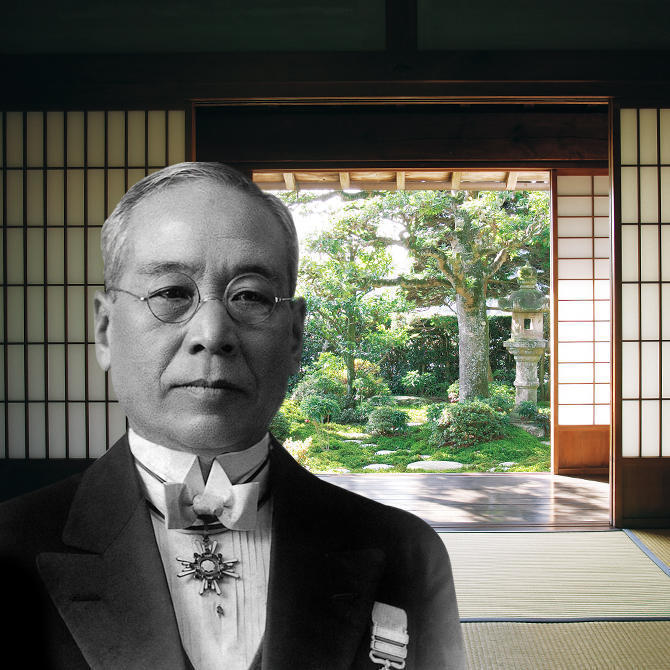
Toyoda, the grandson of founder Kiichiro Toyoda, is leading a $33 billion effort to take Toyota Industries private. This move would bring the original parent company, founded by Sakichi Toyoda in 1926, closer to the founding family.
Toyota Motor was spun off from Toyota Industries in 1937. The proposed buyout may tighten Toyoda’s influence over the automaker and reunite the group’s ancestral core.
How did Toyota achieve record global sales in 2025?
The record 11.3 million vehicles sold include Toyota and Lexus brands, as well as the truck maker Hino Motors and small-car unit Daihatsu. The U.S. and Japan drove the majority of this growth, together accounting for more than two-fifths of parent company sales.
Toyota’s strategy avoids relying on a single technology. Instead, the company utilizes a mix of combustion engines, hybrids, battery electric vehicles, and other technologies to maintain its lead.
What is driving Toyota’s growth in Africa?
The Toyota Hilux serves as the primary asset in Africa, where it is widely used for mining, construction, farming, government transport, and commerce. Its dominance is based on road clearance, load capacity, and durability in markets with poor road infrastructure.
Toyota has expanded its reach through local assembly. Toyota Tsusho expanded production at Associated Vehicle Assemblers in Mombasa, Kenya, in 2019. In 2021, the company opened a vehicle assembly plant near Accra, Ghana, also focusing on the Hilux.
According to BestSellingCarsBlog, the Hilux returned to the top of the Ghanaian market in 2025 with an 8.2% share. In Botswana, the model led the market in 2024, ranking ahead of the Isuzu KB and Nissan NP300.
How does South Africa reflect Toyota’s regional strategy?
South Africa is the company’s strongest African market. Toyota sold 148,124 vehicles there in 2025, capturing a 24.8% market share.
The Hilux remained South Africa’s best-selling vehicle for a 13th straight year, with 36,525 units sold. Other high-performing models include:
- Corolla Cross: 22,191 units
- Fortuner: 9,049 units
- Hiace: 6,815 units
The company also saw strong rankings for the Vitz, Urban Cruiser, Starlet Cross, and Starlet.
What happens next for Toyota’s powertrain strategy?
Toyota may continue to argue that different global regions will transition to electrification at different speeds. This approach keeps diesel, petrol, plug-in hybrids, and battery electric vehicles relevant across various markets.
As Kenta Kon manages pressure from tighter emissions rules, governance scrutiny in Japan, and Chinese EV makers, the company is likely to maintain its investment in the “multi-pathway” model to balance global demand.
Frequently Asked Questions
Who is the new CEO of Toyota?
Kenta Kon, a former secretary to Toyoda, took over as chief executive in April.
How many vehicles did Toyota sell in 2025?
Toyota sold a record 11.3 million vehicles globally, including Lexus, Daihatsu, and Hino Motors.
What is the cost of the Toyota Industries buyout?
The effort to take Toyota Industries private is valued at $33 billion.
Do you think a multi-powertrain strategy is more sustainable than a full shift to electric vehicles?