
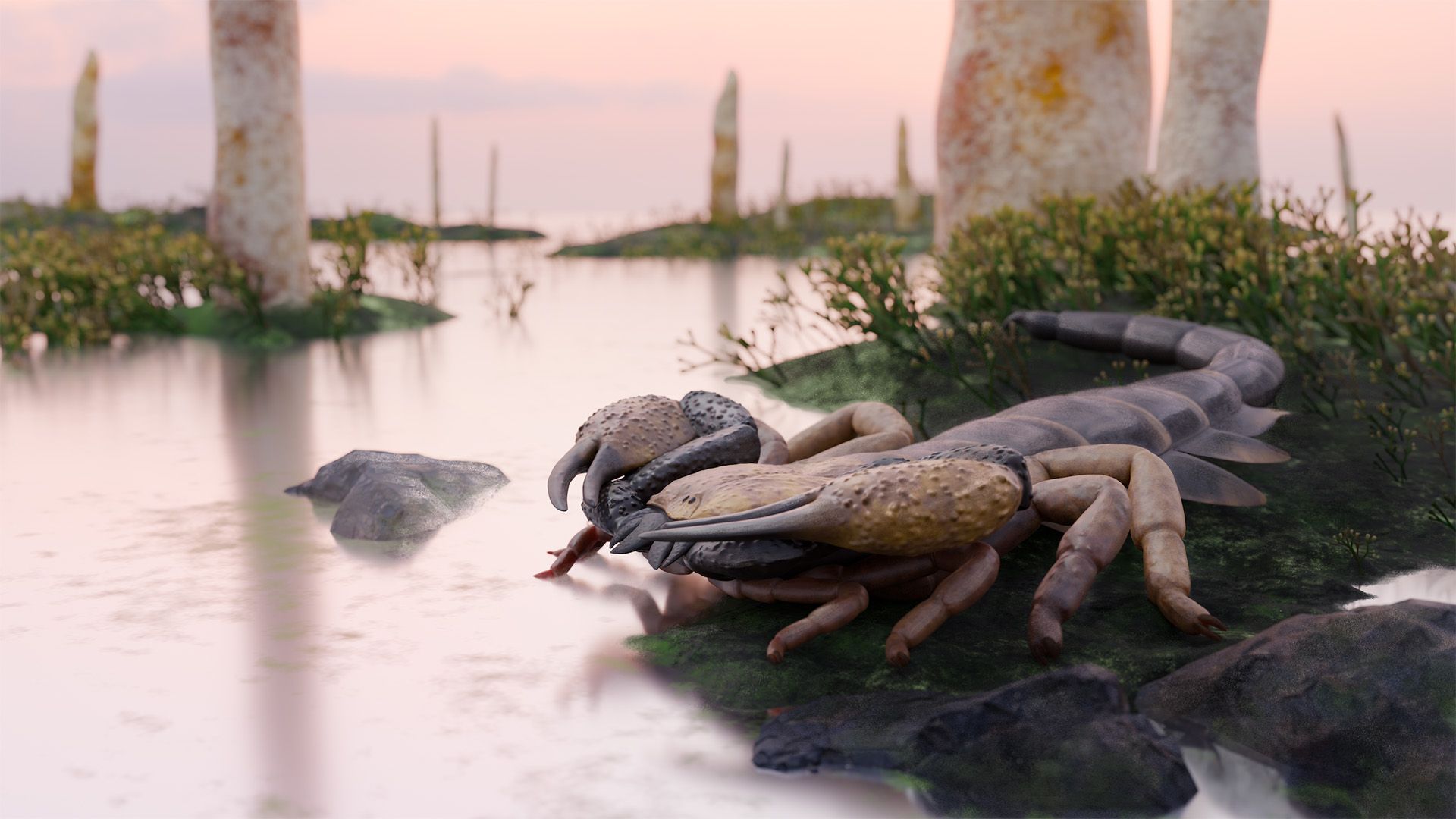
World’s Largest Known Scorpion Discovered in 415-Million-Year-Old Fossils
A century-old mystery involving fossils found in England and Wales has finally been solved, confirming the existence of the largest scorpion to ever roam the Earth. New research published in the journal Palaeontology reveals that the creature, known as Praearcturus gigas, reached lengths of approximately 3.3 feet (1 metre) and possessed formidable pincers measuring roughly 6.2 inches (16 centimeters).
Unlocking Ancient Evolutionary History
For decades, paleontologists debated the classification of P. Gigas. Initial documentation in the 1870s led researchers to suspect the remains belonged to a large, woodlouse-like crustacean. While a hypothesis suggesting the creature was a scorpion emerged in the 1980s, it was widely challenged due to the fragmentary state of the fossils and the absence of a visible scorpion tail.
By applying modern imaging and analytical techniques to specimens held in the Natural History Museum, London, researchers have now confirmed its identity. This discovery fundamentally alters our understanding of how and when arthropods—the most diverse animal group on Earth—attained such massive proportions.
The Mechanics of Gigantism
The existence of such a massive predator in a world where land life was otherwise dominated by small arthropods suggests a unique survival strategy. Researchers identified flap-like structures called epimera on some fossils, which are similar to features that support the shells of modern lobsters and crabs. This indicates that P. Gigas was likely semi-aquatic.
This hybrid lifestyle may have been the key to its immense size. Water provides natural buoyancy for large bodies, and the relative lack of competition from other large terrestrial predators during the Early Devonian may have created a niche that allowed this scorpion to flourish.
Future Implications
The reclassification of these specimens is likely to trigger a broader review of similar fossil collections. As researchers continue to apply cutting-edge imaging to previously dismissed or misidentified fragments, further insights into the timeline of arthropod evolution may emerge. This study serves as a reminder that our understanding of ancient history is constantly evolving alongside the technology we use to study it.

Frequently Asked Questions
What did the researchers discover about the habitat of Praearcturus gigas?
The research suggests the creature was likely at least partially aquatic, using its time to hunt in water, as the Early Devonian landscape lacked the complex ecosystems necessary to support such a large predator on land.
Why was it difficult to identify this creature for so long?
The fossils were fragmentary and lacked a characteristic scorpion tail, which caused scientists to debate its classification for more than a century, with early theories misidentifying it as a crustacean.
How large were these ancient scorpions?
Praearcturus gigas grew to lengths of about 3.3 feet (1 metre) and featured pincers approximately 6.2 inches (16 centimeters) long.
What other secrets might be hidden within existing museum fossil collections waiting for modern analysis?