
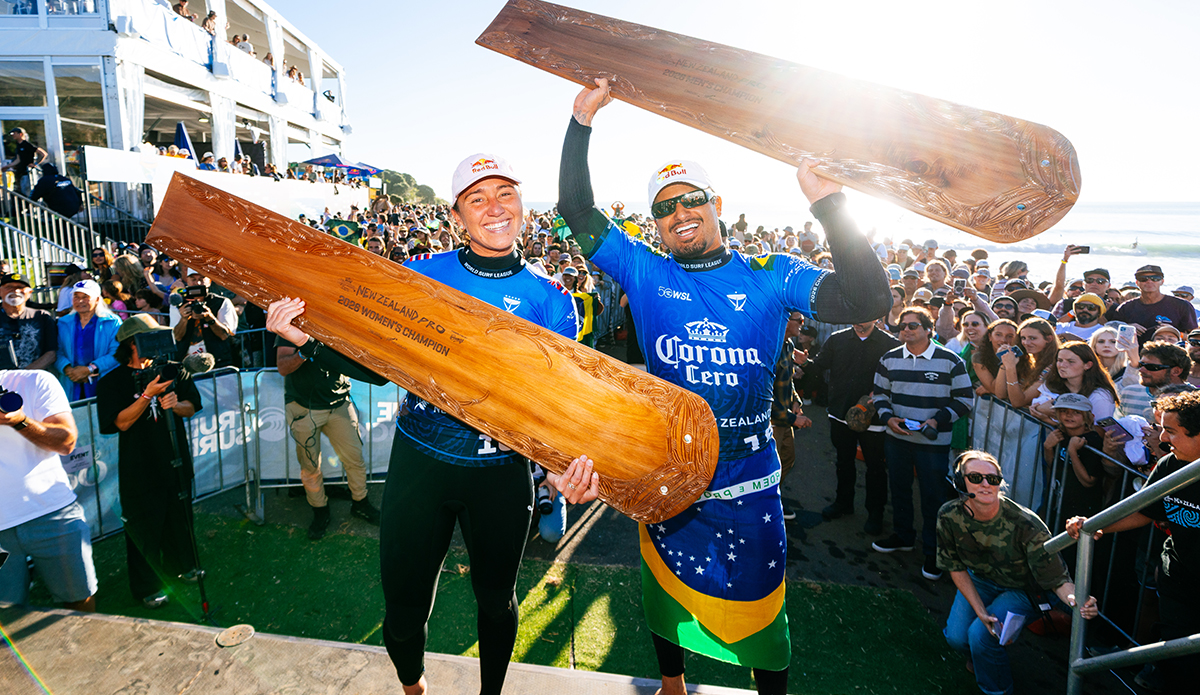
WSL 2026 Mid-Season Surprises: Brazilian Goofy-Footers Dominate, Women’s Legends Resurface, and Rising Stars Struggle
Carissa Moore and Italo Ferreira lead a new era of surfing dominance. Photo: Rambo Estrada//WSL
5 Future Trends Shaping the Next Era of Surfing: What the 2026 WSL Season Reveals
The 2026 World Surf League Championship Tour has already rewritten the rulebook. From Brazilian goofy-foot dominance to the resurgence of surfing legends, the sport is evolving faster than ever. But what does this mean for the future? Here’s a deep dive into the trends reshaping competitive surfing—and how they’ll impact the sport for years to come.
The Rise of Goofy-Footers: A Shift in the Surfing Power Structure
For decades, regular-foot surfers dominated the WSL rankings. But 2026 has flipped the script: four Brazilian goofy-footers now occupy the top four spots, a feat no one saw coming. This isn’t just a fluke—it’s a statistically significant shift that could redefine how surfers train, compete, and even design boards.
Why it matters: The dominance of Italo Ferreira, Gabriel Medina, and Yago Dora suggests that goofy-footers may now have a structural advantage in certain conditions. Historically, right-handers struggled in wave types like Bells Beach and Margaret River, but 2026’s subpar conditions at those events leveled the playing field. If this trend continues, we may see:
- More goofy-foot surf camps popping up globally, with coaches specializing in right-hand technique.
- Board manufacturers prioritizing goofy-foot-specific shapes, much like how Firewire and Channel Islands already cater to different stances.
- A generational shift in surfing culture, where goofy-footers are no longer seen as underdogs but as the new standard.
The Old Guard Strikes Back: Why Experience Still Beats Youth in Surfing
After three straight women’s CT titles went to surfers under 22, the 2026 season proved that age is just a number. Carissa Moore (33), Steph Gilmore (38), and Lakey Petersen (31) have shown that experience, adaptability, and mental resilience can outperform raw talent when conditions demand it.
Key takeaways:
- Mentorship programs may expand, with veterans like Moore and Gilmore coaching younger athletes on how to handle pressure in big-wave events.
- Sponsorship deals could shift toward experience over youth, with brands valuing longevity and consistency over fleeting hype.
- A hybrid approach to training, where surfers blend youthful athleticism with the wisdom of older competitors, may become the gold standard.
Why the Young Stars Aren’t Living Up to Hype (And What It Means for the Future)
Erin Brooks, Caity Simmers, and Caroline Marks were supposed to be the faces of the next generation. But so far, their results have been underwhelming. Brooks, a highly anticipated aerial specialist, hasn’t cracked round three. Simmers, a two-time world champ, is 7th in rankings after a disappointing Raglan. And Marks, another former champ, is struggling to find her footing.
Possible explanations:
- Pressure cooker effect: The WSL’s new format (no mid-season cut, cumulative points) may be intensifying competition, making it harder for mid-tier surfers to shine.
- Over-reliance on social media hype: Some young surfers may be overconfident after viral moments, leading to inconsistent performances.
- A skills gap in progression: If surfers aren’t refining their pro-level maneuvers fast enough, they’ll struggle in elite fields.
What’s next? If this trend continues, we may see:
- More structured development programs, like the WSL’s own academy, to bridge the gap between junior and pro surfing.
- A shift in scouting, where teams look for consistent performers over one-hit wonders.
- Greater emphasis on mental coaching, as young surfers learn to handle the pressure of high-stakes events.
The Regular-Foot Crisis: Can They Bounce Back?
Kanoa Igarashi, Jack Robinson, and Jordy Smith—three of surfing’s biggest names—are underperforming in 2026. Igarashi, a former top-five regular, is 13th. Robinson, a four-time top-five finisher, hasn’t advanced past round three. And Smith, at 38, is looking more like a retirement candidate than a title contender.
Why now? Possible factors:
- Goofy-foot dominance has shifted the competitive landscape, making it harder for regular-footers to adapt.
- Injury and fatigue: The grueling WSL schedule may be taking a toll on older surfers.
- A lack of innovation: If regular-footers aren’t evolving their progression, they’ll fall behind.
The silver lining: Punta Roca in El Salvador could be the great equalizer. With its powerful right-hand point breaks, regular-footers like Smith (who won there last year) may have a chance to reclaim their form.
Our Take: Not necessarily. While goofy-footers are strong now, surfing is unpredictable. A single dominant regular-footer (like Griffin Colapinto or Filipe Toledo) could shift the tide again. The key will be adaptation.
The Dark Horses: Who’s Really Leading the Next Wave?
When top surfers stumble, others rise. George Pittar (5th overall) and Sawyer Lindblad (also 5th) are the biggest surprises of 2026. Pittar’s win at Margaret River proved that young Aussies can break through when they’re ready. Lindblad, just 20, is clawing her way back onto the tour after missing the mid-season cut—showing resilience is just as important as talent.
What So for the future:
- More “late bloomers” will emerge, proving that consistency beats early hype.
- Underdog stories will drive engagement, with fans rooting for surfers like Lindblad who defy expectations.
- Sponsorships may shift toward “hidden gems”, as brands invest in surfers with potential rather than just fame.
FAQ: Answering Your Burning Questions About the Future of Surfing
Will goofy-footers dominate forever?
Unlikely. While they’re strong now, surfing is cyclical. A single dominant regular-footer (like Griffin Colapinto or Jack Robinson finding his form) could shift the balance again.
Are the young stars really struggling, or is it just a bad season?
It’s a mix. Some (like Molly Picklum) are thriving, while others (Erin Brooks, Caity Simmers) may need more time to adapt to the new WSL format. Consistency will be key.
Could Punta Roca be the turning point for regular-footers?
Absolutely. With its powerful right-hand waves, it’s a regular-footer’s dream. If Jordy Smith or Kanoa Igarashi deliver there, it could reignite their careers.
Will the old guard keep winning titles?
Possibly. Carissa Moore and Steph Gilmore have shown they’re far from done. But the younger generation (like Lindblad and Picklum) is closing the gap fast.
How can I bet on these trends as a surfer?
Watch how surfers adapt to different wave types. Goofy-footers excel in certain conditions—regular-footers may need to refine their footwork and strategy to compete.
What Do You Think? Is This the New Era of Surfing?
We’ve seen goofy-foot dominance, legend comebacks, and young stars struggling to keep up. But the best is yet to come—Punta Roca is next, and the 2026 season is far from over.
Join the conversation:
- Comment below: Who’s your pick to win the 2026 title?
- Explore more: Dive into our surf archives for deeper analysis.
- Stay updated: Subscribe to our newsletter for the latest WSL insights.